The Ministry of Finance has just announced a synthesis of opinions, reception, and explanation of social feedback on the draft Decree amending and supplementing a number of articles of Decree No. 103/2024 on land use levy and Decree No. 104/2024 on the land development fund of the Government.
Many contributions from ministries, sectors, and localities have proposed to clarify and improve the regulations on exemption and reduction of land use charges.
According to the People’s Committee of Nghe An province, the draft needs to supplement specific regulations on the dossier for exemption and reduction of land use charges for people with revolutionary merits, in accordance with the Law on Tax Administration.
The Ministry of Finance has received and will amend in the direction of supplementing the content: “Exemption and reduction of land use charges for people with revolutionary merits are only implemented when there is a decision of the competent state agency on the permission of exemption and reduction of land use charges in accordance with the law on people with revolutionary merits.”
The State Audit Office also proposed to expand the subject of consideration to include the “relatives of people with revolutionary merits” to match the subjects entitled to preferential treatment under the Ordinance on Preferential Treatment of People with Revolutionary Merits.
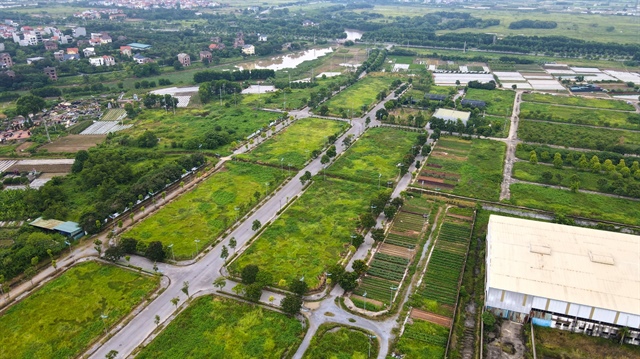 Ministries, sectors, and localities provide feedback on the draft Decree 103, suggesting clear regulations on the authority and deciding agency for organizations and individuals eligible for land use charge exemption. Illustrative image |
Meanwhile, the Finance Department of Son La province proposed to add subjects of application, including poor people and households who are not ethnic minorities, in line with the contents specified in Articles 18 and 19 of Decree No. 103/2024. At the same time, further clarification is needed for cases of residing in the place with the land but not yet converted to residential land.
The Ministry of Finance has received this contribution and improved Clause 1, Article 17 of Decree 103.
However, the Finance Department of Cao Bang province requested clarification on the content “only applicable to ethnic minorities living in the place with the land.” At the same time, they proposed to specify the content of “living in the place with the land,” whether it is determined based on permanent residence registration or temporary residence. The “place with the land” should be defined according to the administrative unit at the communal level or provincial level (according to the local government of two levels).
Besides, the former Finance Department of Thai Binh province suggested separating the cases of exemption and reduction of land use charges for people who have to relocate when the State recovers land due to life-threatening risks and cases of land recovery attached to houses but not eligible for compensation.
The Vietnam Women’s Union also requested maintaining the mechanism of exemption from land use charges for cases of land recovery where the household is poor and has no other place to live.
The Ministry of Finance stated that Clause 1, Article 157 of the Land Law and Decree No. 103/2024 have already regulated the exemption and reduction of land use charges for poor households. The Ministry received the opinions of ministries and localities on the draft decree amending the level of preference for land use charges in cases of land recovery where the household has no other place to live, to ensure fairness among cases of land recovery by the State.
Proposed Clear Regulations on Competence
Regarding competence, the Ministry of Agriculture and Environment proposed to amend and supplement point c1 to clarify that the state agency managing taxes is responsible for determining land users eligible for land use charge exemption to serve as a basis for issuing land use right certificates and ownership of assets attached to the land as prescribed.
The Ministry of Agriculture and Environment also proposed not to assign the agency managing land as the main agency in inspecting and examining the conditions for exemption and reduction of land use charges and land rents. Instead, clear regulations should be promulgated for the tax agency to take the initiative in implementing and uniformly applying them to cases of land rent exemption and reduction.
In response to this contribution, the Ministry of Finance stated that Clause 3, Article 157 of the Land Law stipulates that land users who are entitled to exemption from land use charges and land rents do not have to go through the procedure of proposing exemption from land use charges and land rents. However, to determine whether a land user is subject to land use charge and land rent exemption, it is necessary to clarify the reason and area of land entitled to exemption right from the time of the decision on land allocation or land lease.
This is the basis for monitoring and calculating financial obligations for land use charges and land rents. This is especially important in the case of annual land rent payment but with exemption for only a certain number of years. The tax agency shall base on the land dossier transferred by the competent land management agency to perform the calculation of financial obligations. Therefore, at the time of land allocation or land lease (when the dossier has not been transferred to the tax agency), the tax agency cannot determine whether the land user is subject to land use charge and land rent exemption.
Similarly, the People’s Committee of Lang Son province and the Finance Department of Thai Binh province also proposed to amend and supplement Clause 5, Article 18 of Decree No. 103/2024, towards clear regulations on the authority and deciding agency for organizations and individuals eligible for land use charge exemption, and the determination of exemption by decision or administrative document for uniform implementation by localities.
According to the Ministry of Finance, the draft has been amended to stipulate that the agency and person with the competence to decide on land allocation (Chairpersons of People’s Committees at all levels) shall decide on land use charge exemption; the form of documents is decided by the competent agency and person.
Nguyen Le
– 15:27 26/08/2025
Breaking News: Is the Local Chairman Facing Traffic Violation Charges?
Introducing the latest proposal for the draft Decree on administrative sanctions for road-related offenses. This decree aims to uphold road safety and foster a culture of compliance among road users. With stringent measures and updated regulations, this proposal strives to mitigate traffic violations and promote a harmonious and secure road environment for all.
Who is Eligible for the 50% Land Use Fee Reduction?

After a decade, a surprising land-use debt surge of nearly VND 4 billion has prompted the taxpayer, a member of the police force, to seek clarification from the tax authorities about the 50% reduction in land-use fees.
Proposed Fines for Traffic Violations: Empowering Village Chairpersons and Police Chiefs with Hefty Penalties of Up to 60 Million Dong

“The Ministry of Construction has proposed a new regulation that would grant the Chairman of the People’s Committee and the Head of the Police at the commune level the authority to impose fines for road traffic violations. The proposed fine amount is significant, reaching up to 60 million VND.”
“Rescuing” 11 Loss-Making BOT Projects

The governing body is set to introduce new regulations to aid 11 transport projects that are facing financial difficulties. These projects, which were agreed upon before January 1, 2021, will receive support to get back on track and ensure their financial viability.
“Fostering Competition and Safeguarding the Interests of Gas and Oil Enterprises.”
“Businesses have the freedom to pursue their ventures as long as they don’t contravene any laws. However, for industries with conditional operations like the fuel sector, it’s imperative that companies adhere to the stipulated requirements and regulations. These conditions are in place to ensure a safe and sustainable business environment, and non-compliance can have significant repercussions.”