Excessive Land Use Charges: HoREA’s Proposal for Revision
The Ho Chi Minh City Real Estate Association (HoREA) has submitted a proposal regarding the fourth draft of the Decree amending and supplementing several articles of Decree 103/2024/ND-CP by the Ministry of Finance, which regulates land use fees and land rent.
HoREA points out that the current practice of applying land prices from the price table to calculate land use fees when the state permits a change in land use purpose, recognizes land-use rights, or extends the use period for households and individuals is unfair. The current method uses 100% of the price from the land price table without distinguishing between policies for land areas within or exceeding the residential land limit. This has resulted in excessively high land use fees that are unreasonable and beyond the financial capacity of many households and individuals.
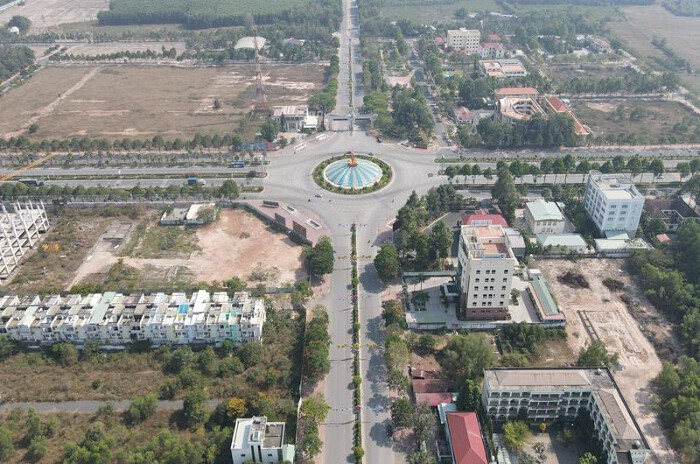
The current method of calculating land use fees after changing the land’s purpose results in excessively high costs for residents.
To address this issue, HoREA suggests amending and supplementing Clause 1, Article 8 to allow for lower land use fee rates for land areas within the residential land limit and higher rates for areas exceeding the limit when the state permits a change in land use purpose, recognizes land-use rights, or extends the use period for households and individuals.
Specifically, the land price after changing the purpose of use for land areas within the residential land limit should be calculated at 20% (previously proposed as 30%) of the land use fee at the time of the decision to change the land use purpose. For land areas exceeding the limit, the price should be calculated at 30% (previously proposed as 50%) of the land use fee.
HoREA also highlights that Clause 1, Article 8 stipulates that the land price for calculating land use fees is based on the land price table. As a result, the current land use fee after changing the land’s purpose is calculated at 100% of the price in the table for the entire land area, including areas within and exceeding the residential land limit. This has led to excessively high fees, as evidenced by cases in TP Vinh, Hoc Mon, and District 7, where residents had to pay exorbitant amounts, prompting many to withdraw their red book application.
While Clause 5, Article 45 of the Land Law and Point c, Clause 11, Article 18 of Decree 101/2024/ND-CP allow for debt recording of land use fees without a time limit, HoREA notes that this restriction on debt recording has unintended consequences. It limits the essential rights of land users, preventing them from engaging in critical transactions such as transfer, assignment, lease, mortgage, leaseback, donation of land use rights, mortgage, and contribution of capital in the form of land use rights. Despite having the red book, individuals are unable to utilize it for their benefit.
Regarding the calculation of 30% and 50% land use fees in the previous draft, HoREA believes that these rates still result in excessively high fees for households and individuals. Localities have already implemented the provisions of the 2024 Land Law, with significant price increases. For example, Ho Chi Minh City’s (before the administrative merger) land price table for the 2020-2024 period showed increases of 2.36 to 38.8 times compared to the previous period.
Reducing Supplementary Payments
HoREA also proposes amending the regulations regarding supplementary payments for land use and rent during the period when these fees were not calculated.
Specifically, it is suggested to amend and supplement Clause 2, Article 50 so that the amount to be paid by the user for the period when land use fees were not calculated is 0.5% or 1% per year (previously proposed as 3.6%) of the rent payable.
To resolve the issue of unreasonable supplementary payments for land use and rent, it is necessary to amend Point d, Clause 2, Article 257 of the 2024 Land Law.
HoREA emphasizes that to definitively address the issue of unreasonable supplementary payments for land use and rent during the period when these fees were not calculated, it is necessary to amend Point d, Clause 2, Article 257 of the 2024 Land Law. The suggestion is to abolish the provision regarding supplementary payments, as it imposes new legal responsibilities or more onerous ones, which is inconsistent with Clause 2, Article 55 of the 2025 Law on the Promulgation of Legal Documents.
Point d, Clause 2, Article 257 of the 2024 Land Law effectively applies retroactive effect to cases of land allocation and lease according to the 1993 Land Law (over 30 years ago), the 2003 Land Law (over 20 years ago), and the 2013 Land Law (over 10 years ago). Notably, none of these previous Land Laws stipulated the responsibility of investors regarding supplementary payments for the period when land use fees were not calculated.
In the event that the National Assembly passes the draft amended Land Law, which abolishes Point d, Clause 2, Article 257 of the 2024 Land Law regarding supplementary payments, the amended Land Law should include a transitional provision. This provision would allow for the deduction of supplementary payments already made by enterprises from other financial obligations, which would be a reasonable solution.
Unlocking the Land Use Conundrum: Unraveling the Decree 103 Amendments

The proposed revisions to Decree 103 on land use and land rental fees aim to introduce a more nuanced fee structure. By doing so, it is hoped that a fairer and more rational land policy will be implemented, one that is closer to the people it serves.
The Five Amendments Legacy: Revolutionizing Vietnam’s Provincial Landscape

After 80 years of nation-building, Vietnam’s land management has undergone several pivotal transitions, evolving from feudal ownership to state ownership and eventually embracing market mechanisms. Each reform has been intrinsically linked to significant shifts in the nation’s trajectory. Experts view the current wave of institutional reforms, including provincial mergers, streamlining of bureaucratic apparatuses, and the establishment of a national database, as tantamount to a “fourth revolution” in land management.
A Proposal to Reduce Land Use Fees for Residential Purposes
HoREA has proposed that in the event of a Government Resolution, the collection of land use fees when converting agricultural or non-agricultural land to residential land should be clearly specified. They suggest a reduction from 30% to 20% for land within the allocated residential land limit, and from 50% to 30% for land exceeding this limit.
Two Additional Land Procedures at the Commune Level: What Citizens Need to Know
As of August 25th, the communal authorities will commence the process of facilitating economic organizations to contribute capital in the form of land-use rights for project implementation and allocation of coastal areas for land reclamation.
Why the Additional Land Premium of 5.4%/year is a ‘Burden’ and Needs Amendments
Many businesses and organizations have petitioned against the collection of additional land fees or have requested a reduction in the annual rate of 5.4%. This move aims to provide much-needed support and alleviate the challenges faced by investors.