









Proposals for 36 Outstanding Policies for the FTZ
On September 3rd, the Ho Chi Minh City Institute for Development and the Advisory Council for the Implementation of Resolution 98/2023 of the National Assembly organized a seminar to contribute ideas to the draft “Proposal for the construction and submission to the National Assembly of a Resolution amending and supplementing a number of points of Resolution 98”.
The draft proposes to supplement a number of industries and fields to the list of priority industries and fields to attract strategic investors to the city. It also suggests conditions for meeting the requirements of a strategic investor and policies for the Free Trade Zone (FTZ) associated with the seaport in the Cai Mep Ha area.
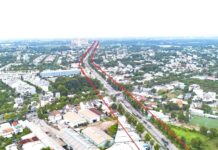
Regarding the proposal for the “Study on the FTZ associated with the seaport in the Cai Mep Ha area” (belonging to Tan Phuoc and Tan Hai wards), Mr. Le Van Danh, Deputy Director of the Department of Industry and Trade, said that Ho Chi Minh City’s People’s Committee is researching and absorbing many opinions to perfect the proposal. The proposal consists of two main contents: scale and mechanism policies. In terms of scale, the FTZ will be deployed on an area of 3,746 hectares, divided into 8 functional subdivisions including seaports, high-tech industries, residential areas, and commercial services, integrating full production and business activities, and logistics according to international models.
In terms of mechanisms, the proposal puts forward 36 outstanding policies focusing on customs, labor, taxation, and other areas to create a favorable investment environment. However, the Department of Industry and Trade noted the need to carefully calculate the budget equation to avoid excessive exemptions and reductions affecting revenue. The Department also proposed separating the content related to strategic investors, stipulating that investors must own a minimum of 30% of the project capital, have experience in implementing similar projects, and meet additional criteria such as creating jobs for local workers and committing to green transition in logistics and production. The Department of Industry and Trade suggested that the People’s Committee of Ho Chi Minh City be the competent authority to establish the FTZ and the FTZ Management Board.
Commenting on this content, Assoc. Prof. Dr. Tran Hoang Ngan, a member of the National Assembly, suggested that Ho Chi Minh City could refer to the models of Da Nang and Hai Phong in developing the FTZ, initially in Cai Mep Ha and then expanding to other areas.
Concerns About “Binding” Experience Requirements
Regarding the proposal to supplement priority industries and fields to attract strategic investors, Assoc. Prof. Dr. Vu Anh Tuan from the Vietnam-Germany University suggested that the investment in the urban railway/trainway along the Saigon River as mentioned in the draft is “too small”. With an investment of VND 6,000 billion, equivalent to about USD 230 million, only 2-3 km can be completed, while a minimum urban railway project is 10 km long, equivalent to about USD 1 billion.
For the criteria of strategic investors, the expert proposed three additional conditions. These include the financial capacity of the investor with an ownership capital of 20-30% of the total project capital, a three-year credit history with no bad debts, and the ability to mobilize capital through the capital market, issue corporate bonds, and borrow from banks of USD 2-3 billion for the urban railway project. At the same time, it is necessary to stipulate that strategic investors must have project management capabilities and commit to long-term companionship of 7-10 years…
Dr. Tran Du Lich, Chairman of the Advisory Council for the Implementation of Resolution 98/2023, said that the regulations on strategic investors mentioned in Resolution 98/2023 have not been implemented by any investors after more than two years. The amended resolution draft proposes even more binding regulations. For example, in the field of urban railways, as Vietnam does not have any enterprises with relevant experience, domestic enterprises would not meet the requirements if prior experience is mandatory. Therefore, he suggested that careful consideration is needed for this content.
Another issue raised by Dr. Tran Du Lich is that Ho Chi Minh City invites strategic investors but also stipulates that they must participate in bidding according to the Law on Investment. Therefore, the expert proposed that the People’s Committee of Ho Chi Minh City be given the right to choose strategic investors, as mentioned in Resolution 188/2025 of the National Assembly on piloting some special mechanisms and policies for the development of the urban railway system in Hanoi and Ho Chi Minh City.
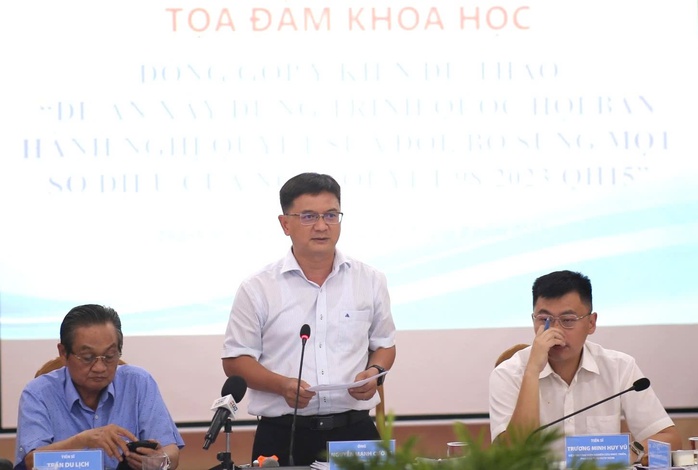
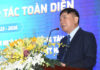
Mr. Nguyen Manh Cuong, Vice Chairman of Ho Chi Minh City People’s Committee, concluding the seminar
Solving the Infrastructure Equation for Economic and Social Development
According to Assoc. Prof. Dr. Tran Hoang Ngan, with a population of 14 million and an expected GRDP of USD 123 billion by the end of 2025, Ho Chi Minh City needs to boldly propose to the Government and the National Assembly for appropriate mechanisms.
Assoc. Prof. Dr. Tran Hoang Ngan suggested the need to fundamentally solve the infrastructure equation for Ho Chi Minh City’s new socio-economic development, especially transportation connections within the inner city and with the two former provinces of Binh Duong and Ba Ria – Vung Tau, between industrial parks, seaports, and airports in the Southeast region. At the same time, it is necessary to build a management system for a supercity, a system for attracting resources, and a mechanism for organizing the apparatus, restructuring state-owned corporations, and quickly handling redundant public assets.
On this issue, Dr. Tran Du Lich proposed to add a clause on decentralization and delegation of authority to the Ho Chi Minh City People’s Council to decide on the arrangement of state-owned enterprises under the Ho Chi Minh City People’s Committee, reorganizing them into “powerhouses” to serve the development of the city. Along with this, the city should expand the pilot of the special mechanisms of the former Thu Duc City to the current 168 wards, communes, and special districts of Ho Chi Minh City. Depending on the content, the Ho Chi Minh City People’s Council will decide, thereby expanding the decentralization and delegation of authority to the grassroots government.
Concluding the seminar, Mr. Nguyen Manh Cuong, Vice Chairman of the Ho Chi Minh City People’s Committee, said that the city’s working group would research and absorb the opinions to build the content to propose to the Government and the National Assembly to amend and supplement a number of articles of Resolution 98.
According to Mr. Nguyen Manh Cuong, after the merger, Ho Chi Minh City has more resources, vision, scale, and potential, requiring the development of a supercity. The development of Ho Chi Minh City is not only a requirement set by the Central Government but also the aspiration of the Party Committee, authorities, and people of the city. In the future, Ho Chi Minh City will take advantage of all resources to develop quickly, strongly, and sustainably. In addition to promoting what has been done in Resolution 98, Ho Chi Minh City will also supplement and amend to promote its potential after the merger, contributing to the development of the country as a leading locality.
The Need for New Development Space
Assoc. Prof. Dr. Tran Dinh Thien, former Director of the Vietnam Economics Institute, emphasized that this is an opportunity for Ho Chi Minh City to propose new mechanisms as the current context is very different from the time Resolution 98/2023 was issued. Previously, there was no “quartet of key resolutions” (Resolutions 57, 59, 66, and 68) from the Politburo as there are now. At the same time, Ho Chi Minh City now has a new position and strength, a larger economic scale, and an increasingly important role in the national economy after the merger with Binh Duong and Ba Ria – Vung Tau. This requires a new vision and development space. Therefore, these two arguments should be included in the draft resolution to increase its persuasiveness and avoid wasting the opportunity presented to Ho Chi Minh City.
The Counterfeit Cash Conundrum: Unraveling the USD Scam in Ho Chi Minh City

Taking advantage of messaging applications with anonymous accounts, the accused group in Ho Chi Minh City had repeatedly bought and sold a total of $35,000 in counterfeit US dollars.
“Banks in Ho Chi Minh City and Dong Nai Work Through Holidays to Distribute 100,000 VND Gifts to Locals”
The Dong Nai administration has disbursed 3 billion Vietnamese dong in cash, specifically 100,000 VND notes, to commercial bank branches for distribution as gifts to the local populace.
Tightening the Wires of Progress: The Phuoc An Cable-Stayed Bridge’s Asian Record
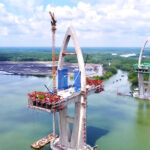
The Phuoc An Bridge, a spectacular feat of engineering, spans the Thi Vai River, connecting Ho Chi Minh City and Dong Nai. With its impressive 55-meter clearance, it boasts the distinction of being Asia’s largest extradosed bridge, accommodating vessels up to 30,000 tons.
Unlocking New Opportunities for Investors: The Transformative Impact of Key Infrastructure Developments in Southern Ho Chi Minh City
According to Ms. Duong Thuy Dung, Executive Director of CBRE Vietnam, investors have recognized the irrationality of real estate prices in the center of Ho Chi Minh City and are strongly shifting their focus to the neighboring areas. These peripheral zones benefit directly from existing and upcoming infrastructure and belt road projects, offering significant growth potential.
The Latest Directive: Establishing a Fund for Relocation Housing and Land

The Department of Construction has been tasked by the Ho Chi Minh City People’s Committee to establish a fund for housing and land to serve resettlement purposes. This task is based on the needs for resettlement arrangement and the proposal to invest in the construction of resettlement areas by various units. A report on the implementation results must be submitted before October 15th.