














The Current State: When Supply Falls Short of Demand
According to the General Statistics Office of Vietnam, the country is accelerating its urbanization process, with a projected population of 104 million by 2030, half of whom will reside in cities. This poses a significant challenge for the real estate market, particularly the affordable commercial housing segment targeting families with monthly incomes between 10 and 35 million VND.
Affordable commercial housing currently meets about 60% of the housing demand from young workers, technicians, office employees, and middle-income families in major cities. However, the supply remains severely limited. As of August 2025, only over 100,000 affordable commercial housing units have been completed, while the actual demand is estimated at over 1.2 million units for the 2025-2030 period. Among the 500 registered projects in this segment, approximately 150 (around 130,000 units) are stalled due to land clearance issues, and nearly 300 (around 320,000 units) are awaiting planning adjustments or detailed guidelines under the 2024 Land Law and 2023 Housing Law.
It’s crucial to distinguish between social housing and affordable commercial housing—two vital components aimed at providing homes for low- and middle-income earners. Social housing, led by the government, targets workers and low-income individuals with prices ranging from 10 to 15 million VND per square meter, supported by public land and preferential policies. However, the current income verification process takes 3-6 months, and the 5-10 year transfer restriction limits accessibility.
In contrast, affordable commercial housing, priced between 15 and 45 million VND per square meter, offers more flexibility, integrating amenities like parks and shopping centers, and allowing free transfer. Private enterprises meet 60% of market demand, creating integrated urban areas tailored to young generations and leveraging market capital for sustainability. Reducing income verification time for social housing to 1-2 months and easing transfer conditions would enhance connectivity between the two segments.
Pioneering affordable commercial housing projects include Ehome Southgate in Long An (Nam Long Group, 1.1 billion VND/unit), Vinhomes Happy Home in the outskirts of Ho Chi Minh City (Vinhomes, 20-25 million VND/m²), VSIP projects in Binh Duong (VSIP Group & Becamex IDC, 18-25 million VND/m²), Legacy Prime in Binh Duong (Kim Oanh Group, 900 million VND/unit), Ecohome in Hanoi (Capital House, 20-30 million VND/m²), and Viglacera Housing in Bac Ninh (15-25 million VND/m²), providing housing opportunities for thousands of families.
A looming challenge is the anticipated 20-30% increase in urban land prices in major cities from January 1, 2026, under Decree 71/2024/NĐ-CP. This necessitates close collaboration between the government and businesses to maintain housing prices at levels affordable for workers. Currently, 70% of industrial zone workers still live in makeshift accommodations, significantly impacting labor productivity and quality of life.
Satellite Cities: Expanding Living Spaces
The integration of Binh Duong, Dong Nai, and Ba Ria-Vung Tau into Ho Chi Minh City, and Bac Ninh into Hanoi since 2025 has opened up vast urban spaces, creating opportunities for satellite city development. The expanded Ho Chi Minh City, with 13-15 million residents, will need 1.5-2 million affordable housing units, while expanded Hanoi, with 8-10 million residents, will require 800,000-1 million units by 2030.
Can Gio is emerging as a highlight with a 2,870-hectare land reclamation project forming an eco-urban area, combining affordable housing, tourism, and an international seaport, connected via the Can Gio Bridge (expected completion in 2028) and Ring Road 3 (2026). Binh Duong continues to develop with VSIP III (1,000 hectares) and the New Binh Duong City (1,000 hectares), integrating housing, industrial zones, and services, connected via the My Phuoc – Tan Van Expressway and the Di An – Thu Dau Mot metro as per the 2030 plan.
In Central Vietnam, the Da Nang Free Economic Zone (1,200 hectares in Hoa Khanh – Lien Chieu) combines affordable commercial housing (20-30 million VND/m²) with industrial zones and the Lien Chieu Port. In the North, the Yen Phong Urban Area in Bac Ninh (1,500 hectares) and Viet Yen in Bac Giang (800 hectares) are designed to serve Samsung industrial zone workers, connected via the Hanoi – Lang Son Expressway and Ring Road 4 (completion in 2025).
The development of affordable commercial housing and satellite cities is closely tied to transportation infrastructure. Vietnam is addressing this through key transportation projects.
Metro Line 2 (Ben Thanh – Tham Luong – Thu Thiem) has achieved 100% land clearance and over 66% of technical infrastructure relocation packages, with Phase 1 (11-12 km, 11 stations) expected to start in December 2025 and complete by 2030. Once operational, it will reduce travel time from central Ho Chi Minh City to Thu Duc and Cu Chi to 20-30 minutes, significantly improving the quality of life for satellite city residents.
Beyond urban metros, the Thu Thiem – Long Thanh light rail (41.8 km, 20 stations, 120 km/h) is set to operate from 2030, connecting Thu Thiem Financial Center to Long Thanh Airport in 20-25 minutes. This opens up opportunities for affordable commercial housing in areas like Nhon Trach and Long Thanh, where land prices are suitable for projects priced at 15-45 million VND/m².
International Lessons and Development Models
International experience shows that affordable housing is not just a temporary solution but a strategic infrastructure requiring modern planning, transparent governance, and advanced technology. In Singapore, the Toa Payoh district offers apartments priced at 15-45 million VND/m² near MRT stations, integrated with schools, supermarkets, and parks. The Housing and Development Board (HDB) manages comprehensively, providing free cleared land and loans at 2.6% annual interest, with repayments under 20% of income, enabling 90% of the population to own homes.
South Korea employs the PPP (Public-Private Partnership) model in Gangnam, offering loans at 1.2% annual interest, integrated metro, and synchronized amenities, ensuring high living standards. Japan uses modular construction technology in Tama-Plaza, reducing costs by 20% and construction time by 40%, connected to the Shinkansen, providing affordable housing near urban centers. China employs 3D concrete printing technology in Longhua, Shenzhen, constructing five-story buildings in days at one-third the cost of traditional methods, integrated with metro and amenities.
Vietnam can learn from these models to build integrated urban areas, enhancing the quality of life for workers through synchronized planning, advanced technology, and financial support.
To make affordable commercial housing a strategic infrastructure, Vietnam should consider integrating advanced infrastructure models, compared with successful countries:
- TOD (Transit-Oriented Development): Developing integrated urban areas around public transport hubs, such as Metro Line 2 and Metro Line 1 (Ben Thanh – Suoi Tien, operational in 12/2024), with housing, commerce, and services within a 10-15 minute walk. For example, areas near Thu Duc metro station offer apartments at 20-30 million VND/m². Compared to Singapore’s Toa Payoh, Vietnam’s TOD needs to accelerate metro progress and clean land planning via PPP to prevent land price surges (100-150 million VND/m² in Thu Duc).
- ZOD (Zone-Oriented Development): Building affordable housing near industrial zones, such as VSIP III (Binh Duong), Yen Phong (Bac Ninh), and Phu My (Ba Ria-Vung Tau). For instance, worker housing in VSIP III (18-25 million VND/m²) integrates amenities within a 2-3 km radius. South Korea’s Gangnam demonstrates ZOD success through PPP and synchronized amenities. Vietnam needs integrated planning and connectivity via the Thu Thiem – Long Thanh light rail to enhance living standards.
- NOD (Node-Oriented Development): Developing urban areas at major infrastructure nodes, such as Thu Thiem, Long Thanh, and Dong Anh stations, leveraging expressways, metros, and the Tan Son Nhat – Long Thanh high-speed metro. For example, the urban area around Long Thanh Airport offers apartments at 15-25 million VND/m². Japan’s Tama-Plaza uses modular technology to reduce costs and construction time. Vietnam should adopt similar technologies for optimization.
- LVC (Land Value Capture): Leveraging increased land value from infrastructure (Ho Chi Minh City metro, Long Thanh Airport, Cai Mep – Thi Vai Port) to reinvest in affordable housing. Land prices around Thu Duc metro station have risen 20-30% in the past three years. However, auction mechanisms and resource allocation still need improvement for effective investment and private sector participation. Singapore’s HDB effectively reinvests 70% of revenue. Vietnam requires transparent legal frameworks and PPP for efficient reinvestment.
- RULD (Rural-Urban Linkage Development): Developing affordable housing clusters in Hoa Binh, Vinh Phuc, Tay Ninh, and Long An, connected to urban areas via provincial roads and inter-regional buses. For example, housing in Long An (1.1 billion VND/unit) integrates amenities, connected to Ho Chi Minh City via National Highway 1A. China’s Longhua demonstrates RULD success through 3D printing technology and inter-regional infrastructure. Vietnam needs to enhance inter-regional buses and improve National Highway 1A and Provincial Road 51.
With valuable lessons from advanced nations and the strong potential of satellite cities, Vietnam stands at a golden opportunity to transform affordable commercial housing into a solid foundation for the sustainable development of major urban areas. The key question is no longer “whether it’s possible” but “how” to effectively realize this vision.
Stay tuned for Part 2: How can the Vietnamese government and private enterprises realize the dream of stable housing for millions? What solutions will ensure synchronized connectivity between infrastructure, housing, and amenities?
Unlocking Opportunities: Vietnam’s Ministry of Finance Hosts Successful Investment Promotion Conference in the United Kingdom
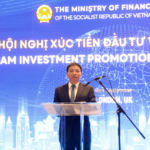
On the morning of September 16, 2025 (local time), the Ministry of Finance successfully hosted an Investment Promotion Conference in London, United Kingdom. The event was attended and chaired by Minister of Finance Nguyễn Văn Thắng.
Prime Minister Requests IMF to Continue Policy Advisory and Risk Warnings for Vietnam
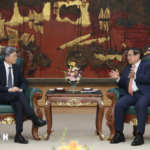
Prime Minister requests the IMF to further strengthen cooperation, technical assistance, and human resource training for Vietnam, while implementing programs to support Vietnam’s adaptation to new international economic conditions.
Prime Minister Proposes National Scholarship Fund and Increased Education Spending

Prime Minister Pham Minh Chinh announced that the government will establish a National Scholarship Fund and increase the education budget, aiming to create a strategic breakthrough in workforce training.
Deputy Prime Minister: Government Secures Funding for Universal Healthcare Exemption

On the morning of September 16th, during the National Conference on Implementing the Political Bureau’s Resolutions, Deputy Prime Minister Lê Thành Long presented Topic 2, focusing on the key and core contents of Resolution No. 72-NQ/TW dated September 9, 2025, issued by the Political Bureau. This resolution outlines breakthrough solutions to enhance the protection, care, and improvement of the people’s health, along with the Government’s Action Plan to implement it.
Streamlining Construction Permits: The ‘One-Stop, One-Lock’ Approach to Approval and Licensing

Revolutionizing the construction permit process, Deputy Director of Hanoi’s Department of Construction, Luyen Van Phuong, has proposed a transformative reform in the revised Construction Law draft. His advocacy for a streamlined “one-stop, one-lock” mechanism aims to simultaneously evaluate and significantly reduce processing times, garnering widespread attention as a pivotal step toward administrative efficiency.