









Domestic Prices Show Slight Adjustment but Remain at Record Highs
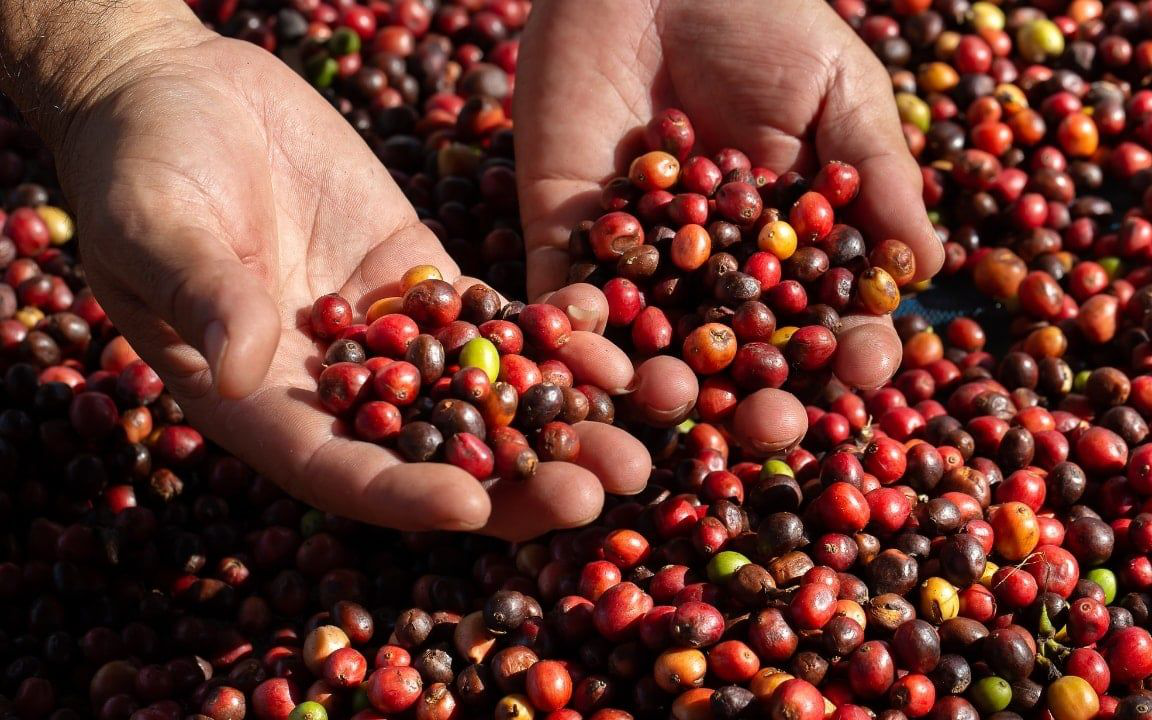
On September 17, 2025, Vietnam’s domestic coffee market witnessed a moderate price decline after a prolonged period of surging prices. According to the Ministry of Agriculture and Environment, Robusta coffee prices in key Central Highlands regions adjusted to around VND 120,000 – 121,500 per kg, a decrease of approximately VND 1,300 – 2,200 per kg compared to the previous session. Specifically, Lam Dong stabilized at VND 120,000 per kg, while Dak Lak and Gia Lai recorded similar figures.
Domestic coffee prices dipped slightly after a strong rally but remained significantly higher than multi-year averages. Exports continued to grow, yet rising costs and international market pressures are urging Vietnam’s coffee industry to prepare more meticulously for a new phase.
Despite the adjustment, current prices are still notably higher than those of previous years. Mr. Nguyen Nam Hai, Chairman of the Vietnam Coffee and Cocoa Association (VICOFA), attributed this to limited domestic and global Robusta supplies due to early-season droughts, coupled with stable demand from Europe, the U.S., and emerging markets. Additionally, high domestic transportation costs and profit-taking sentiments among farmers and traders have slowed the price decline.
The slight price drop is a technical correction following an extended rally, not a negative signal. It reflects a healthy market adjustment, influenced by rainfall in Brazil and improved global supply prospects.
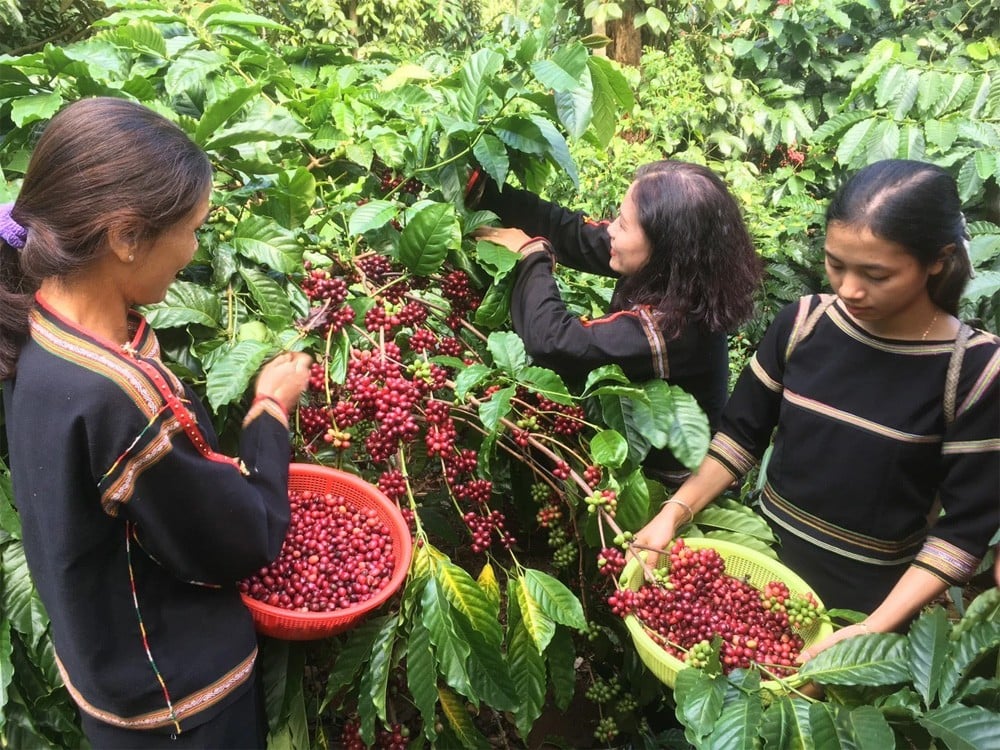
According to the Ministry of Agriculture and Environment, Vietnam’s coffee sector demonstrated impressive resilience in both production and exports during the first eight months of 2025. Despite localized droughts in the Central Highlands, sustainable farming practices and replanting efforts have significantly improved bean quality.
Exports Maintain Growth, Bolstering Long-Term Foundations
From January to August 2025, Vietnam’s coffee exports continued to thrive. Cumulative exports reached approximately 1.2 million tons, valued at USD 6.42 billion, marking substantial increases in both volume and value compared to the same period last year. Average export prices remained at historic highs, underscoring Vietnamese coffee’s global value.
In August alone, export volumes stabilized, though average prices plateaued at around USD 5,476 per ton, still higher than in August 2024. Germany, Italy, and Spain remained key markets, while emerging markets like Mexico showed significant growth potential.
On September 17, 2025, domestic coffee prices eased slightly but remained elevated, signaling undiminished demand. Exports continued to rise in both volume and value, highlighting Vietnam’s coffee industry’s resilience amid global competition.
Mr. Nguyen Van Phuc, owner of an export company in Dak Lak, shared: “High export values enable us to invest in advanced processing lines. However, rising logistics costs and stringent sustainability certifications are compelling us to restructure operations to meet stricter requirements from major markets like the EU and U.S.”
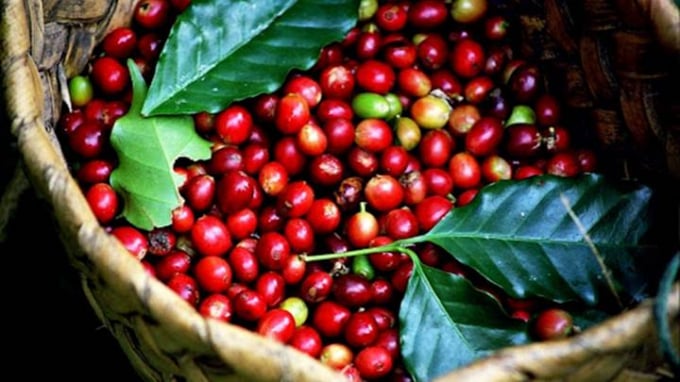
Companies must proactively meet increasingly stringent partner requirements.
Ms. Ha Thi Minh Nguyet, a coffee processor and exporter in Gia Lai, added: “Current high prices offer opportunities for long-term contracts but also heighten quality and traceability pressures. We must proactively enhance quality and traceability to meet our partners’ increasingly stringent demands.”
Addressing Challenges in a New Landscape
Experts warn that behind the record-breaking figures, Vietnam’s coffee industry faces significant challenges. Positive price and export signals do not guarantee a prolonged “golden era” without appropriate strategies. High input costs—from fertilizers and labor to logistics—continue to squeeze profit margins for farmers and businesses. Additionally, USD exchange rate fluctuations, weather in Brazil, and hedge fund activities make international markets sensitive to supply-demand dynamics.
Moreover, stringent environmental regulations, particularly the EU’s Deforestation Regulation (EUDR), require companies to invest more in raw material management, traceability technology, and production transparency. Failure to adapt could erode Vietnam’s competitive edge despite high prices.
According to VICOFA leaders, sustaining growth requires companies to proactively secure long-term contracts, utilize price hedging tools, and upgrade post-harvest technologies. More importantly, strengthening farmer-business linkages is essential to stabilize supply, enhance quality, and reduce intermediary costs.
From a business perspective, Ms. Nguyet emphasized that alongside corporate efforts, government support—such as reduced logistics costs, green credit, and trade promotion—is crucial. These measures will empower the coffee industry to adapt to international requirements and expand markets.
Additionally, Mr. Hai noted that VICOFA is organizing trade missions to the U.S. and Canada to promote Vietnamese coffee, which remains relatively unknown in these markets.
“Long-term prospects cannot rely solely on short-term high prices. The coffee industry needs a clear repositioning strategy: shifting from volume-driven to value-driven growth, aligned with sustainability. If farmers and businesses swiftly elevate quality standards, expand markets, and mitigate international risks, Vietnam’s coffee ‘golden era’ can not only endure but also advance further in the global supply chain,” Mr. Hai stressed.
According to VICOFA, the 2024/25 coffee crop is expected to decline slightly due to early-season droughts, though bean quality has improved. International forecasts suggest Robusta prices could remain high in Q4/2025 if demand stays strong and inventories do not recover significantly. Vietnam’s coffee industry is thus entering a “golden phase” amid considerable challenges. Thorough preparation, proactive risk management, and embracing sustainability are key to maintaining Vietnam’s global coffee leadership.