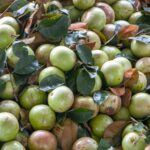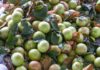
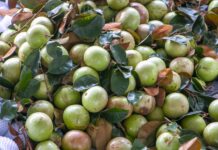













The fruit in question is the soursop.
Formerly, Hiep Loi Ward (formerly Nga Bay, Hau Giang, now Can Tho City) was an impoverished area. Thanks to the shift to cultivating soursop, many locals have transformed their lives, earning billions of Vietnamese dong annually.
From Rice Paddies to the “Green Gold”
Mr. Nguyen Huu Thanh, from Xeo Vong B Hamlet, Can Tho City, shared with Thanh Nien Newspaper that previously, villagers primarily grew rice or other crops, but the income was meager, just enough for daily sustenance. When the irrigation system was improved, residents switched to growing mandarin oranges. However, after a few years, the orchards were affected by disease, forcing them to be cleared. In this context, some households boldly experimented with growing soursop. The unexpected economic success quickly made this fruit the main crop in Hiep Loi.
According to local calculations, soursop yields ten times the profit of rice cultivation. This has encouraged many farmers to make the switch.
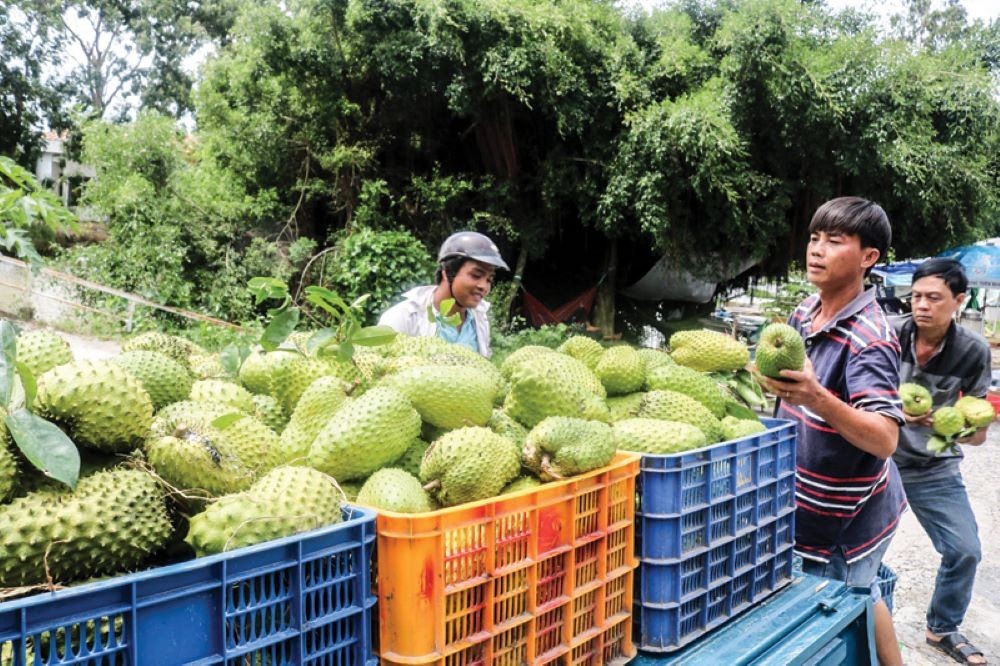
Soursop (illustrative image).
Like Mr. Thanh, many other farmers have also prospered thanks to soursop. Mr. Viet (Hamlet 2) shared that he is cultivating 4.5 hectares with over 3,000 trees. With a yield of 40–50 tons per hectare and a stable purchase price of around 25,000 VND/kg, each hectare generates over 1 billion VND.
Corporate Partnerships Open Export Doors
The economic impact of soursop has been further amplified by corporate involvement. Kim Nhien Agricultural Processing Co., Ltd. currently purchases soursop from about 50 hectares of local farms. Beyond domestic consumption, the company processes the fruit into soursop tea for export to demanding markets such as the United States and Laos. On average, the company exports approximately 5 tons of tea monthly, equivalent to 50 tons of fresh soursop.
Kim Nhien Agricultural Processing Co., Ltd. buys fresh soursop to produce tea, significantly increasing the fruit’s value. Notably, soursop tea has seen a price surge, reaching up to 100,000 VND/kg at times.
What began as an experimental replacement for mandarin oranges has now established soursop as a strategic crop, offering sustainable livelihoods and expanding export opportunities. In many rural areas, this fruit has truly become a “life-changing tree,” elevating farmers from hardship to prosperity and fostering long-term commitment to agriculture.
Vietnam is steadily establishing its presence on the global agricultural map with soursop. Beyond domestic consumption, this fruit is processed into tea, juice, dried products, and exported to markets like the U.S., Laos, Singapore, South Korea, and China. Its economic value, far surpassing that of rice, provides farmers with stable incomes. The growth of the soursop industry contributes to sustainable agricultural transformation and enhances the reputation of Vietnamese fruit.
17 Million Vietnamese Traders Handle $100 Billion in Crypto Transactions Abroad

With over 17 million Vietnamese actively trading cryptocurrencies—generating an estimated annual transaction volume exceeding $100 billion—the entire ecosystem operates exclusively on foreign exchanges. This underscores the urgent need to transition to a regulated domestic marketplace, ensuring tax compliance and seamless integration within Vietnam’s financial infrastructure.
Digital Finance: The Key to Driving Sustainable Consumption in Vietnam

Digital finance is poised to play a pivotal role in shaping sustainable consumer lifestyles, a trend gaining significant momentum worldwide.
Blockchain Businesses Unrestricted: No Legal Bans Confirmed, Says Attorney Phan Vu Tuan

Blockchain experts view the recent cautious response from businesses as a positive sign of their willingness to adapt to new regulations. However, timely communication and clear guidance from regulatory bodies are essential to ensure a smooth transition.
Eighty-Two-Year-Old Chairman and the Do Family: The Quiet Real Estate Empire Behind Billion-Dollar Wind Power Projects
Less known than industry giants, Tai Tam Group, a family-owned enterprise rooted in Hanoi’s rental real estate market, has quietly amassed a renewable energy portfolio with a registered investment capital exceeding 50 trillion VND.
Lego Partners with Kuehne+Nagel to Launch Regional Distribution Hub in Vietnam: A Major Boost for the Country’s Logistics Sector
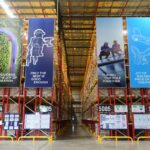
The newly established Regional Distribution Center, operated by Kuehne+Nagel, serves as the logistics hub for LEGO’s billion-dollar factory, marking a significant leap forward for Vietnam’s logistics industry.