











Illustrative Image
American soybean farmers are facing a crisis as China, their largest buyer, halts imports amid escalating trade tensions between the world’s two largest economies.
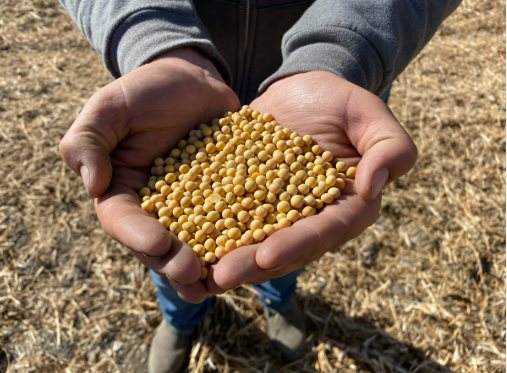
In North Dakota, where 90% of soybean production is exported, farmers like Brent Kohls are scrambling to store hundreds of acres of unsold soybeans. “It’s incredibly stressful,” Kohls said. “I’ve had to use corn silos to store the surplus soybeans.” Many other farmers have invested in additional grain bagging equipment or temporary storage solutions after infrastructure damage caused by storms.
China stopped purchasing U.S. soybeans in February, following the Trump administration’s imposition of new tariffs on Chinese goods. This marks the longest disruption ever, intensifying financial pressure on American farmers. The U.S. Department of Agriculture recently lowered its soybean export forecast to the lowest level since 2013, at 1.65 billion bushels.
According to official data, in 2024, the U.S. exported approximately $12.8 billion worth of soybeans to China, accounting for a quarter of total soybean export revenue. However, China is increasingly diversifying its supply sources, importing $36 billion worth of soybeans from Brazil last year, along with steady supplies from Argentina and Uruguay. “China’s soybean purchases from the U.S. depend on whether the U.S. lifts its tariffs,” said Johnny Xiang, founder of Agradar Consulting in Beijing.
Analysts suggest that Beijing’s freeze on orders reflects a long-term strategy to reduce dependence on the U.S. and test its resilience in potential food security crises. “China wants to ensure it can navigate such extreme scenarios,” said Even Pay, Director of Trivium China.
This situation prompted the American Soybean Association (ASA) to send an urgent letter to President Trump, warning that farmers are on the brink of trade and financial collapse. ASA Chairman Caleb Ragland emphasized, “American farmers cannot sustain a prolonged trade dispute with our largest customer.”
To mitigate risks, the U.S. industry is expanding markets in Europe, Asia, and Africa, while investing heavily in deep processing. In North Dakota, a new 50,000-ton crushing plant began operations in August 2024, reducing export reliance on China from 80% to approximately 50%. However, this scale remains insufficient to fill the void left by the Chinese market.
Amid rising production costs due to tariffs, falling soybean prices, and uncertain export prospects, many U.S. farmers fear long-term impacts, including declining land values and forced reductions in cultivated areas. “Right now, all we can do is hope and pray, but that’s not a sustainable business plan,” said Justin Sherlock, a farmer and Chairman of the North Dakota Soybean Growers Association.
Source: Nikkei
Mirae Asset: New US Levies Won’t Undermine Vietnam’s Textile Industry Edge
Mirae Asset maintains that the 20% countervailing duty imposed from August 7th will retain Vietnam’s competitive advantage. Despite potential increases in US demand in the latter half of the year, the country remains an appealing prospect.