


















On September 23rd, the National Competition Commission issued three decisions imposing penalties for unfair competition practices against three major gold trading companies: Saigon Jewelry Company (SJC), DOJI Group, and Bao Tin Minh Chau.
Each company was fined 200 million VND. The violations included providing misleading product information to attract customers from competitors. Additionally, they were required to publicly correct the misleading information on their websites.
The Commission noted that during the investigation, all parties actively cooperated by providing necessary information and documents. They also took steps to mitigate the consequences of their violations.
Previously, in May 2025, these three companies were also penalized by the State Bank of Vietnam for various violations, with fines ranging from 1.3 to 2.6 billion VND.
The State Bank identified serious breaches related to reporting and managing gold trading activities, including failure to report, incomplete reporting, or untimely reporting.

SJC, DOJI, and Bao Tin Minh Chau fined for unfair competition practices. (Image: DOJI)
Bao Tin Minh Chau was found to have provided misleading product information, potentially engaging in unfair competition. DOJI conducted unauthorized gold trading activities through platforms like https://egold.doji.vn and https://trangsuc.doji.vn, as well as the Egold app, violating regulations on gold trading and e-commerce.
Both DOJI and Bao Tin Minh Chau failed to disclose information regarding transportation processes, complaint resolution, and data privacy on their e-commerce platforms. Some companies also sold gold at prices higher than listed, violating price transparency rules.
All three companies were found to have serious violations of anti-money laundering regulations, including inadequate internal policies, failure to classify customers by risk, lack of periodic risk assessments, and non-compliance with reporting large transactions.
Additional violations included insufficient customer identification records, lack of clear internal controls, and failure to designate specific personnel for anti-money laundering efforts.
The administrative fines for anti-money laundering violations were as follows: SJC (2.14 billion VND), Bao Tin Minh Chau (2.64 billion VND), and DOJI (1.365 billion VND).
Phú Quý and Bảo Tín Minh Châu Issue Scam Alert on Facebook Fraud

Seizing on the public’s demand and psychological drive to purchase gold and silver, numerous individuals have fraudulently impersonated reputable precious metal businesses such as Bao Tin Minh Chau and Phu Quy. Their aim is to deceive and unlawfully appropriate customers’ assets.
“VBA Chair Phan Đức Trung: No More Than Three Crypto Exchanges Are Capable for the Pilot Phase”

“The President of the Vietnam Blockchain and Digital Asset Association emphasized the importance of qualified personnel and stringent security standards for the successful pilot operation of a digital currency exchange.”
Today, September 8: Gold Ring and SJC Gold Prices Drop Sharply
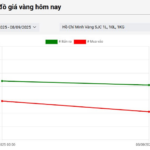
The relentless rally in gold prices has finally taken a breather, with gold rings and SJC gold witnessing a unanimous decline today.
“Former SJC Gold Company CEO Accused of Illicitly Producing Thousands of Taels of Gold Using External Raw Materials, Hoarding Stabilization Gold to Sell at Higher Prices”

The indictment by the Supreme People’s Procuracy revealed that Mrs. Hang and her accomplices caused a loss of over VND 107 billion to SJC Company. This includes a loss of VND 11.6 billion due to embezzlement and VND 95.8 billion due to violations. Mrs. Hang is accused of personally benefiting to the tune of VND 73.5 billion from these illicit activities.
“Curbing the “Brain Drain”: Reporting Requirements for International Money Transfers over $1,000”

The State Bank has proposed a mandatory report on international money transfers of $1,000 or more to tighten control over capital flows and prevent money laundering and illicit activities.