Most Support Services Are Provided by Foreign Entities
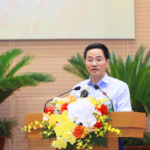
On September 29th, during a meeting of Committee II under the Private Economic Panorama model (ViPEL), Mr. Phạm Quốc Long, Deputy General Director of Gemadept, stated that Vietnam has immense potential in its seaports but has yet to fully capitalize on it.
Amid global supply chain disruptions due to geopolitical issues, Mr. Long believes this is the “ripe” moment to establish an international maritime hub in Ho Chi Minh City.
“In Southeast Asia, Vietnam’s port system ranks second in volume (29.9 million TEU) and first in growth rate (21%). Vietnam serves as a vital link in the India-Pacific Economic Corridor (IPEC), covering 13 out of 17 FTAs signed by Vietnam,” Mr. Long highlighted the advantages in the maritime sector.
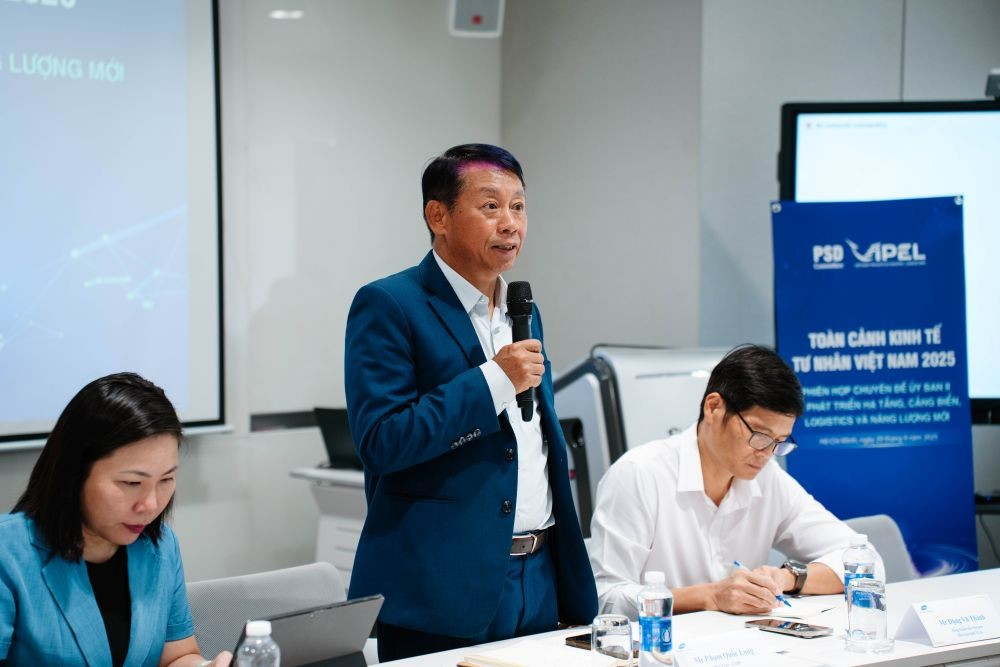
Mr. Phạm Quốc Long – Deputy General Director of Gemadept. Photo: Ban IV
Over time, Vietnam has emerged as one of the most dynamic container transport markets in the region, nearing the scale of leading ASEAN logistics hubs. However, Vietnam remains a logistics importer, with most support services provided by foreign entities. Additionally, Vietnam loses approximately $1 billion annually due to fragmented port systems and low handling fees.
Following the integration of Bà Rịa – Vũng Tàu and Bình Dương into Ho Chi Minh City, Mr. Long believes the opportunity for Ho Chi Minh City to become a global maritime hub is more evident than ever.
“By linking the maritime hub with a free trade zone (FTZ), an onshore financial and service center, we can become a crucial link in the global supply chain,” said the Deputy General Director of Gemadept.
To realize this vision, Mr. Long proposed the development of an international maritime center in Ho Chi Minh City with an investment of approximately $10 billion, through a public-private partnership. This includes $5 billion for port infrastructure, $4 billion for auxiliary infrastructure, and $1 billion for soft infrastructure.
Mr. Long estimated that, once fully operational, the center could create over 20,000 direct and indirect jobs, while enhancing competitiveness.
Unlocking Potential That the Dutch Envy
Furthermore, to establish Vietnam as a global maritime hub, Mr. Long suggested developing inland waterway transport, focusing on upgrading and expanding the Hà Nam Channel (Hai Phong) to accommodate larger vessels and reduce logistics costs. He also proposed raising the clearance of bridges such as Đồng Nai, Bình Triệu 1, and Bình Phước 1 to avoid restricting waterway traffic and enhance inland transport capacity.
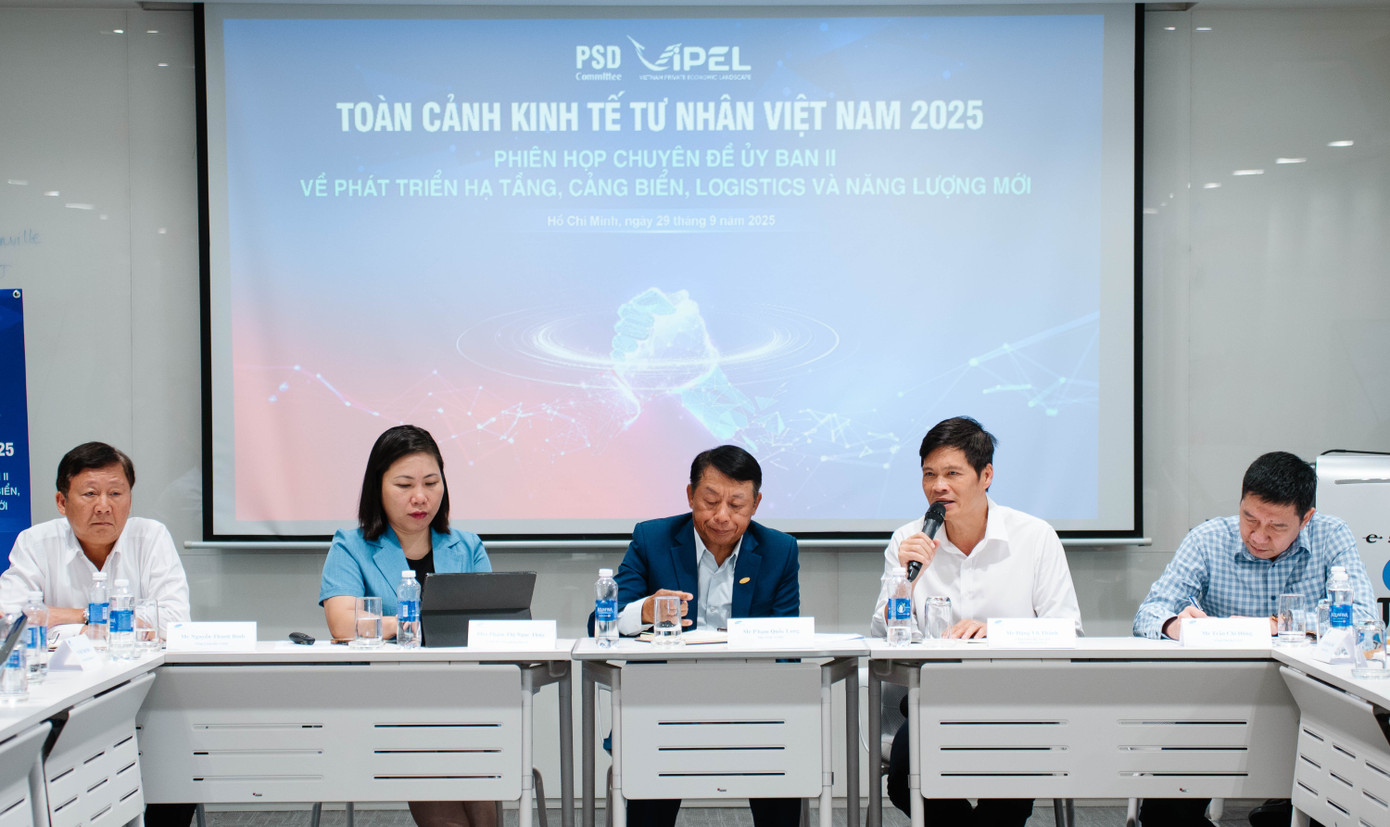
Mr. Đặng Vũ Thành – General Director of Southern Warehousing Corporation (Sotrans) – speaking at the meeting. Photo: Ban IV.
According to Mr. Long, the government needs to allocate approximately VND 6,480 billion in public investment and streamline administrative procedures. Private enterprises should commit to reducing logistics costs (cutting transport fees by 10%), improving service quality, and investing in new watercraft, barges, and ships.
“Dutch businesses and experts visiting Vietnam often remark that our canal system is their dream. Our inland waterway transport potential is immense, and we must leverage it to become a global maritime hub,” Mr. Long stated.
Mr. Đặng Vũ Thành, General Director of Southern Warehousing Corporation (Sotrans), expressed that “turning Vietnam into an international maritime hub is the dream of many in the industry.”
Echoing Mr. Long’s sentiments, Mr. Thành pointed out that the current bottleneck in inland waterway transport is the low clearance of bridges on rivers, which prevents larger vessels from operating.
He proposed improving the legal framework to enable businesses to effectively operate inland waterways. “Businesses are ready to participate, even investing in foreign consulting services, as long as there is a supportive mechanism,” said the General Director of Southern Warehousing Corporation.
“Female Leaders Share Strategies to Boost Private Economy: From Thai Huong’s Vision for Vietnamese Tea to PNJ Chairwoman Cao Thi Ngoc Dung’s Proposal for a Tourism-Lifestyle Ecosystem”

On September 28th, the 4th Committee on Resource Development and Services convened in Ho Chi Minh City. This meeting marks a pivotal step in ViPEL’s efforts to materialize the directives outlined in Resolution 68-NQ/TW, which focuses on private sector economic development. The initiative aims to transition from a “request-grant” mechanism to a “Public-Private Co-Nation Building” model, where businesses and the government collaboratively design strategies and execute them together.
Hanoi Pilots the Establishment of a Venture Capital Fund
The Hanoi Venture Capital Fund (HVCF) is a pioneering initiative established by the Hanoi People’s Committee, operating under a public-private partnership model through a business investment cooperation agreement. Unlike traditional entities, HVCF functions without legal personality, streamlining its operations to foster innovation and growth in the capital region.
Crafting Transparent BT Contract Policies: Addressing Shortcomings and Preventing Losses

The Government Office has issued Announcement No. 511/TB-VPCP dated September 25, 2025, outlining the conclusions of the Government Standing Committee regarding the draft Decree detailing the implementation of projects under the Build-Transfer contract model.
Unlocking the Path to Achieving an 8.5% GDP Growth Target
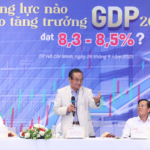
Unlocking ambitious growth targets in 2025 hinges on two pivotal strategies: implementing meaningful administrative reforms through seamless data integration and ramping up public investment in infrastructure to slash logistics costs, fostering long-term competitive advantages for businesses.
“Public and Private Sectors: United in Building the Nation’s Economy”
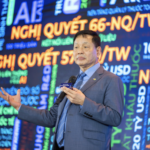
“Mr. Truong Gia Binh, Chairman of FPT Corporation and Head of the Private Economic Affairs Committee (Committee IV), emphasizes the need to foster a collaborative mechanism between the private sector and government agencies. He believes that by sharing responsibilities, the private sector can become the most important driving force for the economy, thus contributing to the realization of this ambitious goal.”