













Money Forward’s journalist interviewed Dr. Ngo Viet Nam Son, a renowned urban planning expert and architect, regarding the future development of Can Gio district.
Mr. Son, after the administrative boundary expansion, many believe Ho Chi Minh City’s maritime economic opportunities will significantly increase. What’s your perspective on this prospect?
Dr. Ngo Viet Nam Son: Previously, Can Gio Port was planned as an international transshipment hub. However, following HCMC’s boundary expansion, the opportunities extend beyond that. The Can Gio International Transshipment Port will collaborate with the Cai Mep – Thi Vai deep-water port. This collaboration is significant as the Cai Mep – Thi Vai – Can Gio port cluster will evolve into an international port complex, facilitating imports and exports for industrial zones across the region, including Binh Duong, Bien Hoa, Dong Nai, Nhon Trach, and Phu My.
Once operational, this system will unlock immense potential for HCMC’s maritime economy, positioning it as a leading logistics hub in Southeast Asia.
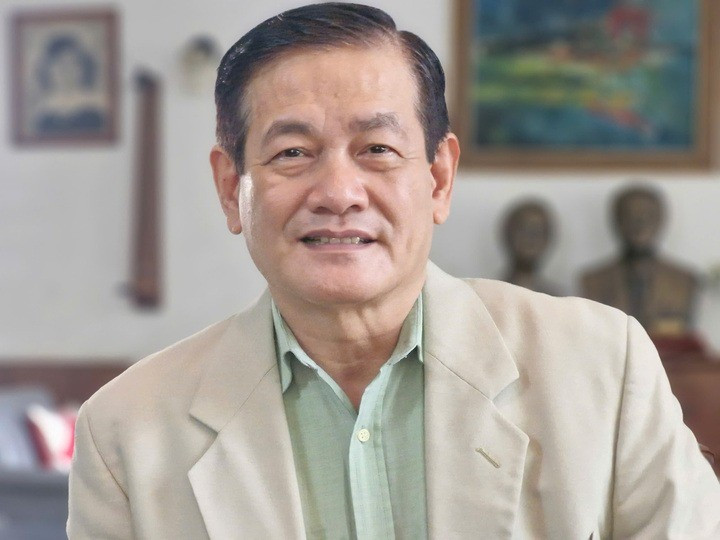
Dr. Ngo Viet Nam Son, Urban Planning Expert and Architect.
To maximize the port cluster’s potential, how crucial is regional infrastructure investment, in your opinion?
Dr. Ngo Viet Nam Son: With such a large-scale port cluster, the regional connectivity system must be upgraded accordingly. For instance, Ring Road 4 will be extended to the port area and a bridge connecting to Can Gio will be constructed.
This will be accompanied by the development of a multi-modal infrastructure network, including highways, railways, waterways, and airways, all interconnected. This foundation will enable comprehensive, efficient, and sustainable regional economic development.
Regarding Can Gio, HCMC’s emerging “sea-facing” urban area, how do you foresee its position evolving?
Dr. Ngo Viet Nam Son: Following HCMC’s boundary expansion, Can Gio is entering a new development phase with a significantly enhanced position. Plans are underway for a metro line from District 7 (old) to Can Gio, with potential for a second line in the future. Specifically, an inter-regional metro line from Thu Thiem to Long Thanh could be established, with branches to Binh Duong and Vung Tau, extending through Can Gio.
This will position Can Gio as a vital transportation hub, integrally linked to the entire economic region.
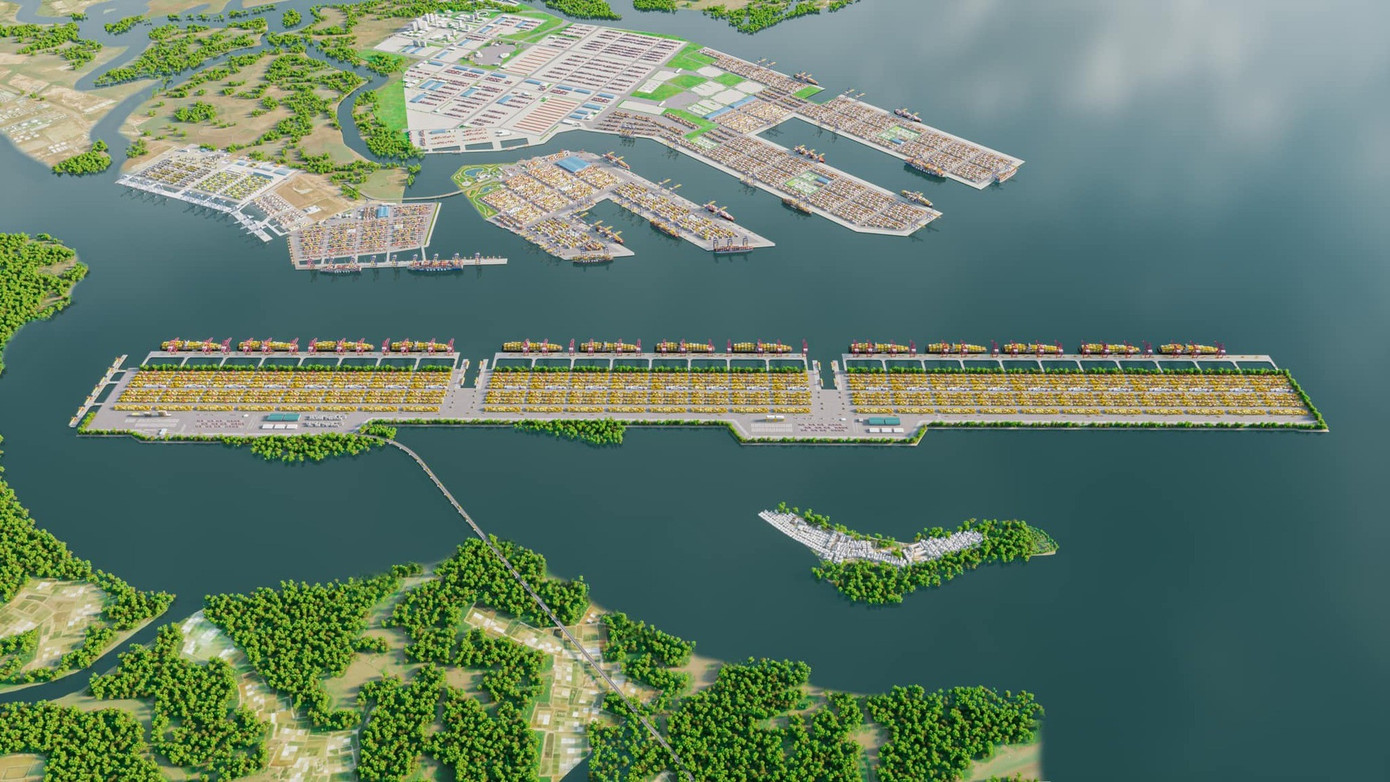
Rendering of Can Gio International Transshipment Port.
Regarding bridge infrastructure, particularly the bridge connecting Can Gio to Ba Ria – Vung Tau, what are your suggestions?
Dr. Ngo Viet Nam Son: I support constructing a bridge between these two localities, ideally positioned along the extended Ring Road 4, directly connecting to the port cluster and then to Can Gio.
This is the most feasible option, as it avoids excessive sea crossing and reduces construction costs, making it suitable for public investment. It will serve both port connectivity and urban integration between Ba Ria – Vung Tau and Can Gio. Additionally, a Transit-Oriented Development (TOD) model can be implemented to generate sustainable budget revenue.
Previously, Can Gio Port was planned solely as an international transshipment hub with complex supply routes. Now, the connection is simpler, requiring only a link to HCMC’s Ring Road 4. We no longer need extensive infrastructure investment for the port, as the necessary infrastructure already exists via Cat Lai.
If there’s future demand for a direct sea-crossing bridge connecting Can Gio’s reclaimed urban area to Vung Tau, this project should be prioritized for private investment due to its high cost and lower urban-economic efficiency compared to the Ring Road 4 option.
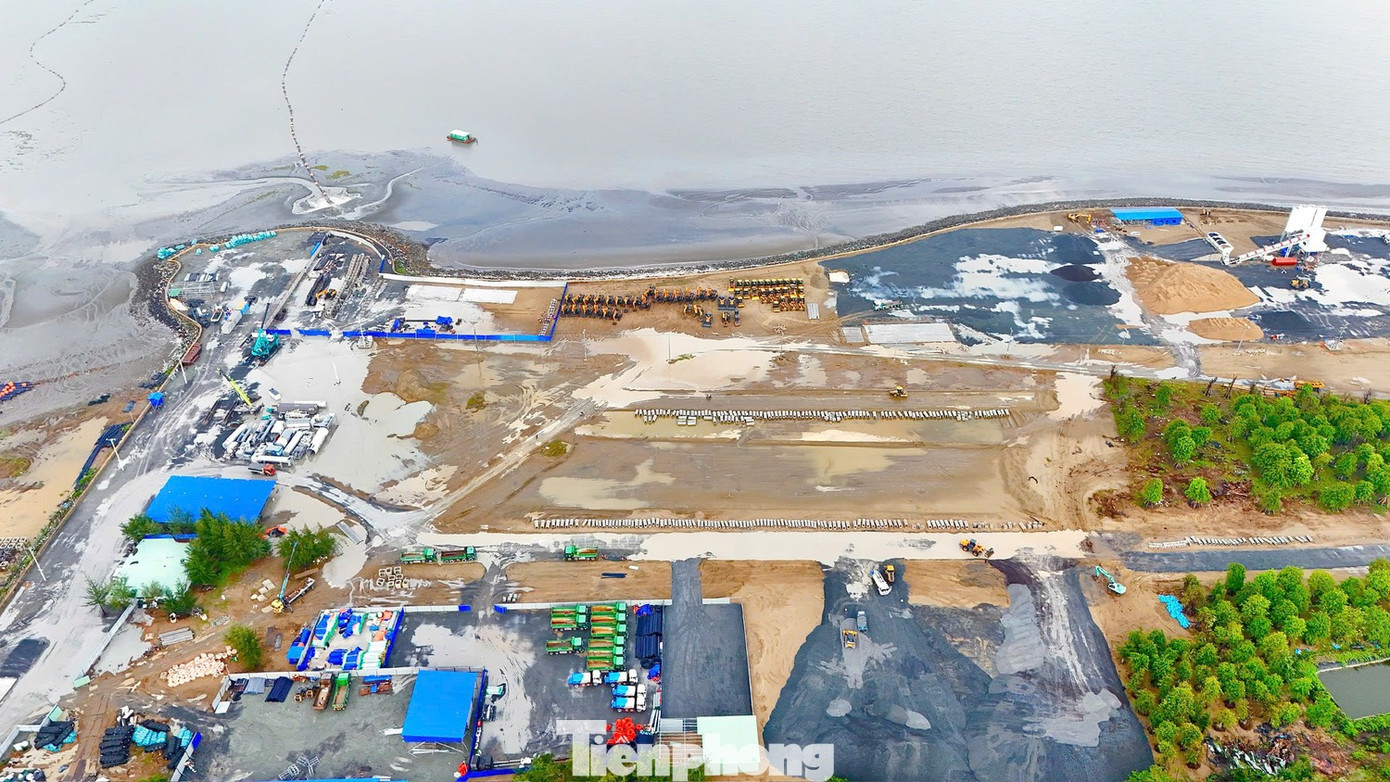
Can Gio is rapidly transforming.
With significant infrastructure investment, could Can Gio become a new regional sea tourism hub?
Dr. Ngo Viet Nam Son: Absolutely. Once the bridge from Ring Road 4 to Can Gio is completed, transportation will become much more convenient. This will enable the development of a coastal urban-tourism corridor stretching from Can Gio – Vung Tau – Long Hai – Ho Tram – Phan Thiet. In Can Gio, eco-tourism can be developed in conjunction with the biosphere reserve, while the reclaimed urban area can adopt a Dubai-inspired model.
In Vung Tau, Long Hai, and Ho Tram, the focus will be on high-end resorts and leisure developments, creating a seamless tourism chain.
With multi-modal infrastructure—highways, metro, and the Tan Son Nhat – Long Thanh airport—connected, southern coastal tourism will thrive. International and domestic tourists from HCMC can travel quickly and easily, boosting the service economy and creating local jobs. This will contribute to redistributing population and employment, reducing urbanization pressure in the city center. Once transportation infrastructure is fully connected, workers can choose to live and work in peripheral areas, from Binh Duong to Ba Ria – Vung Tau and Can Gio, fostering sustainable, expansive development.
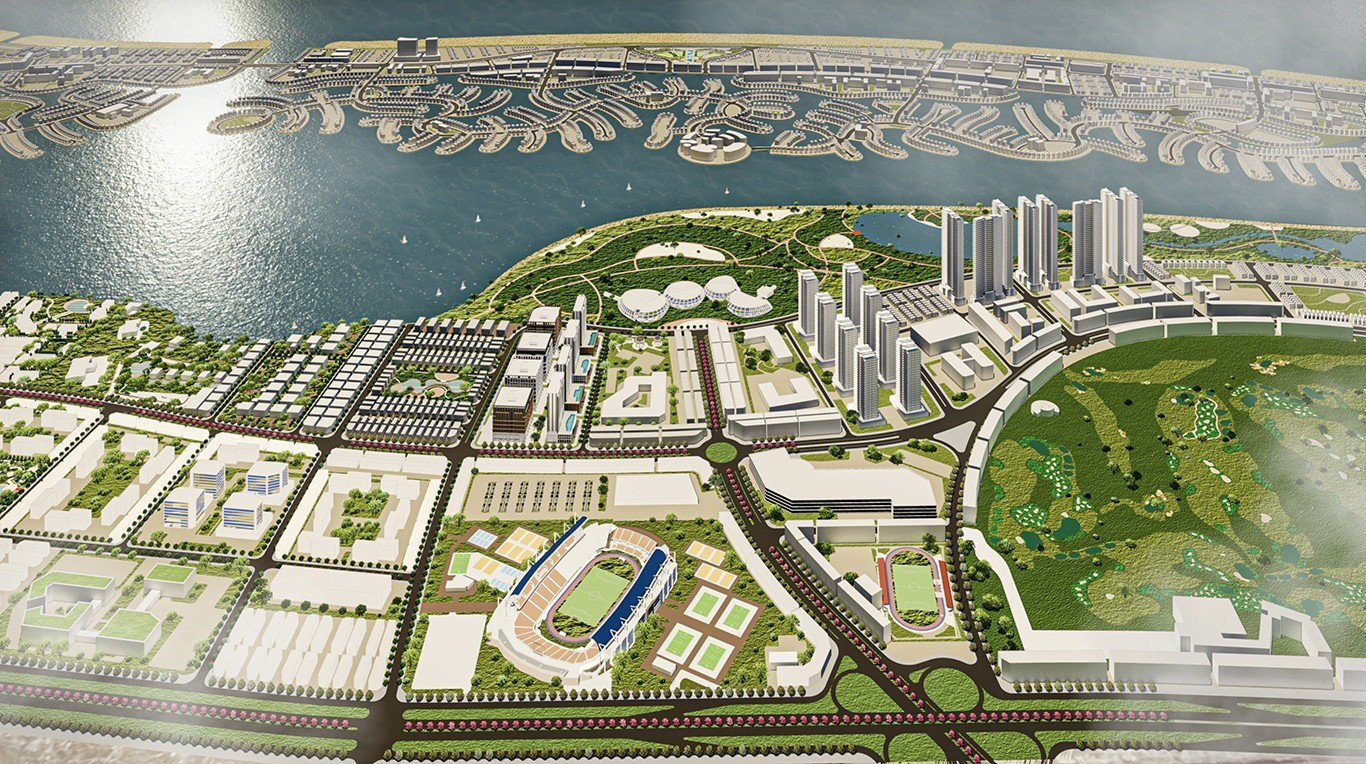
Rendering of Can Gio’s reclaimed urban tourism area.
In summary, how do you envision Can Gio’s future landscape?
Dr. Ngo Viet Nam Son: Previously, when discussing HCMC’s maritime economy, the focus was solely on Can Gio. Post-merger, HCMC’s coastline will expand into a continuous urban tourism strip from Can Gio – Vung Tau – Long Hai – Ho Tram.
Can Gio will no longer be isolated but will become a crucial link in this interconnected coastal urban-tourism chain. With seamless connectivity in transportation, ports, and urban development, residents, tourists, and investors will all benefit.
This strategic transformation will help HCMC achieve its double-digit growth aspirations.
Thank you, Mr. Son!
Vietnam’s Most Populous City to Launch $380 Million Overpass and Underpass Project, Aiming to Alleviate Eastern Gateway Congestion
Later this year, Ho Chi Minh City will commence construction on Phase 1 of the Ring Road 2 and the Binh Thai Interchange. Upon completion, this project will significantly enhance the Eastern region’s transportation network, alleviate traffic congestion, and bolster regional connectivity.
How Can We Stabilize and Control Rising Home Prices in Ho Chi Minh City?
Amidst the soaring property prices in Ho Chi Minh City, the solution to affordable housing may not solely lie in the price tag but in the strategic long-term planning and distribution of residential areas.
Billionaire Nguyen Thi Phuong Thao’s Conglomerate Officially Tasked with Developing Metro Line 4

After extensive collaboration with Ho Chi Minh City authorities, Sovico has been officially entrusted with the research and development of the Metro Line 4 project, connecting Dong Thanh to the Hiep Phuoc Urban Area.
Real Estate Experts Propose Solutions to Lower Housing Prices in Ho Chi Minh City
Housing prices in Ho Chi Minh City continue to soar, making the quest for affordable living a complex equation. The solution lies not solely in price tags, but in thoughtful urban planning and population decentralization strategies.
Ho Chi Minh City Prioritizes Businesses as the Core of Its Service Ecosystem
The city government is committed to standing alongside businesses, actively listening to their feedback, and implementing administrative reforms centered around serving their needs.