Ho Chi Minh City’s Chairman, Nguyen Van Duoc, along with a working delegation, conducted a field survey at the Cai Mep – Thi Vai seaport system in September 2025.
|
Ho Chi Minh City (HCMC) currently boasts four key industries: mechanical engineering, electronics – IT, chemicals – rubber – plastics, and food processing. These sectors account for 65-70% of the value in the manufacturing and processing industry.
Meanwhile, Binh Duong excels in wood processing, textiles, footwear, precision mechanics, and food – pharmaceuticals. Ba Ria – Vung Tau, on the other hand, specializes in heavy industry, chemicals, metallurgy, oil and gas, and energy.
The synergy among these localities post-merger enables HCMC to craft an industrial development strategy leveraging existing strengths and targeting high-tech, value-added sectors.
Building an Industrial-Service-Green Urban Ecosystem
Dr. Tran Du Lich suggests that the new HCMC should maximize the 50,000-hectare industrial belt linked to deep-water ports and international transport systems. This would deepen the city’s integration into the global supply chain. Developing the Can Gio international transshipment port and a synchronized logistics system, alongside free trade zones (FTZs), will establish a closed supply chain, enhancing competitiveness and global supply chain participation.
Pre-merger, HCMC had 26 industrial parks and export processing zones, totaling approximately 5,900 hectares. By 2030, this is planned to expand to 36 industrial parks covering over 8,300 hectares. However, many of these parks, established over 30 years ago, are small-scale, have outdated infrastructure, and are embedded in high-density residential areas.
Binh Duong, in contrast, possesses a large, well-planned industrial land reserve, aiming to expand to 25,000 hectares post-2030. Yet, it lacks seaports, airports, and a robust logistics system. Ba Ria – Vung Tau, while advantaged in seaports and heavy industries, faces land scarcity and infrastructure pressures.
According to Mr. Bui Minh Tri, Head of the HCMC Export Processing and Industrial Zones Authority (Hepza), the new HCMC, post-merger with Binh Duong and Ba Ria – Vung Tau, is at a strategic crossroads. It is poised to become a leading integrated industrial-logistics-seaport region in the area.
Currently, the new HCMC operates 66 export processing and industrial zones, the highest nationally. HCMC is emerging as a hub for services, finance, technology, and high-quality human resources. It serves as the production “heart” with modern industrial zones, complete infrastructure, and as the deep-sea gateway for the Southern region, excelling in logistics, energy, and heavy industry.
“When these three pillars are seamlessly connected via expressways, seaports, and logistics hubs, a complete production ecosystem will emerge—from research and manufacturing to production, storage, and export,” Mr. Tri emphasized.
Hepza’s leader noted that HCMC aims to transition from a “pure production zone” to an “industrial-service-green urban ecosystem.” This involves attracting high-tech industries, new materials, auto parts, electronics, and supporting industries. Special emphasis is placed on developing green infrastructure, renewable energy, and smart governance, aiming for a sustainable, resilient, and green industrial model.
Experts suggest HCMC should leverage the superior mechanisms and policies of Resolution 98/2023 to attract industrial development investments. The city should prioritize investment in technology-intensive, green production sectors, creating a strong ripple effect across the industrial and smart urban ecosystem.
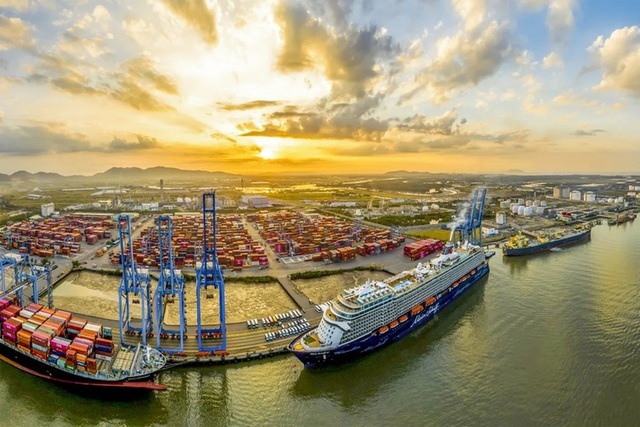
HCMC needs to maximize the industrial belt linked to seaports for regional outreach. |
Accelerating Infrastructure to Connect Regional Advantages
Architect Ngo Anh Vu, Director of the HCMC Urban Planning Institute, believes HCMC has vast development potential if it harnesses the synergies of the new merger model. Connecting the three regions via modern transport infrastructure and logistics supply chains will create a new economic powerhouse, competitive with regional megacities. This includes effectively leveraging the International Financial Center, the Cai Mep – Thi Vai – Can Gio port system, and industrial-service-logistics corridors.
A new-generation industrial belt is emerging. Key routes like National Highway 13, My Phuoc – Tan Van, HCMC – Long Thanh – Dau Giay Expressway, and projects such as Ring Road 3, Ring Road 4, Bien Hoa – Vung Tau Expressway, and HCMC – Moc Bai, once completed, will form vital transport corridors linking industrial zones to seaports and border gates.
To accelerate the above infrastructure and transport connectivity, Mr. Dang Tan Duc, Director of the Becamex Research and Development Institute, suggests that with limited public funds, the city should mobilize societal resources, especially private and foreign direct investment (FDI). A critical factor is an exceptional institutional framework providing a transparent, attractive, and stable environment for investors. Upgrading and supplementing Resolution 98/2023/QH15 on special mechanisms and policies for HCMC is essential for proactive capital mobilization and infrastructure development breakthroughs.
HCMC to Complete Ring Roads and Expressways in the Next Term
During the 2025-2030 term, HCMC will prioritize investing in and completing multiple ring roads, expressways, and railways, aiming to become a connected megacity.
According to the draft Document of the 1st HCMC Party Congress (2025-2030), HCMC will mobilize and effectively utilize all societal resources, especially public resources, to ensure public investment plays a leading role. Simultaneously, it will vigorously attract private, foreign, and international organizational investments through public-private partnerships (PPPs).
The goal is to swiftly complete infrastructure for functional sub-regions and development corridors, including: The East-West Corridor, serving seaports, airports, and international trade, connecting Thu Thiem to Long Thanh and Vung Tau. The North-South Corridor, focusing on creative production and logistics, linking Thu Duc with Di An, Ben Cat, and Bau Bang.
The Saigon River Corridor, developing tourism, ecology, and riverside urban areas from Dau Tieng Lake to the Dong Nai River. The Coastal Corridor, forming a logistics-tourism-seaport development chain from Can Gio to Ho Tram – Binh Chau.
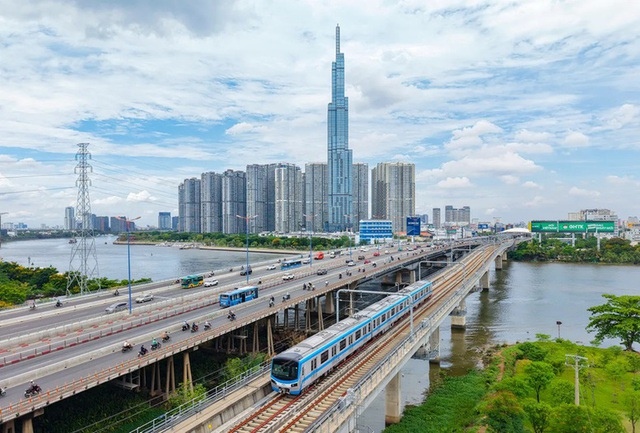
HCMC focuses on integrated, smart transport and digital infrastructure for synchronization and modernization. |
HCMC will prioritize developing an integrated, smart transport network, connecting regions and inter-regions. This includes urban rail systems, inter-regional specialized railways, and expressways linking urban centers, industrial zones, seaports, airports, and financial hubs.
The city aims to expedite investment, upgrade, expand, and operationalize key transport routes like Ring Road 2, Ring Road 3, and Ring Road 4. These three ring roads, totaling over 360 km, will encircle the city, reducing inner-city congestion and enhancing regional connectivity.
HCMC will also accelerate the completion of expressways such as the 57 km Ben Luc – Long Thanh Expressway (VND 29.5 trillion), the 51 km HCMC – Moc Bai Expressway (VND 19.6 trillion), the 57 km HCMC – Thu Dau Mot – Chon Thanh Expressway (VND 20 trillion), and the 42 km Long Thanh – Ho Tram Expressway (VND 20 trillion).
Additionally, a freight railway connecting the Cai Mep – Thi Vai port to Binh Duong’s industrial zone is planned. The Bau Bang – Cai Mep railway, 127 km long with an investment of nearly VND 153 trillion, will operate at 160 km/h for passenger trains and 120 km/h for freight trains. This line is expected to directly link former Binh Duong industrial zones and Dong Nai to the Cai Mep – Thi Vai deep-sea port cluster, enhancing maritime transport advantages. The city will also invest in coastal roads and waterway transport to meet cargo, passenger, and tourism demands.
Le Anh
– 06:57 13/10/2025
Vietnam’s Largest Province Secures Nearly VND 35,000 Billion in Investment Capital Today
The People’s Committee of Lam Dong Province has granted Investment Registration Certificates and Investment Policy Approval Decisions to nine projects, with a combined investment capital of nearly VND 35,000 billion.
FIATA World Congress 2025: Strengthening Supply Chain Resilience in the Face of Global Uncertainty
At Session 4 of the FIATA World Congress 2025, delegates shared innovative solutions to enhance the adaptability and resilience of supply chains in the face of global disruptions.
Văn Phú Expands Development into Southern Market
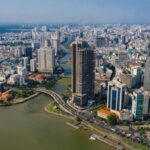
The Southern real estate market, centered around the emerging Ho Chi Minh City, is witnessing a significant investment surge from leading property developers. This wave is marked by a series of large-scale projects poised to transform the urban landscape entirely. This trend aligns with a strategic vision focused on critical transportation and infrastructure hubs within the city, aiming to redefine traffic flow and commercial dynamics across the entire Southern Key Economic Region.
Saigon Centre Secures Ho Chi Minh City’s Approval for Phase 3 Investment After Three Decades of Inactivity
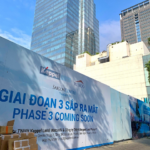
Nestled in the heart of Ho Chi Minh City’s most vibrant intersection, Saigon Centre Phase 3 occupies a prime “diamond-grade” location. After over three decades of inactivity, this landmark project has recently been awarded an amended investment certificate, marking a significant milestone in its development.
Does Changing Your Health Insurance Registration Location Incur a Fee?

Under current regulations, the Social Insurance Agency handles the issuance, replacement, and adjustment of health insurance cards, free of charge for participants.