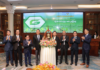


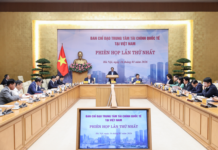






On the afternoon of October 12th, the 1st Congress of the Government Party Committee for the 2025-2030 term discussed draft documents for the Congress and draft documents to be submitted to the 14th National Party Congress.
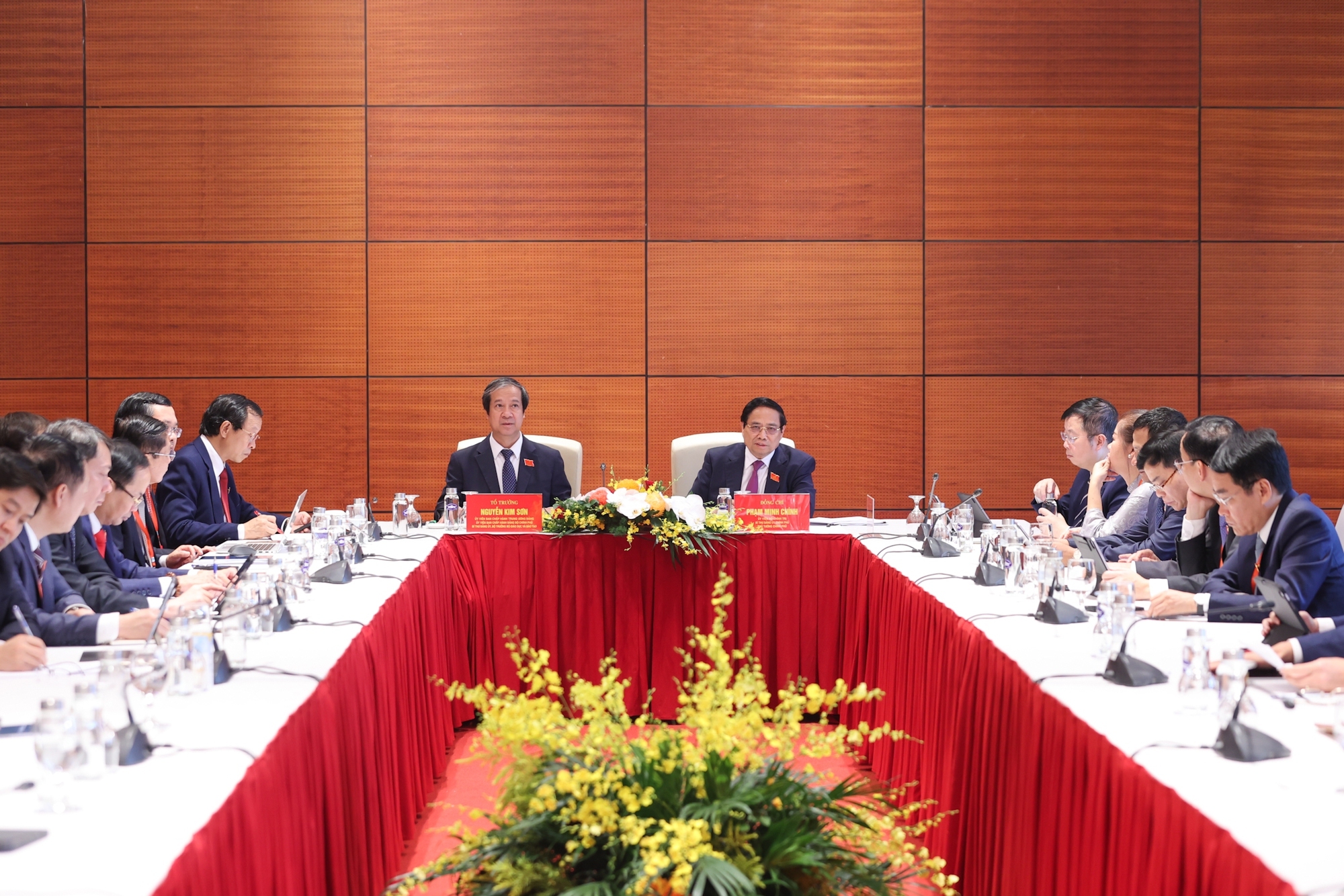
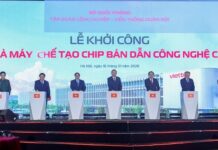
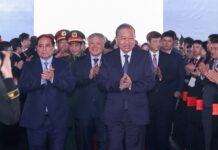
Prime Minister Pham Minh Chinh chaired the group discussion on draft documents for the 14th National Party Congress. (Photo: VGP)
According to the report on the socio-economic development results for the 2020-2025 period, despite numerous challenges and unprecedented issues, thanks to the efforts of the entire political system and the people under the Party’s leadership, Vietnam is expected to achieve and exceed 22 out of 26 key socio-economic targets for the 2021-2025 period. This includes completing all social targets, with 2024-2025 achieving and surpassing all 15 key socio-economic targets.
Vietnam’s GDP increased from $346 billion in 2020, ranking 37th globally, to $510 billion in 2025, ranking 32nd globally and 4th in ASEAN. Per capita GDP increased 1.4 times, from $3,552 to approximately $5,000, entering the upper-middle-income group.
Macroeconomic stability was maintained, with inflation controlled at around 4% annually. State budget revenue for 2021-2025 is estimated at 9.6 trillion VND, 1.36 times higher than the 2016-2020 period and exceeding the target of 8.3 trillion VND. Total tax, fee, and land rent exemptions and reductions amounted to approximately 1.1 trillion VND. Total additional revenue and budget savings reached about 1.57 trillion VND.
The report highlights that by the end of 2025, 3,245 km of expressways (exceeding the target of 3,000 km) and 1,711 km of coastal roads (exceeding the target of 1,700 km as per the 13th Party Congress Resolution) will be completed. Phase 1 of Long Thanh International Airport is nearing completion, and efforts are being made to commence the Lao Cai – Hanoi – Hai Phong railway line.
Average worker income increased from 5.5 million VND/month in 2020 to 8.4 million VND/month in 2025. The proportion of agricultural labor decreased from 33.1% in 2020 to approximately 25.8% in 2025. The share of labor in industry, construction, and services increased from 66.9% to 74.2%, and the proportion of trained workers rose from 64.5% to 70%.
Nationwide, 633,000 social housing units are under construction, with 100,000 units expected to be completed in 2025. The proportion of trained workers increased from 64.5% in 2020 to 70% in 2025. Vietnam’s happiness index rose 37 places, from 83rd in 2020 to 46th in 2025. Vietnam’s Global Innovation Index ranked 44th out of 139 countries and territories in 2025.
Regarding organizational restructuring, the two-tier local government model has been implemented. Post-restructuring, the Government’s apparatus was streamlined, reducing 8 ministries, ministry-level agencies, and Government agencies to 14 ministries and 3 ministry-level agencies (a 32% reduction). The number of provincial administrative units decreased from 63 to 34, district-level units ceased operations, and commune-level units reduced from 10,035 to 3,321 (a 67% reduction).
The total number of public administrative staff decreased by 145,000, and regular expenditures were reduced by 39 trillion VND annually.
During the 2020-2025 period, the Government developed and submitted to the Politburo for approval a plan to address 5 weak banks, 12 delayed and inefficient projects, and long-standing projects causing resource wastage.
Agencies and localities are reviewing and proposing solutions to remove obstacles for nearly 3,000 projects with a total capital of nearly 5.9 trillion VND (approximately $235 billion) and a total land area of about 347,000 hectares.
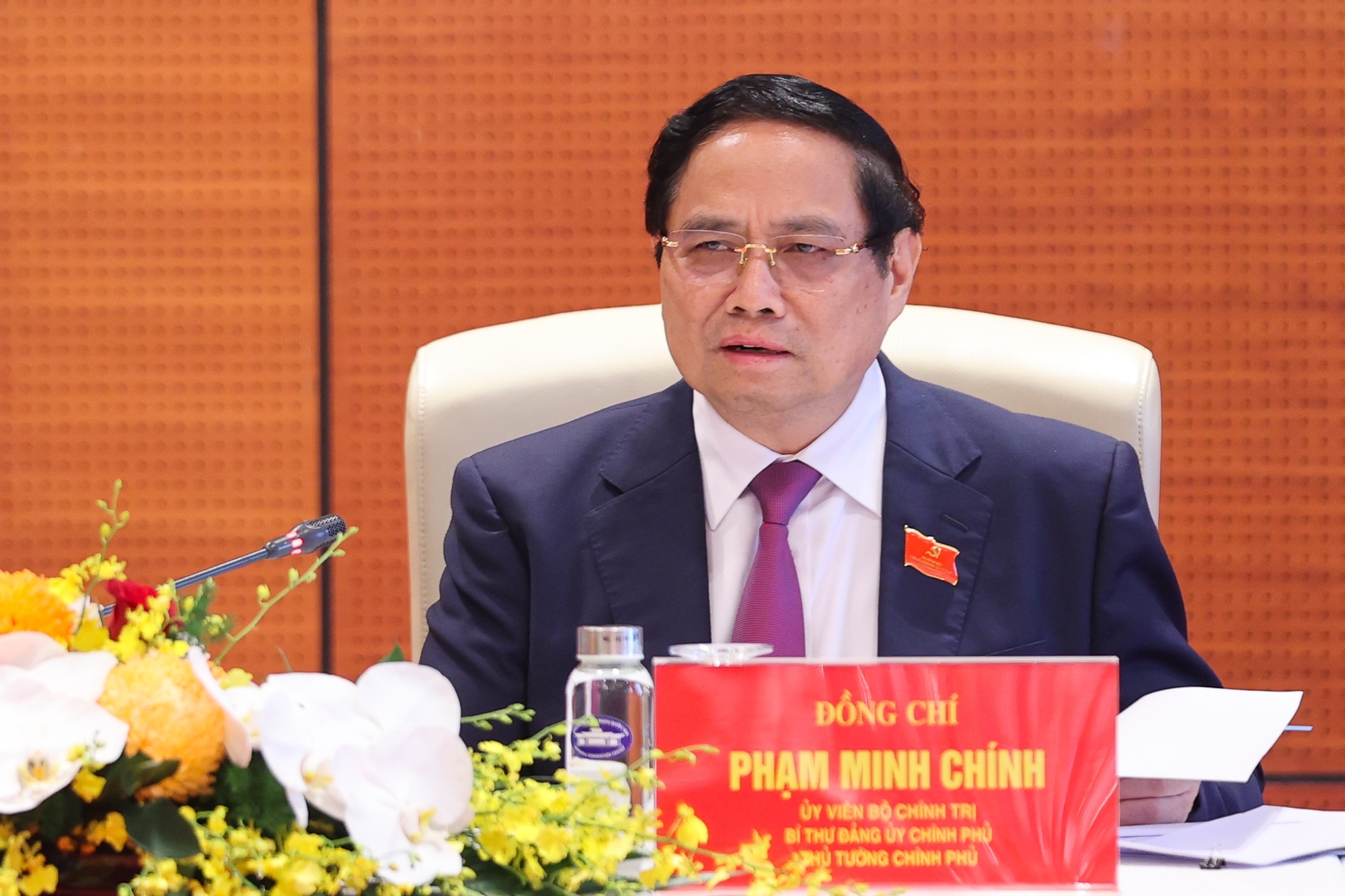
Prime Minister Pham Minh Chinh. (Photo: VGP)
Speaking at the group discussion, Prime Minister Pham Minh Chinh emphasized that the draft documents for the 14th National Party Congress feature many new points, focusing on brevity, substance, and actionable, effective, and feasible measures.
The Prime Minister stressed that without continued innovation, development is impossible. “To venture into the vast ocean, delve deep into the earth, and soar into space, we must innovate and break through more boldly,” he said, highlighting science, technology, innovation, and digital transformation as the foundation for development.
“We must adopt a developmental mindset, methodology, and approach to solve practical problems,” the Prime Minister stated.
Recalling the slogan “Innovate or Perish” from the 6th Party Congress, he emphasized the need to surpass ourselves and our limitations to achieve innovation and development.
The Prime Minister called on delegates to provide coherent and feasible input on the documents to ensure continued strong innovation and breakthrough development, particularly in resource allocation and mobilization mechanisms. He recalled President Ho Chi Minh’s scientific and effective resource mobilization methods during the nation’s early days.
Delving deeper into resource mobilization, the Prime Minister emphasized removing institutional barriers to unlock and leverage resources, transforming bottlenecks into national competitive advantages.
He highlighted impressive figures from this term, including 1.57 trillion VND in additional revenue and budget savings, 1.1 trillion VND in social welfare spending, public debt reduction from 44.3% of GDP in 2020 to approximately 35% in 2025, and total social investment of 17.3 trillion VND (33.2% of GDP), with public investment reaching 3.4 trillion VND, a 55% increase from 2016-2020.
The Prime Minister noted that while FDI attraction is a bright spot, domestic resources remain vast. He stressed the importance of mobilizing total social investment through synchronized measures, such as removing institutional barriers, developing financial and stock markets, and establishing international financial and free trade centers.
“Mechanisms must be flexible to facilitate investors while safeguarding national independence, sovereignty, and territorial integrity,” he cautioned.
Another key measure mentioned was allowing private enterprises to invest in large infrastructure projects, such as international sports facilities capable of hosting the Olympics or international airports, which they can complete faster, more modernly, and cost-effectively without using state budget funds.
Unleashing a New Wave: Domestic Consumption and Market Upgrades Drive Momentum

The consumer and retail stock sector is entering its most anticipated phase in years, fueled by a convergence of robust corporate growth and positive international capital flows. A resurgence in domestic purchasing power, coupled with the expansion of modern retail channels, is driving significant profit improvements for leading companies in the third quarter of 2025.
The Ride-Hailing Battle in Vietnam: Who’s Cheaper and Faster – Xanh SM or Grab?
A recent Q&Me report reveals that Grab continues to dominate in popularity and response speed. Meanwhile, Xanh SM is rapidly gaining traction, thanks to its lower prices and faster pickup times, particularly in Hanoi.
Launch of the Low-Altitude Economy Alliance (LAE): Aiming to Create 1 Million Jobs and Generate Billions of USD for Vietnam

The LAE Alliance was established with a visionary goal: to position Vietnam as a regional leader in the low-altitude economy, ultimately transforming it into the global hub for this innovative sector.
FPT Partners with Vina Capital to Transform Vietnam into a Drone Hub
Meet the visionary leaders steering innovation forward: Mr. Nguyễn Văn Khoa, CEO of FPT, serves as Chairman of the Alliance. Alongside him, Ms. Nguyễn Hoài Thu, CEO of Vina Capital’s Investment Division, and Mr. Trần Anh Tuấn, Vice Chairman and CEO of the Vietnam UAV Network, stand as Vice Chairmen, driving transformative initiatives with unparalleled expertise and foresight.
FBA Season 5: Contestants Shine as Financial Analysts, Organizers Excel as Professional Event Managers

“Phạm Hải Âu, Director of Risk Management at NCB Bank and former Risk Consulting Director at PwC, recently shared his praise for the students attending the Future Business Analyst Season 5 (FBA S5) Gala Night, themed ‘The Last Alpinist.’”