What Insights Can We Gain from the Ho Chi Minh City Real Estate Market in Recent Times?
The Southern real estate market, particularly in Ho Chi Minh City (formerly known as HCMC) and the newly merged regions of Binh Duong and Ba Ria – Vung Tau, has been consistently attracting investment capital from the North for nearly a year.
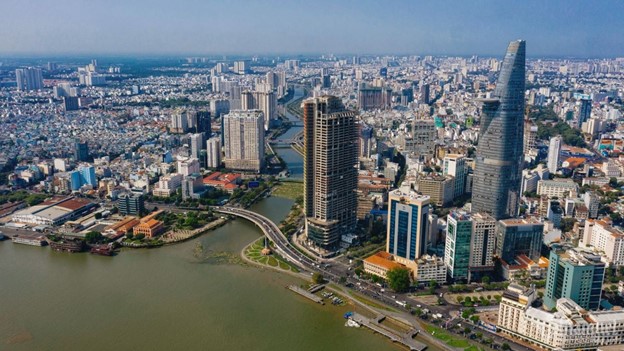 The Ho Chi Minh City real estate market remains a magnet for investors
|
According to Savills Vietnam, recent project launches in Ho Chi Minh City, Tay Ninh, and Dong Nai have recorded a successful transaction rate of over 20% from Northern investors, doubling the figures from previous years.
Commenting on this trend, Mrs. Nguyen Thi Mien, Vice Director of the Vietnam Real Estate Research Institute, stated that the sharp increase in real estate prices in the North during 2023–2024 and the limited new supply are driving investors toward areas like the new Ho Chi Minh City, which includes the former HCMC, Binh Duong, and Ba Ria – Vung Tau. These areas boast large land reserves, gradually improving transportation infrastructure, and flexible legal policies.
In terms of infrastructure, the Ho Chi Minh City government’s commitment to reshaping key development zones such as the Eastern, Southern, Northwestern, and Western districts is opening up new avenues for growth.
Specifically, the Ring Road 3 project in Ho Chi Minh City, expected to be completed by Q2/2026, will directly connect the Southern district with Dong Nai, Binh Duong, and Long An (former), enhancing trade, industrial, and logistics capabilities.
Additionally, the Ben Luc – Long Thanh Expressway is being expedited for completion between 2025–2026. Once operational, it will significantly reduce travel time from Nha Be and Binh Chanh to Dong Nai and Ba Ria – Vung Tau (former).
Furthermore, Metro Line 4 (Thanh Xuan – Hiep Phuoc) is planned to traverse major roads like Pasteur, Nguyen Thai Hoc, and Nguyen Huu Tho, linking the Southern district of former HCMC with the city center and northern areas.
Given this context, Mrs. Mien believes that Northern investors, experienced in capitalizing on emerging infrastructure developments, are keen on purchasing real estate in suburban or peri-central areas, especially in projects with high price appreciation potential.
Among these, apartment units, despite lower profit margins, remain popular due to their abundant supply and diverse pricing, making them a preferred choice in a market with limited investment options.
Moreover, the continuous launch of new projects by reputable developers like Van Phu Real Estate Development JSC in Ho Chi Minh City is transforming the urban landscape of Southern HCMC (former) and instilling confidence among investors.
Mr. Vo Huynh Tuan Kiet, Director of the Residential Marketing Department at CBRE Vietnam, noted that the demand for housing is immense, coupled with a steady influx of migrants into Ho Chi Minh City. Therefore, residential development is an imperative challenge to address.
The administrative boundary merger, which expands the land fund, also creates a strong synergy.
“Resolving the land fund issue will unlock new opportunities for businesses. Previously, most projects faced legal hurdles, delaying implementation. However, with expanded land funds and relaxed legal constraints, developers will have more location options, facilitating the emergence of new projects,” Mr. Kiet emphasized.
Van Phu’s Strategic Move
As part of its 2023-2032 strategy announced in 2023, coinciding with the government’s efforts to resolve legal issues for projects, Van Phu has focused on researching investments for four key projects during 2025-2030. These include: Nha Be (located on Le Van Luong – Nguyen Huu Tho Road, Nha Be Commune, Ho Chi Minh City) with an area of approximately 30 hectares and a total investment of around VND 5,000 billion; Tan Kien (former Binh Chanh District – situated at the intersection of National Highway 1A – Vo Van Kiet Avenue, Tan Nhut Commune, Ho Chi Minh City) with an area of 9.2 hectares and a total investment of approximately VND 12,000 billion; Vung Tau (located in Phuoc Thang Ward, Ho Chi Minh City) with an area of 42.4 hectares and a total investment of around VND 15,000 billion; and the Nhon Trach Eco-Urban Area project in Dong Nai with an area of 120 hectares and a total investment of approximately VND 20,000 billion. All are strategically located.
Additionally, the BT Saigon project, involving the construction of a road segment connecting Pham Van Dong Street to the Go Dua – National Highway 1 intersection in Thu Duc (former), undertaken by Van Phu’s subsidiary Bac Ai, has officially resolved its legal obstacles. This opens up opportunities to leverage counter-land funds in central Ho Chi Minh City, such as the 132 Dao Duy Tu plot (former District 10) with an area of nearly 11,000 m²; the 582 Kinh Duong Vuong plot (former Binh Tan District) with an area of 12,000 m²; the 129 Le Van Duyet plot (former Binh Thanh District) with an area of over 7,000 m²; and the 234 Ly Tu Trong plot (former District 1) and Ky Dong (District 3), expected to be allocated in 2025 and 2026.
Alongside upcoming projects, the company has completed M&A procedures for a 9,000 m² project in Phu Nhuan Ward (former District 7) in Q1/2025 and is currently under construction. The project, featuring two 30-story towers with 602 apartments and 136 commercial units, will be launched in Q1/2026.
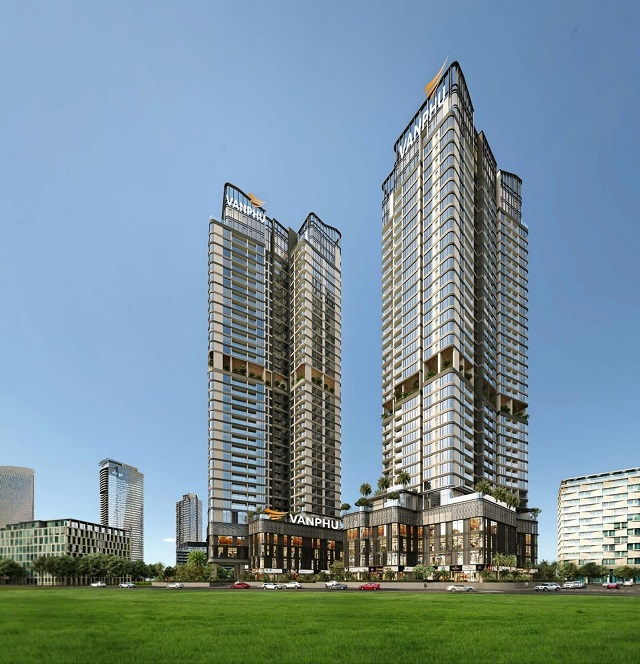
Rendering of the project in Phu Nhuan Ward (former District 7) developed by Van Phu
|
Thanks to its prime location in the Southern area of former HCMC – a region undergoing rapid transformation due to numerous inter-regional transportation projects – and its advantage as one of the few projects offering products in the city by 2026, this development is expected to attract significant interest from both end-users and investors.

Rendering of the apartment project in Phu Nhuan Ward, Ho Chi Minh City
|
Guided by the philosophy of “human-centric living” – prioritizing safety and sustainability in living spaces – Van Phu’s projects in Ho Chi Minh City aim to create truly livable environments that fulfill the happiness aspirations of every family. The company’s expert team seamlessly integrates natural elements into each living space, striving for balance and harmony in feng shui, ensuring a peaceful life for every resident.
This approach empowers the company’s leadership to confidently expand its market share in the key market of Ho Chi Minh City, offering a unique and sustainable approach compared to other players, especially in the Southern market.
Services
– 13:35 13/10/2025
Saigon Centre Secures Ho Chi Minh City’s Approval for Phase 3 Investment After Three Decades of Inactivity
Nestled in the heart of Ho Chi Minh City’s most vibrant intersection, Saigon Centre Phase 3 occupies a prime “diamond-grade” location. After over three decades of inactivity, this landmark project has recently been awarded an amended investment certificate, marking a significant milestone in its development.
Văn Phú Expands Development into Southern Market
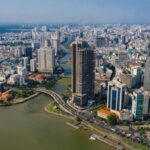
The Southern real estate market, centered around the emerging Ho Chi Minh City, is witnessing a significant investment surge from leading property developers. This wave is marked by a series of large-scale projects poised to transform the urban landscape entirely. This trend aligns with a strategic vision focused on critical transportation and infrastructure hubs within the city, aiming to redefine traffic flow and commercial dynamics across the entire Southern Key Economic Region.
Does Changing Your Health Insurance Registration Location Incur a Fee?

Under current regulations, the Social Insurance Agency handles the issuance, replacement, and adjustment of health insurance cards, free of charge for participants.
Cần Giờ No Longer Stands Alone

Experts believe that following Ho Chi Minh City’s administrative boundary expansion, Can Gio is entering a new phase of development with a significantly enhanced status compared to before. When integrated into the city’s overall development plan, Can Gio will emerge as a crucial link in the interconnected urban-coastal tourism chain, which includes Can Gio – Vung Tau – Long Hai – Ho Tram.
Vietnam’s Most Populous City to Launch $380 Million Overpass and Underpass Project, Aiming to Alleviate Eastern Gateway Congestion

Later this year, Ho Chi Minh City will commence construction on Phase 1 of the Ring Road 2 and the Binh Thai Interchange. Upon completion, this project will significantly enhance the Eastern region’s transportation network, alleviate traffic congestion, and bolster regional connectivity.