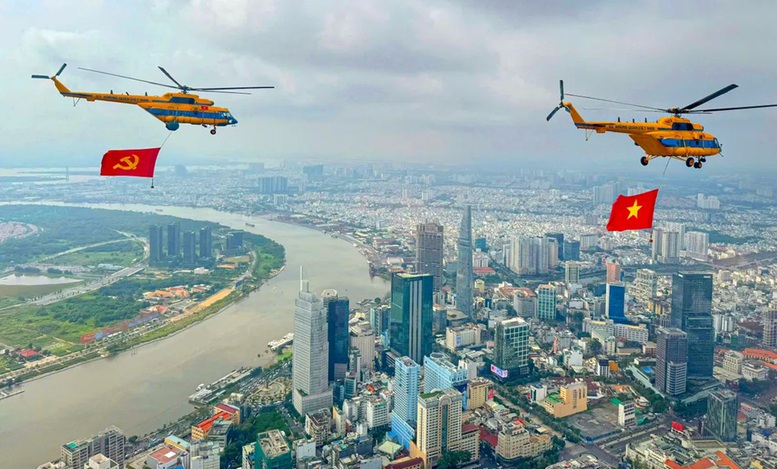
Once known as the “Pearl of the Orient” in the 20th century, Ho Chi Minh City is now stepping into the 21st century with the ambition to become a global metropolis.
From the “Pearl of the Orient” of the 20th century, Ho Chi Minh City is entering the 21st century with the ambition to become a global metropolis—a hub for capital, people, knowledge, and creativity. This transformation not only changes the city’s appearance but also demands a fundamental shift in governance and its role in national development. This congress, therefore, is not just about a five-year term but about shaping a long-term vision for a global metropolis that leads the nation’s transformation.
The city must answer three core questions: Where will Ho Chi Minh City stand on Asia’s economic map? How can it grow rapidly while remaining sustainable and humane? And how can every citizen feel happy and proud to live, work, and contribute here? The scale of this congress transcends local boundaries. It measures the city’s creative capacity, tests the strategic thinking of its new leadership, and crystallizes the intelligence, resilience, and aspirations of its 14 million people, who together continue to write the story of Vietnam’s most dynamic city.
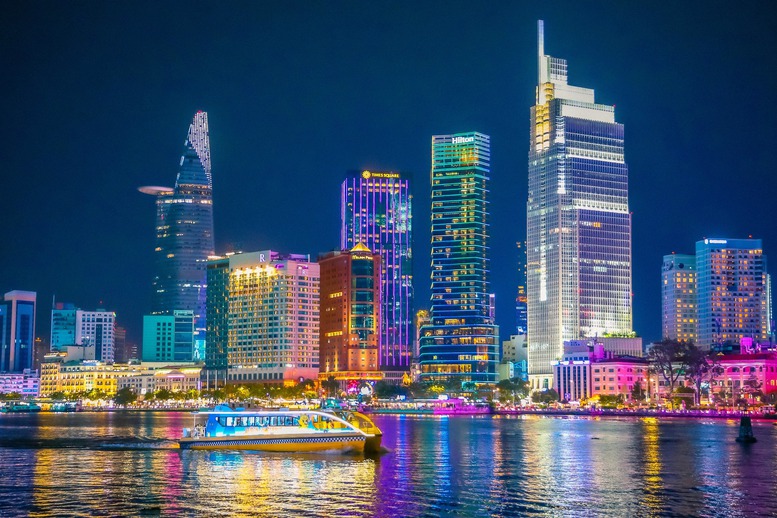
Ho Chi Minh City—a city of great aspirations—once again stands at a moment of self-renewal, to live up to its role as the nation’s leader and a symbol of Vietnam’s relentless spirit.
THE VISION AND MISSION OF HO CHI MINH CITY IN THE NEW ERA
Ho Chi Minh City—a city of great aspirations—once again stands at a moment of self-renewal, to live up to its role as the nation’s leader and a symbol of Vietnam’s relentless spirit.
In every stage of the nation’s development, there is a place that reflects its aspirations. Today, Ho Chi Minh City is a symbol of dynamism, creativity, and pioneering spirit. Its vision cannot be limited to being an “economic leader” but must rise to become a global center—where Vietnam integrates, innovates, and spreads its values to the world.
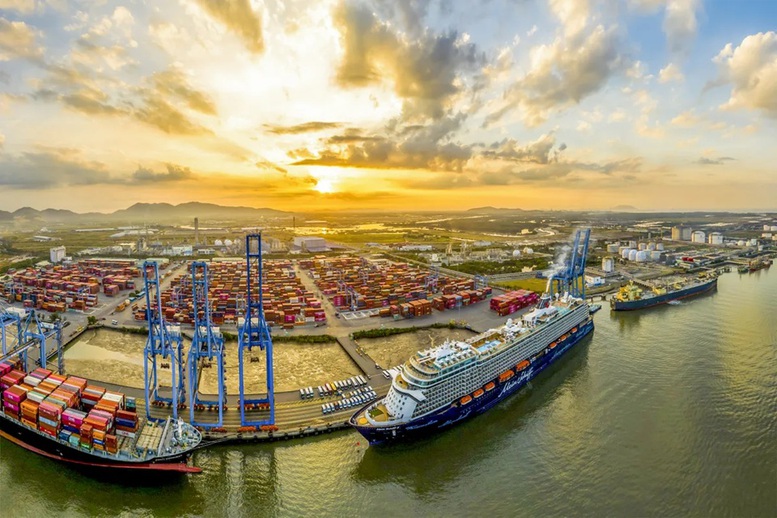
Ho Chi Minh City must be positioned as a global metropolis—capable of directly connecting with Singapore, Seoul, Tokyo, Dubai, or Shanghai.
Ho Chi Minh City must be positioned as a global metropolis—capable of directly connecting with Singapore, Seoul, Tokyo, Dubai, or Shanghai; a node in the global urban network, where capital, technology, knowledge, and culture converge. But the city does not develop for itself alone. With a contribution of nearly 25% of GDP and over 30% of the national budget, every step the city takes must become a step forward for the nation. The mission of Ho Chi Minh City is to pull the train of Vietnam forward—leading, spreading, and driving development.
Alongside this, the city has a deeper mission—to become an inclusive and humane space where everyone has opportunities. Amidst market dynamism, ordinary workers must have housing, children must have education, the vulnerable must be protected, and talent must be celebrated. A metropolis can only be sustainable when it creates fairness in opportunity and happiness in development.
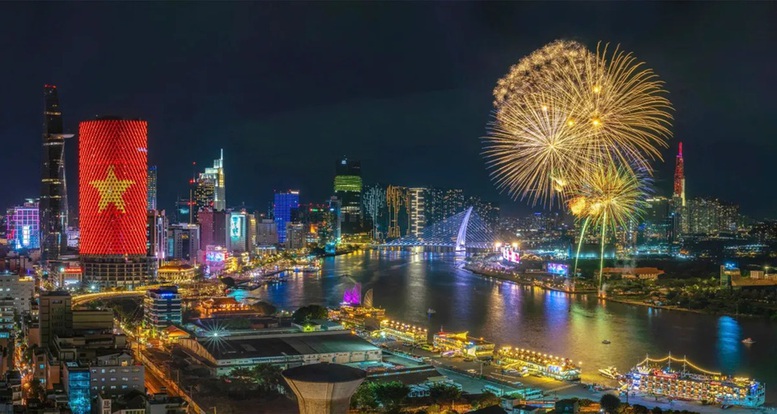
The mission of Ho Chi Minh City can be summarized in three words: Lead – Liberate – Spread.
From this vision, the mission of Ho Chi Minh City can be summarized in three words: Lead – Liberate – Spread.
Lead, because it is the nation’s largest industrial, service, and innovation center, responsible for pioneering new development models. Liberate, because Ho Chi Minh City is where human creativity is most powerfully unleashed—where people dare to think, act, and take responsibility. And Spread, because every breakthrough of the city must become a development driver for the Southeast region, the Mekong Delta, and the entire nation.
STRATEGIC DIRECTIONS FOR HO CHI MINH CITY’S DEVELOPMENT IN THE METROPOLITAN ERA
To realize this vision, Ho Chi Minh City needs to build a development model based on five strategic pillars. First, in terms of institutions, there must be a two-tier governance model—City and Commune/Ward—lean, transparent, accountable, and data-driven. The city needs a stable and pioneering legal framework, allowing high autonomy in planning, budgeting, personnel, and international cooperation. This is not just about granting power but about trust, so Ho Chi Minh City can truly become Vietnam’s “institutional laboratory”—testing the most modern governance models.
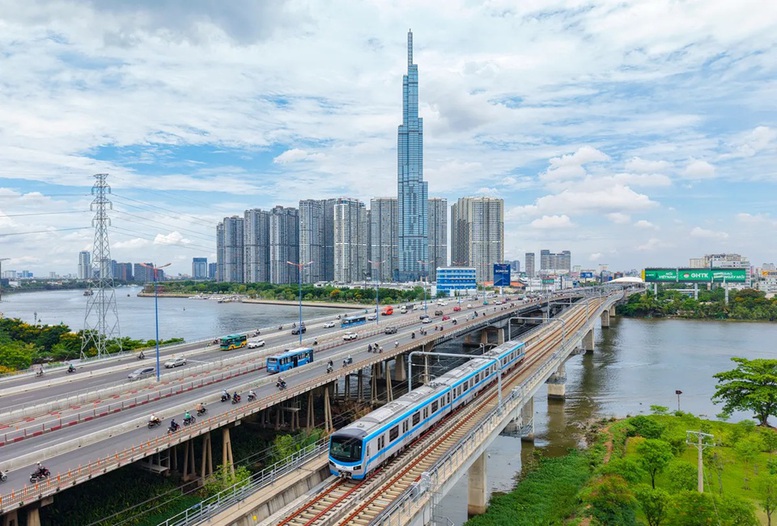
Ho Chi Minh City focuses on investing in synchronized and modern transportation and digital infrastructure.
Second, in terms of the economy, the city must shift from broad-based to deep-based growth, driven by three new engines: the digital economy—where data and technology are core resources; the green economy—where growth is linked to emission reduction; and the innovation economy—where businesses, universities, research institutes, and startups form a “new energy triangle.” It is essential to establish the Ho Chi Minh City International Financial Center, develop new-generation high-tech industrial parks, modern logistics, and become a leading regional startup hub.
Third, in terms of infrastructure, the city must be planned as a multi-centered urban region, with clear development poles: a financial-creative center; a northern green industrial pole; a southern logistics-seaport pole; and an eastern high-tech-university pole. Public transportation must be the backbone, planned according to the TOD model—urban development linked to transport axes, allowing citizens to travel conveniently, civilly, reducing congestion, and improving quality of life.
Fourth, in terms of society, Ho Chi Minh City must become a city of opportunities—where people are at the center of development. Affordable housing, quality education, universal healthcare, and green spaces must be top priorities. Investing in people—especially the “digital generation”—is investing in the future. A city is truly successful when workers can live comfortably, young people can start businesses, and intellectuals can contribute.
Fifth, in terms of the environment, development must go hand in hand with conservation. As a coastal city, Ho Chi Minh City needs a strong climate adaptation strategy: flood control, clean energy transition, green expansion, and circular economy. A city is truly modern when it lives in harmony with nature and is resilient to challenges.
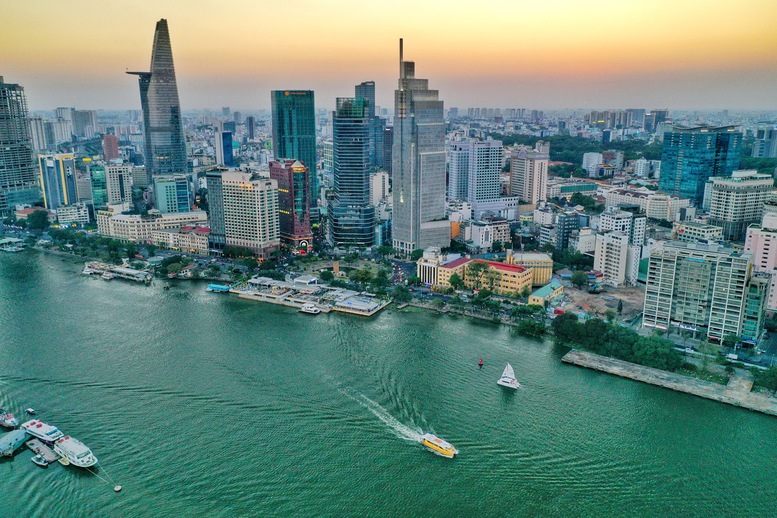
The city that once led economic innovation must now lead institutional and governance innovation.
ASPIRATIONS TO RISE AND THE SPIRIT OF THE CONGRESS
All these directions will not become reality without a new spirit of action. This congress must reignite the spirit of Ho Chi Minh City—awakening the will to strive, the desire to innovate, and the spirit of service. The city that once led economic innovation must now lead institutional and governance innovation. If the past was about “breaking barriers,” the future must be about paving the way for creativity and knowledge.
The spirit of the congress must be forged by three values: striving to think big, innovating to do the difficult, and serving to take responsibility for the people’s happiness. The leaders chosen after the congress are not just managers but creators—with a global vision, reformist courage, and hearts for the people.
The Ho Chi Minh City Party Congress does not just shape the path for a city but opens a vision for the nation. If Vietnam aims to become a developed country by mid-21st century, Ho Chi Minh City must become a global metropolis—a center of integration, innovation, and national outreach.
It is no coincidence that whenever the nation enters a new era, Ho Chi Minh City is named first. For this city has long been a mirror reflecting the vitality, intelligence, and aspirations of the Vietnamese people. In the century of knowledge and creativity, Ho Chi Minh City must be the vanguard, where Vietnam proves its ability to stand alongside developed nations and demonstrates the capacity to create happiness through sustainable and humane development.
I hope this congress crystallizes the intelligence, resilience, and trust of its 14 million people, making it a historic congress—not just planning a city’s development but laying the foundation for a national vision: a modern, humane, powerful Vietnam—with Ho Chi Minh City as one of its shining beacons of aspiration.
Unveiling Sunshine Group’s Hottest Mega Projects: A Staggering $3.4 Billion Asset Portfolio Redefining the Market
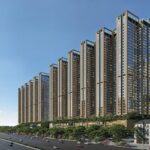
Alongside impressive Q3 2025 business results, Sunshine Group has consistently delivered market-leading breakthroughs in Hanoi and Ho Chi Minh City with a series of projects priced up to 25% lower than comparable developments in the same areas.
Foreign Capital Poised to Return to Vietnam’s Stock Market Following Upgrade Catalyst
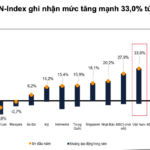
FTSE’s updates could spark an immediate market response, but VNDirect anticipates a subsequent shift back to fundamentals as the driving force.
Southern Region’s Apartment and Townhouse Market: A Comprehensive Overview
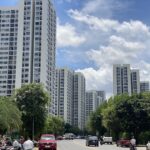
Property buyers in Ho Chi Minh City are returning to the market, with one broker reporting the successful sale of three apartments and one townhouse in the past three months.
J.P. Morgan Forecasts VN-Index to Hit 2,200 Points, Highlights 22 Top Money-Magnet Stocks Amid Upgrade
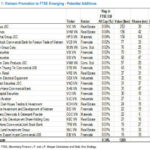
J.P. Morgan has revised its 12-month target for the VN-Index upward, setting a base-case scenario at 2,000 points and an optimistic scenario at 2,200 points. This adjustment reflects a potential 20–30% increase from current levels, signaling confidence in the market’s growth trajectory.
Up-Close Look at the Nearly 3km Stretch of Ho Chi Minh City’s Ring Road 2 Ahead of Its Resumption
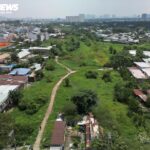
After a five-year hiatus, the construction site of the Ring Road 2 project in Ho Chi Minh City lies in disarray, cluttered with debris, overgrown with weeds, and marred by accumulated waste. The project is slated to resume construction by the end of October 2025.