On the afternoon of October 17th, during the seminar titled “Quenching the Thirst for Affordable Housing and Solutions to Attract Residents to New Urban Areas,” Dr. Nguyen Van Dinh, Vice Chairman of the Vietnam Real Estate Association (VNREA) and Chairman of the Vietnam Real Estate Brokers Association (VARS), stated that the “dream of stable housing” for many citizens remains challenged by mismatched supply, escalating prices, and the dominance of investment demands.
According to VARS statistics, in the first nine months of the year, the total new housing supply nationwide exceeded 100,000 units, with the third quarter alone recording over 34,600 new units—the highest in the past five years. However, the supply-demand mismatch persists, as most new projects fall into the high-end segment. Currently, luxury and ultra-luxury properties are growing rapidly, accounting for 33% of total units launched, while affordable housing (mostly social housing) represents only about 6% of the supply.
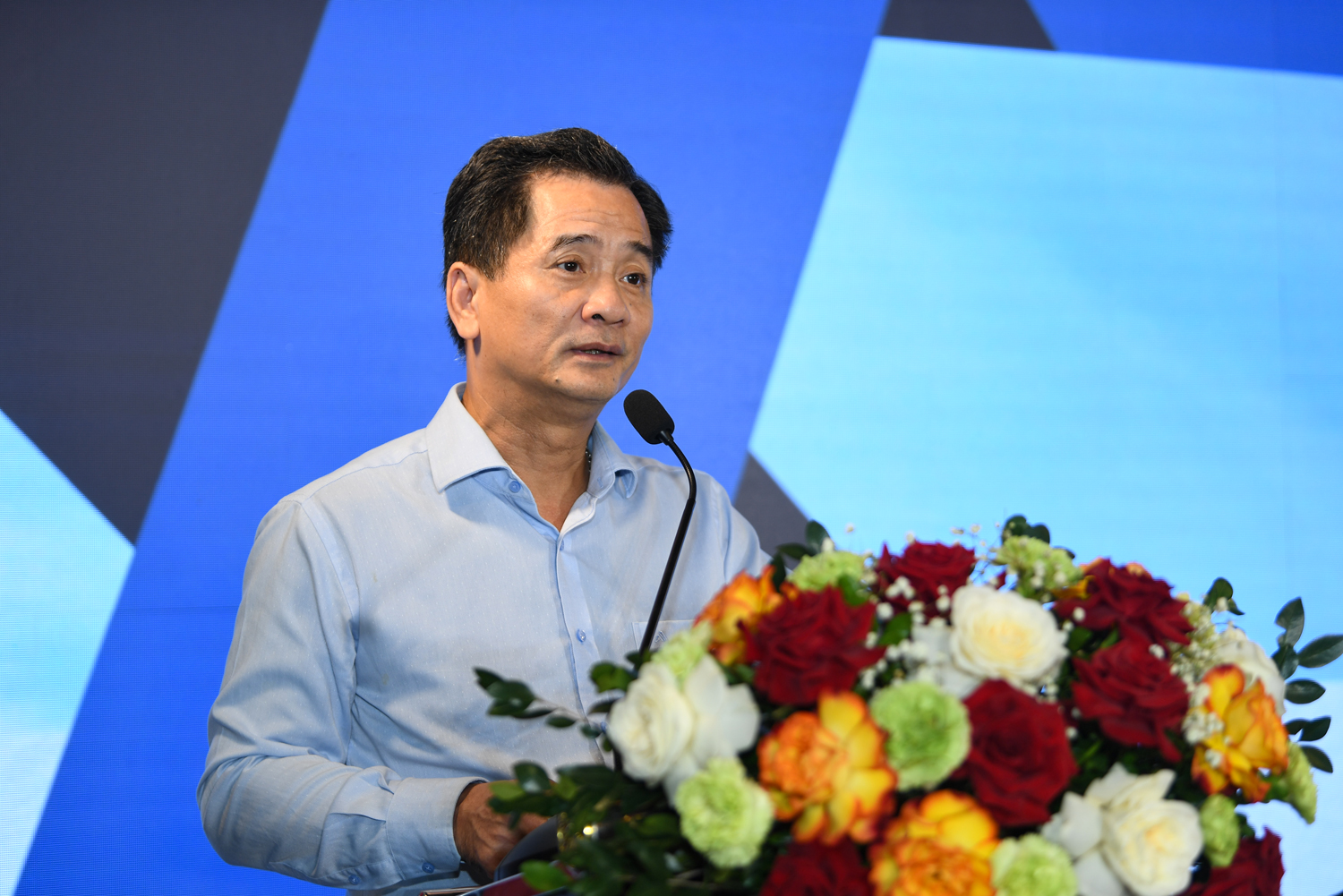
Dr. Nguyen Van Dinh, Vice Chairman of VNREA and Chairman of VARS, speaking at the seminar.
In Hanoi, the average apartment price currently hovers around 90–100 million VND/m², with many inner-city projects surpassing 120 million VND/m². In Ho Chi Minh City, the average price is approximately 90 million VND/m², partially cooled by suburban supply. Compared to 2019, housing prices in Hanoi have nearly doubled, while Ho Chi Minh City has seen a 50% increase.
In the secondary market, prices are rising daily, with many apartment projects recording increases of hundreds of millions to billions of VND in short periods. This has led investors to hold onto properties, anticipating further price hikes, thereby tightening secondary supply.
Conversely, the social housing segment—expected to address the housing needs of low-income earners—remains sluggish. Despite the 1 million unit program being implemented for nearly three years, only about 35% of the plan is projected to be completed by the end of 2025.
Dr. Dinh highlighted the reality: “Many young people are losing motivation to own a home as the gap between housing prices and income widens. Conversely, real estate investment demand has surged amid cheap credit and rising inflation. Many view real estate as a safe haven, driving strong investment waves, particularly in the South, where prices remain accessible and infrastructure is rapidly developing.”
Dr. Dinh also noted that some developers and distributors are “drip-feeding” inventory to create artificial scarcity, fueling FOMO (fear of missing out) among buyers. Speculative groups are hoarding properties and flipping contracts for profit, further driving up prices. Nonetheless, many projects still report high absorption rates, even selling out on launch day, reflecting a recovering market after a sluggish period.
Dr. Nguyen Van Dinh emphasized, “When citizens can achieve stable housing, the real estate market will not only be an asset accumulator but also a foundation for social stability and national economic growth.”
According to Dr. Dinh, the current supply scarcity stems from delayed legal procedures, limited local management capacity, and rising land and investment costs. Some enterprises, despite holding large land banks, are slow to develop or are holding inventory, failing to meet demand.
The market also faces imbalances, with capital flooding into real estate distorting investment structures and posing bad debt risks for banks. “If the dream of stable housing becomes unattainable for most citizens, it’s not just a market issue but a social welfare concern,” Dr. Dinh stressed.
To achieve a balanced and sustainable market, Dr. Dinh recommended expediting the completion of new laws such as the Land Law, Housing Law, and Real Estate Business Law, along with detailed guidelines for local implementation. Simultaneously, legal bottlenecks must be removed to promote social and affordable commercial housing. Establishing a national real estate database and state-managed transaction centers will enhance market transparency and safety.
Additionally, the market needs diversified capital sources through investment funds and real estate bonds, reducing reliance on bank credit and customer deposits. Key infrastructure projects like ring roads, metros, and highways should be accelerated to expand urban spaces, offering citizens more affordable housing options.
Dr. Nguyen Van Dinh concluded, “The dream of stable housing will only materialize when the market is balanced, supply is sufficient, prices are reasonable, legal frameworks are transparent, and capital flows are healthy. When citizens can achieve stable housing, the real estate market will not only be an asset accumulator but also a foundation for social stability and national economic growth.”
Revitalizing Northern Ho Chi Minh City: A Surge in Affordable Housing Projects
North of Ho Chi Minh City, the real estate landscape is buzzing with excitement as numerous social housing projects take center stage, transforming the area into a vibrant hub of affordable living options.
Unlocking Green Growth: Strategies for Businesses to Thrive Sustainably with Nam Long

In an era where green growth is a defining metric of corporate success, Nam Long is steadfast in its commitment to sustainable development. This approach not only fosters societal value but also establishes a long-term competitive edge.
Should 20% Land Allocation for Social Housing Be Replaced with Monetary Contributions?
In a recent draft on land use obligations for developers, the Ministry of Construction has introduced a provision allowing financial contributions in lieu of allocating 20% of project land for social housing construction.
Affordable Social Housing in Bac Ninh: Prices Rival Hanoi at Nearly 19 Million VND per Unit

At 19 million VND per square meter, social housing prices in Bac Ninh now rival those in the outskirts of Hanoi, marking a significant shift in the region’s real estate landscape.
Legal Concerns for Buyers: Navigating Property Purchase Risks
When asked about the “biggest risk concerns when buying real estate,” most customers express worries regarding project legality, construction delays, and the project’s liquidity, carefully considering these factors before committing their funds. In contrast, concerns about price fluctuations and rental potential are less prominent.