Measuring and Managing Greenhouse Gas Emissions is Imperative |
Mr. Nguyen Tuan Quang, Deputy Director of the Department of Climate Change (Ministry of Agriculture and Environment), stated that ministries, sectors, localities, the business community, and financial institutions have actively engaged, achieving significant initial results.
According to Mr. Nguyen Tuan Quang, following Vietnam’s commitment to achieving net-zero emissions by 2050 at COP26, many localities nationwide have proactively incorporated greenhouse gas reduction targets into their annual and five-year socio-economic development plans. Additionally, action programs for green energy transition, carbon and methane reduction have been implemented, and major emission sources have begun conducting greenhouse gas inventories as mandated by the government.
Mr. Nguyen Tuan Quang noted that policies and legal frameworks related to carbon neutrality have been comprehensively and timely issued, laying the groundwork for fulfilling climate change commitments. However, to realize the Net Zero goal by 2050, Vietnam must continue implementing several key solution groups.
These include perfecting synchronized mechanisms and policies to promote low-carbon models and circular economies, while effectively applying carbon pricing tools such as carbon taxes, carbon credits, and emissions trading platforms. Vietnam needs policies to encourage investment and mobilize private sector financial resources for climate change adaptation. Businesses should be incentivized to adopt low-emission production technologies, develop new technological solutions, and use clean fuels. Media also plays a crucial role in raising public awareness and fostering societal consensus on achieving Net Zero commitments.
From a scientific perspective, Assoc. Prof. Dr. Mai Van Trinh, Director of the Institute of Agricultural Environment, believes that measuring and managing greenhouse gas emissions is essential for Vietnam to achieve a green, sustainable agriculture capable of deep integration into international markets.
According to Mr. Mai Van Trinh, agriculture currently accounts for a significant portion of national emissions, primarily from rice cultivation, livestock farming, and chemical fertilizer use. Major greenhouse gases include CO₂ from fuel combustion, CH₄ from rice paddies and livestock digestion, and N₂O from nitrogen fertilizers and organic matter.
Assoc. Prof. Dr. Mai Van Trinh emphasized that emissions not only impact the environment but also directly affect the productivity, quality, and competitiveness of Vietnamese agricultural products in international markets. Major export markets like the EU, Japan, and the US are tightening carbon standards, and without proactive control, Vietnamese agriculture risks losing its global supply chain advantages.
Based on research, Assoc. Prof. Dr. Mai Van Trinh shared solutions to reduce greenhouse gas emissions in rice cultivation, such as alternating wet and dry irrigation, rational organic fertilizer use, and utilizing straw for compost or biochar production instead of burning. These solutions reduce CH₄ emissions by 30-55% while improving soil fertility and lowering input costs.
Assoc. Prof. Dr. Mai Van Trinh also highlighted the role of Measurement, Reporting, and Verification (MRV) systems in modern carbon governance.
He noted that from 2025, Vietnam will officially pilot its domestic carbon market under Decision 232/QĐ-TTg, which approved the establishment and development of a carbon market. The 2025-2028 period will be experimental, with the carbon trading platform fully operational by 2029.
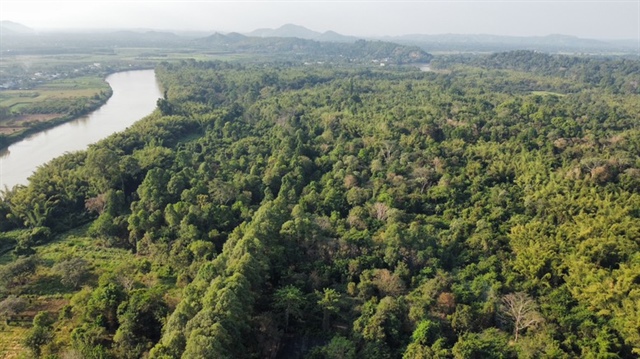
At the local level, Mr. Nguyen Danh Hung, Deputy Director of the Department of Agriculture and Environment in Nghe An Province, stated that Nghe An has an advantage as one of the three provinces with the largest forest areas, alongside Lam Dong and Gia Lai. From 2023-2025, the province participates in the Emission Reductions Payment Agreement (ERPA) program for the North Central region.
Approximately 790,000 hectares of forest and over 38,400 forest owners are involved, offering dual benefits of environmental protection and reduced livelihood pressure for highland communities.
– 05:13 16/10/2025
Vietnamese Business Sells Carbon Credits to FIFA

Vietnamese businesses have successfully sold carbon credits on the voluntary market to prestigious entities such as the World Economic Forum and FIFA’s football tournaments.
World’s Largest Black Pellet Production Plant in Vietnam Officially Commences Commercial Operations

This state-of-the-art facility boasts an impressive annual capacity of 120,000 tons, playing a pivotal role in advancing our commitment to carbon emission reduction.
Unlocking Vietnam’s Net Zero Ambition: Innovative Solutions for a Sustainable Future

Dorsati Madani, a senior economist at the World Bank, has stated that without significant technological advancements, current mitigation policies will fall short of achieving Net Zero by 2050. Experts emphasize that the private sector must play a central role in Vietnam’s efforts to reduce emissions.
Vietnam Sits on a Massive “Treasure Trove”: Potential to Earn $1.9 Billion Annually from the Global Market
Vietnam is truly a treasure trove of “golden forests and silver seas,” embodying sustainability in its purest form.
“Vietnam’s Rare Achievement: Partnering with a Micro-Nation of 11,000 in an 80-Year-Old Global Organization”
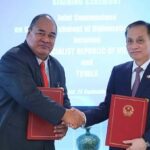
Nestled in the heart of the South Pacific, this enchanting island nation captivates with its serene beauty and unique charm. A hidden gem, it offers a tranquil escape from the ordinary, inviting you to discover its pristine landscapes and vibrant culture.