On the morning of October 16, 2025, during the conference on the dissemination of amendments and supplements to the Securities Law and detailed implementing regulations organized by the State Securities Commission (SSC), representatives from the SSC presented new points in the regulations on securities offerings and issuances.
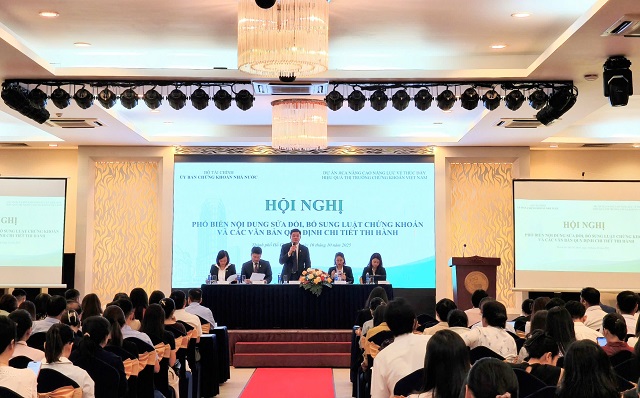
Conference on the dissemination of amendments and supplements to the Securities Law and detailed implementing regulations, held by the State Securities Commission on the morning of October 16, 2025, in Ho Chi Minh City
|
Mr. Hoàng Văn Thu, Vice Chairman of the SSC, stated that the policy direction for securities offerings and issuances follows a principle of both tightening and loosening regulations. This aims to create the most favorable conditions for market participants.
Loosened policies, designed to facilitate operations, apply to activities that have been stable over time with no violations or only minor, unintentional infractions. The regulatory body has even streamlined administrative procedures, moving toward digitization and integrating these processes into full-service online public services.
Tightened regulations apply to activities at risk of exploitation, violations, or fraud. The focus is on file components, requiring proof of transparency and disclosure within the documentation.
The primary goal of the legal framework is to create the most favorable conditions for market participants, particularly businesses, by reducing file review times and streamlining market entry processes.
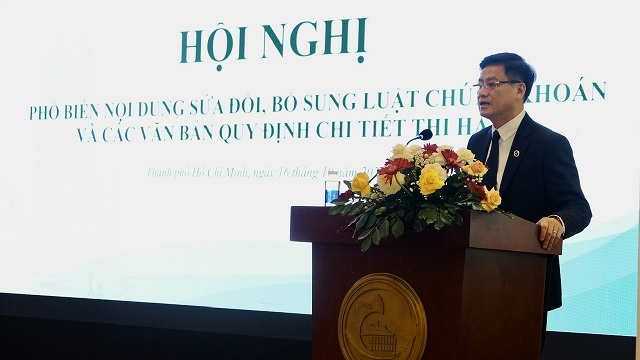
Mr. Hoàng Văn Thu, Vice Chairman of the SSC
|
The Vice Chairman of the SSC shared that recently, the regulatory body has also reduced the time for IPOs linked to listings. Previously, offering regulations required distribution within 90 days (extendable by 30 days, totaling 120 days). Only then could companies register and complete listing procedures within 30 days.
The old regulations resulted in an excessively long period from IPO to listing, sometimes requiring updated financial reports if a new reporting period began, causing frustration for investors. Under the current regulations, listing results are available within 30 days, addressing the previous delays.
New Points in Securities Offering Regulations
During the conference, representatives from the SSC’s Securities Offering Management Board outlined new regulations on securities offerings.
On January 1, 2025, Law No. 56 came into effect, along with Decree No. 245 issued by the Government on September 11, 2025. These changes significantly impact securities offerings and issuances, enhancing transparency, increasing issuer accountability, protecting investors, and simplifying administrative procedures.
For public securities offerings, the general regulations introduce new provisions regarding professional securities investors, responsibilities of organizations and individuals, types of financial statements determining offering conditions, and reporting on capital usage.
For initial public offerings (IPOs), Law 56 adds reporting requirements for contributed charter capital. Consequently, Decree 245 removes the requirement for a “report on owner equity contributions if the file is submitted after the most recent audited or reviewed accounting period.”
Additionally, Decree 245 mandates that companies submit reviewed financial statements if the file is submitted after the semi-annual financial statement period, aligning with listing registration requirements.
For IPOs concurrent with listing registrations, Decree 245 allows stock exchanges to review listing registrations simultaneously with the SSC’s IPO file review. To implement this, the Chairman of the SSC issued Decision No. 709, establishing coordination regulations for concurrent IPO and listing file reviews.
For IPOs by companies post-restructuring, Decree 245 clarifies the term “corporate restructuring” for cases involving acquisitions and asset sales. It also adds conditions and file requirements for post-restructuring IPOs, mandating consolidated financial reports.
For follow-on public offerings, Law 56 and Decree 245 eliminate the requirement that at least 70% of the offered shares be sold to existing shareholders based on ownership ratios.
For public corporate bond offerings, Law 56 adds conditions such as compliance with government regulations on bondholder representatives, debt ratios, issuance value relative to equity, and credit ratings.
Decree 245 includes notable adjustments, such as requiring credit ratings from Moody’s, Standard & Poor’s, or Fitch Ratings; capping debt-to-equity ratios at 5:1 (except for specific sectors); and mandating escrow accounts for bond proceeds.
For offering files, the Decree adds “contracts between issuers and bondholder representatives” while removing “State Bank approval for public bond issuance plans.”
For public bond offerings by international financial institutions, the Decree removes the cap on funds raised in Vietnam relative to total project investment; reduces the minimum bond term from 10 to 5 years; mandates escrow accounts for bond proceeds; and expands permissible capital uses.
For warrant offerings by securities companies, the Decree simplifies file requirements, such as articles of association, business processes, meeting minutes, and shareholder resolutions. Financial statements are exempt if already submitted to the SSC under reporting regulations.
Regarding cancellations of public securities offerings, Law 56 adds provisions for canceling share, bond, or warrant offerings after completion if violations are discovered (unless shares are already listed or traded).
The Law also stipulates that offerings cannot be canceled if shares, shares converted from convertible bonds, or shares purchased via warrants are already listed or traded.

From 2025, companies offering securities must be more transparent and accountable – Illustrative image
|
Beyond public offerings, Law 56 and Decree 245 also amend regulations on private securities offerings.
For private bond offerings by public companies, Law 56 adds provisions for professional investors.
For private share offerings, convertible bonds, and bonds with warrants by public companies, Law 56 requires shareholder approval for issuance plans, capital usage, investor criteria, share quantities, offering prices, or pricing principles (removing the requirement for a specific number of investors).
Conditions for private bond and share offerings are similar, targeting strategic and professional investors (individuals and organizations). For bonds with warrants, offerings are limited to strategic investors, professional institutional investors, and, if credit-rated with secured payments, both individual and institutional professional investors.
For canceling private offerings, Law 56 adds provisions for suspension and cancellation, similar to public offerings. Offerings cannot be canceled if shares, shares from convertible bonds, or shares from warrants are already listed or traded.
Law 56 and Decree 245 also introduce new regulations for other offerings, such as share swaps for non-public joint-stock companies or LLC members; public company share issuances for public tenders and mergers; debt-to-equity swaps; capital increases from equity; employee stock ownership plans (ESOPs); and public tender registrations.
– 14:32 16/10/2025
“Enhancing Product Quality and Administrative Reforms: A Catalyst for Attracting Foreign Investment, Says Deputy Chairman of SSC”
On October 10th, the State Securities Commission (SSC) hosted a conference to disseminate amendments and supplements to the Securities Law and its implementing regulations.
Unlocking Central Counterparty Clearing (CCP): New Securities Laws and Decrees Pave the Way
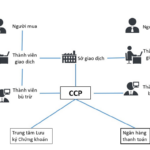
The Vietnamese stock market is poised to meet new demands for upgrading, attracting foreign investment, enhancing transparency, ensuring systemic safety, and modernizing trading infrastructure.
Streamlined Post-IPO Listing Timeline Regulations

On September 27, 2025, the Chairman of the State Securities Commission (SSC) signed Decision No. 709, promulgating the Regulation on Coordinated Review of Registration Dossiers for Initial Public Offerings (IPO) in conjunction with Stock Listing Registration Dossiers.
“All Recent Reforms Aim to Elevate Vietnam’s Market Status, Says Mr. Bui Hoang Hai (SSC)”

At the Vietnam Financial Advisors Summit (VWAS) held on the afternoon of September 25th under the theme “New Era, New Momentum,” Mr. Bui Hoang Hai, Vice Chairman of the State Securities Commission (SSC), emphasized that market upgrading is not merely an endpoint but a means to achieve a more transparent, stable, and efficiently operating market. This transformation aims to provide investors with greater opportunities to pursue profitable returns.
SMC Chairman’s Relative Fined for Unauthorized Share Sale
Mr. Nguyen Nghia Dung, brother of Mrs. Nguyen Thi Ngoc Loan—Chairperson of SMC’s Board of Directors—has been fined 100 million VND by the State Securities Commission (SSC). The penalty stems from his sale of 780,000 SMC shares without prior transaction disclosure as required.