










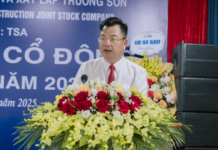







The following is an excerpt from the insights of Mr. Phil Wright, Senior Executive Director, Banking Operations, HSBC Vietnam.

Mr. Phil Wright – Senior Executive Director, Banking Operations, HSBC Vietnam
|
Lessons from global financial hubs reveal that financial centers can act as catalysts for innovation. These hubs provide a safe testing ground for new technologies, attract investment, and connect talent across diverse sectors. However, success doesn’t happen overnight. It requires a clear legal framework, stable long-term policies, and an ecosystem where public and private sectors collaborate closely.
Three key principles emerge from other markets: transparency, consistency, and collaboration.
Transparency: Building trust through clear regulations
The United Kingdom stands as a prime example of transparency in action. In 2016, the UK’s Financial Conduct Authority (FCA) launched the world’s first regulatory sandbox. This controlled environment allows FinTech companies to test new products with real customers under regulatory supervision.
The impact was immediate. Startups gained clarity on regulations, regulators obtained deeper insights into new technologies, and investors felt more confident backing untested ideas. Since then, over 1,000 companies have participated. Research from the European Financial Association shows sandbox participants are 50% more likely to secure funding and attract 15% more capital than non-participants. The UK model has been replicated globally, proving that clear regulations accelerate innovation.
If Vietnam adopts a similar sandbox approach, it would send a powerful message to innovators and investors: experimentation is encouraged, but within a safe and stable legal framework.
Consistency: Building trust over time
While transparency fosters initial trust, consistency ensures scalability. Singapore exemplifies this through Project Guardian, launched by the Monetary Authority of Singapore (MAS) in 2022. This initiative pilots tokenization in capital markets through controlled experiments.
Project Guardian’s significance lies in its continuity. Annually, MAS expands pilot programs, refining standards in areas like payments, custody, and digital assets. This phased approach builds trust: innovators know their efforts won’t fade after a single trial, and investors see a controlled, reliable market evolution.
Vietnam can learn from this by embedding consistency into its international financial center roadmap. Stable regulations and policies will ensure innovation isn’t fleeting but a sustainable growth driver.
Collaboration: Building ecosystems, not silos
Innovation thrives in ecosystems. Hong Kong demonstrates this through Cyberport and the Science and Technology Park, which bring startups, global tech firms, investors, and banks together. These hubs provide funding, mentorship, and incubation programs, enabling rapid idea scaling.
The lesson is clear: innovation isn’t solitary. It requires collaboration among regulators, industries, and education sectors. Vietnam has a unique opportunity to create similar clusters, connecting FinTech firms, banks, investors, telecom providers, and universities. This could foster a hub of ideas, talent, and investment, sustaining its financial center for decades.
Balancing innovation and stability
The challenge lies in finding equilibrium. A center with “high innovation, low stability” risks speculative bubbles and weak oversight. Conversely, “high innovation, high stability” ensures clear direction, reliable pilots, and robust measures for data protection and cybersecurity.
This is Vietnam’s target: a center encouraging experimentation while maintaining strong standards. A legal system with clear participation rules, agile governance, and adherence to international norms will create an environment where investors and innovators thrive.
The importance of international standards
Adopting global standards is crucial. It signals to investors that Vietnam’s financial center is built on best practices, ensuring cross-border compatibility in payments, capital markets, and digital assets. International standards also attract global talent, as experts operate under familiar rules.
For Vietnam, implementing globally recognized frameworks in anti-money laundering, cybersecurity, and data protection is essential. This will attract multinational firms and investors seeking stability and trust.
Building a foundation for talent and growth
A financial center cannot thrive without skilled talent. Vietnam must invest in education, training, and career development in areas like data analytics, cybersecurity, risk management, and financial engineering. Partnerships with universities, professional bodies, and incubators will nurture future FinTech leaders.
Attracting international experts is equally vital. Global financial hubs like Dubai have succeeded with specialized visas for skilled workers, ranking high in global talent competitiveness. Vietnam could consider similar measures to ensure its center attracts global expertise.
A vision within reach
Vietnam stands at a crossroads. By embedding transparency, consistency, and collaboration into its financial center’s foundation, it can create not just a financial hub, but an innovation nexus linking Asia to the world. The benefits extend beyond investment: a vibrant center generating jobs, nurturing startups, attracting talent, and positioning Vietnam as a key player in global finance.
This journey demands vision, patience, and public-private collaboration. Yet, the rewards—a “high innovation, high stability” environment driving prosperity, resilience, and global standing—are well within reach.
– 10:56 15/10/2025
Unlocking Ho Chi Minh City’s Potential: From Underground to Skyward Expansion

Dr. Tran Dinh Thien, Associate Professor, asserts that Ho Chi Minh City must now embrace new frontiers of development, encompassing maritime, aerial, subterranean, digital, and cultural spaces.
Vietnam’s Ascent to Global Financial Hub Status

Aspiring to establish Vietnam as a compelling and sustainable global financial hub not only unlocks opportunities to attract international capital but also serves as a critical test of its institutional framework, infrastructure, and capacity to foster an environment that is truly livable, workable, and investable.
Elevating Vietnam’s Global Standing Through an International Financial Hub

Amidst the dynamic shifts in the global economy, Vietnam is strategically positioning itself to establish an international financial hub as a new growth engine. This ambitious initiative aims to serve as a magnet for global capital and expertise, while simultaneously elevating the nation’s standing on the world financial map.
Unlocking Global Success: World Bank Reveals Exclusive Formula for Vietnam to Dominate the Trillion-Dollar Global Arena

Mariam J. Sherman, World Bank Director for Vietnam, Cambodia, and Laos, highlights Vietnam’s significant advantages but emphasizes the need for a comprehensive and well-structured strategy to maximize its potential.
Vietnam’s Commitments to Developing an International Financial Center

In a world of constant flux, the World Alliance of International Financial Centers (WAIFC) stands as a beacon of collaboration and stability. Deputy Prime Minister Nguyễn Hòa Bình underscored Vietnam’s unwavering commitment to advancing its International Financial Center through three bold pledges, reinforcing its role as a pivotal player in the global financial landscape.