














Unlocking Capital, Boosting Public-Private Partnerships
According to the Vietnam Railways Authority, the agency is collaborating with relevant units to draft guidelines for the implementation of the 2025 Railway Law. This includes detailed decrees and circulars on management, transportation operations, infrastructure, and technical standards.

Guidelines for the implementation of the 2025 Railway Law are under development.
“The 2025 Railway Law replaces the 2017 Law with groundbreaking mechanisms and policies, creating a favorable legal framework to mobilize resources, streamline investment procedures, enhance transparency, and promote science, technology, and workforce training. Notably, the Law emphasizes the state budget’s leading role in prioritizing resources for railway development while encouraging all economic sectors to invest, operate, and grow the railway industry,” stated a representative from the Vietnam Railways Authority.
The Ministry of Transport is directing the development and completion of subordinate legal documents to ensure synchronization with the 2025 Railway Law, effective from January 1, 2026.
According to the Vietnam Railways Authority, Article 5 of the Law outlines state incentives: prioritizing budget allocation for the development, upgrading, and maintenance of national and local railway infrastructure; fostering the railway industry and workforce training to ensure railway transport plays a key role in the national transport system.
The Law also allows for maximum mobilization of non-state resources, leveraging land around railway stations to generate investment capital, and permits localities to decide on technical standards and land use within transit-oriented development (TOD) zones.
The state encourages organizations and individuals to invest in railway projects using non-budget capital, offering incentives such as full state funding for compensation, resettlement support, expedited investment procedures, and encouragement for scientific research, technology application, and workforce training.
Paving the Way for Railway Acceleration
The 2025 Railway Law has institutionalized Party resolutions on private economic development and strategic infrastructure, particularly Resolution 68, expanding opportunities for investors in this sector.
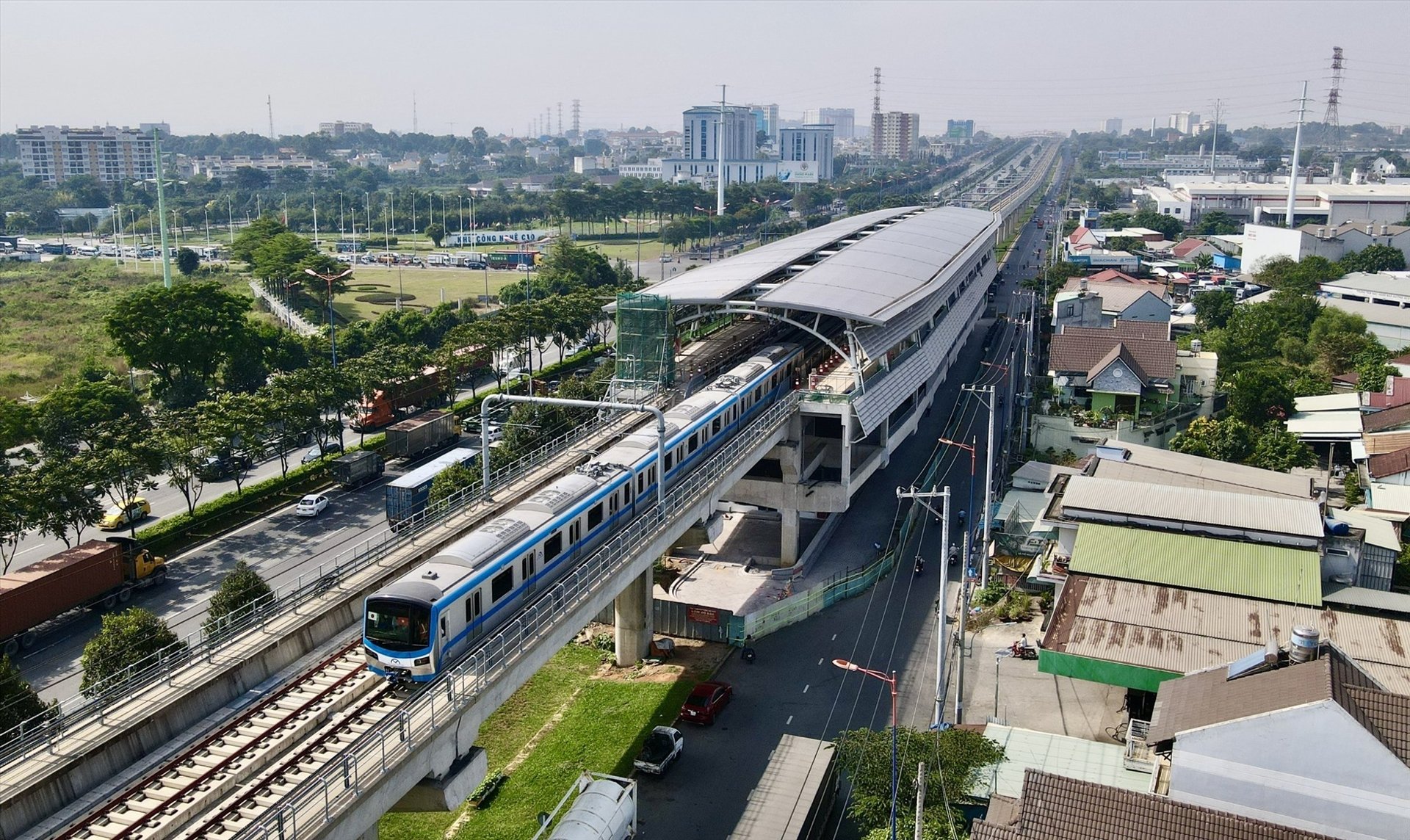
New provisions in the 2025 Railway Law open avenues for maximizing resource mobilization, particularly from the private sector, to invest in railway system development.
The Law specifies investment in railway projects using non-state capital, encouraging public-private partnerships (PPP) or direct investment. The state guarantees compensation and resettlement costs, which are not counted as state capital in PPP projects.
Additionally, railway operators enjoy benefits such as land use fee exemptions or reductions, access to state investment credit, government loan guarantees, and subsidies for urban rail passenger transport.
“With the provisions of the 2025 Railway Law, investors can fully participate in constructing national, local, or specialized railway systems in line with approved plans,” emphasized the Vietnam Railways Authority representative.
A Catalyst for Private Investment
Mr. Hoàng Văn Triệu, an expert from the Railway Technology Research and Development Institute (TRDI), commented: “The 2025 Railway Law and policies mobilizing non-state resources have become a powerful catalyst, attracting private enterprises to invest in railway infrastructure development.”
Less than six months after its enactment, major corporations have proactively proposed investments in national, urban, and inter-regional railway lines. Notable projects include VinSpeech, Thaco, and the Mekolor – Great USA alliance’s North-South high-speed rail initiative.
VinSpeech proposed a Ho Chi Minh City – Can Gio line with a speed of 350 km/h; Vingroup suggested a Hanoi – Quang Ninh route; Thaco is studying the Thu Thiem – Long Thanh line; Becamex proposed Ho Chi Minh City – Can Tho and Bau Bang – Cai Mep routes; and most recently, CT Group expressed interest in the Ho Chi Minh City – Can Tho – Ca Mau line. All projects aim for electrified, high-speed railways with modern technology.
According to Mr. Triệu, the national railway plan by 2050 includes 18 new routes totaling over 3,900 km. Localities are also developing large-scale urban rail networks:
– Hanoi has 14 main lines and extensions;
– Ho Chi Minh City has 12 main lines;
– Da Nang is developing 2 MRT and 11 LRT, Tramway lines;
– Can Tho has 3 MRT and inner-city Tramway lines.
“These networks open vast markets for businesses to invest in infrastructure, vehicles, transportation, equipment manufacturing, and the railway industry. The state must promptly detail policies through specific documents for practical implementation, thereby attracting investment and turning policies into action,” Mr. Triệu emphasized.
Railways: The Backbone of Transportation Driving National Development Aspirations
Railways have evolved beyond being merely the “lifeline” or “backbone” of socio-economic development. Today, they are a critical component in national security and defense strategies, while also serving as a cornerstone of the transportation sector.
Vietnam Poised to Become the Global Maritime Hub

At ViPEL 2025, industry leaders assert that Vietnam is poised to emerge as a global maritime and energy hub, leveraging its strategic coastal advantages and the ongoing shift in supply chain dynamics.
Hanoi Proposes Attractive Incentives for Parking Lot Construction Projects

The Hanoi People’s Committee has proposed a range of incentives to encourage investment and development of bus stations and parking lots throughout the city.
Da Nang Attracts Investment in Smart Urban Development, Aviation, and Maritime Sectors in the Netherlands

From October 3-4, a delegation from Da Nang City, led by the Chairman of the City People’s Council, Nguyen Duc Dung, successfully launched an investment promotion program with partners in the Kingdom of the Netherlands.
Tetra Pak Champions Sustainable Solutions for ASEAN Food Security

At the 57th ASEAN Economic Ministers’ Meeting (AEM-57), the ASEAN-EU Business Summit 2025 will take place on September 25, 2025, in Kuala Lumpur.