Prime Minister Directs the Development of the 2026-2030 Five-Year Plan with a Focus on Decisive, Synchronized, Feasible, and Effective Actions, Aiming for a GDP Growth Rate of 10% or Higher Annually
The period 2026-2030 marks the final five years of the implementation of the 2021-2030 Socio-Economic Development Strategy. The global landscape is expected to evolve rapidly, becoming more complex and unpredictable. Challenges and opportunities will coexist, but difficulties may outweigh favorable conditions. This situation necessitates a new vision, innovative thinking, and fresh development perspectives, along with breakthrough solutions and strong determination to achieve faster and more sustainable growth. The goal is to realize the strategic objectives of becoming a developing country with a modern industrial base and upper-middle-income status by 2030, and a developed, high-income nation by 2045. This will propel Vietnam into a new era of robust, prosperous, and sustainable development.
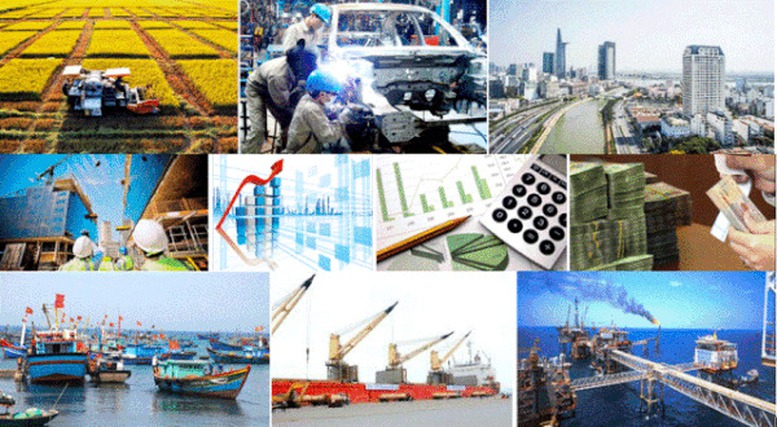
The Prime Minister has instructed ministries, central agencies, and local governments, as well as economic groups and state-owned enterprises, to focus on developing the 2026-2030 Five-Year Plan. This plan should embody decisive, synchronized, feasible, and effective actions, aiming for an average GDP growth rate of 10% or higher annually during the 2026-2030 period.
Comprehensive, Objective, and Honest Evaluation of the 2021-2025 Socio-Economic Development Plan
The Prime Minister has emphasized the importance of a thorough, objective, and honest evaluation of the 2021-2025 Socio-Economic Development Plan. This assessment should compare achievements with the 2016-2020 period and global and regional benchmarks, covering:
Key Evaluation Areas:
– Performance against the general objectives, key indicators, and major balances outlined in the resolutions of the 13th National Party Congress, National Assembly Resolution No. 16/2021/QH15, and People’s Council resolutions on 2021-2025 socio-economic development.
– Dual goals of COVID-19 prevention and control, alongside socio-economic recovery and development, including the implementation of the Socio-Economic Recovery and Development Program.
– Economic restructuring, innovation-driven growth model transformation, productivity enhancement, quality improvement, and competitiveness. This includes sector-specific restructuring, rural and agricultural development, tourism growth, digital economy contributions, and the effectiveness of restructuring in key areas like public investment, credit institutions, and state-owned enterprises.
– Resource mobilization, allocation, and utilization across state, non-state, and foreign-invested sectors. Addressing project bottlenecks, incentives for major projects, and market development.
– Progress in strategic infrastructure development, including transport, energy, science and technology, telecommunications, irrigation, and rural and urban infrastructure.
– Human resource quality enhancement, innovation promotion, digital transformation, and science and technology application.
– Implementation of sectoral, provincial, regional, and national planning; regional development and connectivity; economic zone growth; urban and smart city development; new rural construction; and the establishment of competitive international financial centers.
– Achievements in culture, society, healthcare, environmental protection, natural resource management, climate change adaptation, and disaster risk reduction.
– Improvements in state governance efficiency, e-government and digital government development, administrative reforms, public service quality, and anti-corruption efforts.
Visionary and Breakthrough Approach to the 2026-2030 Socio-Economic Development Plan
The 2026-2030 Plan must align with Party and government resolutions, ensuring:
– Rapid yet sustainable growth, macroeconomic stability, inflation control, and balanced development.
– A new growth model driven by science, technology, innovation, and digital transformation, with a focus on high-quality human resources and international integration.
– Improved living standards, social welfare, and environmental sustainability, avoiding trade-offs between growth and social equity.
The Plan should build on the 2021-2025 evaluation, anticipate global and domestic trends, and incorporate visionary and breakthrough strategies to leverage opportunities, overcome challenges, and address past limitations.
Key indicators must be feasible, clear, and aligned with the 2021-2030 Strategy, ensuring accuracy and consistency across sectors and regions.
Initiatives should be innovative, actionable, and results-oriented, with clear responsibilities, timelines, and resource allocation. They must engage all stakeholders, including political entities, economic sectors, businesses, and citizens.
The 2026-2030 Plan is expected to include:
– Contextual analysis, general objectives, and key indicators, targeting a 10% or higher average GDP growth rate, increased labor productivity, and enhanced industrial contributions.
– Legal framework improvements, investment climate enhancements, administrative reforms, and talent development.
– Economic restructuring, industrialization, and modernization driven by technology and innovation, with a focus on sustainable growth, market development, and state-owned enterprise reforms.
– Private sector development, science and technology advancements, digital transformation, and high-quality human resource cultivation.
– Infrastructure development, urban and rural modernization, social progress, environmental sustainability, national defense, and international integration.
Ministries and localities are tasked with formulating specific policies and solutions to ensure the Plan’s success, aligned with national priorities and local conditions.
Grand Opening Ceremony for World-Class Stadium Attended by General Secretary Tô Lâm
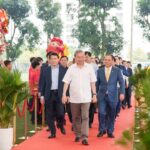
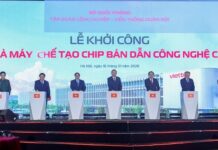
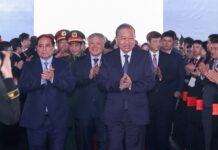
On the morning of October 19th, in Hưng Yên, the Ministry of Public Security held a groundbreaking ceremony for the PVF Stadium, a state-of-the-art venue with a seating capacity of 60,000. This stadium will feature the most advanced dome technology in Vietnam, rivaling the best in the world. General Secretary Tô Lâm attended the event and participated in the ceremonial groundbreaking.
National Assembly’s Economic Committee Applauds Government’s Bold Policies and Visionary Leadership
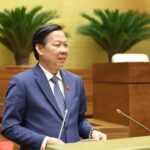
The National Assembly’s Committee on Economics and Finance (KTTC) commends the Government’s bold, decisive policies, its proactive mindset, and agile, timely leadership. These efforts have yielded significant positive outcomes, with many targets surpassing expectations. This success lays a crucial foundation, bolstering confidence, stabilizing the macroeconomy, and creating favorable conditions for rapid, sustainable development in the upcoming period.
Striving to Commence Construction of the North-South High-Speed Railway by 2026
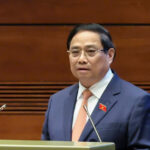
In the realm of strategic infrastructure development, Prime Minister Pham Minh Chinh has outlined ambitious plans. These include accelerating the implementation of the Lao Cai – Hanoi – Hai Phong railway line, as well as railway connections with China and urban rail projects in Hanoi and Ho Chi Minh City. A key highlight is the targeted commencement of the North-South high-speed railway in 2026.
Prime Minister: Vietnam’s Per Capita GDP Projected to Reach $5,400–$5,500 by 2026
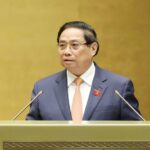
In presenting the projected socio-economic development plan for 2026, Prime Minister Phạm Minh Chính outlined ambitious targets: a GDP growth rate of 10% or higher, per capita GDP reaching $5,400–$5,500, and an average CPI increase of around 4.5%. These goals are supported by ten key task groups and primary solutions.
10th Session of the 15th National Assembly Opens: 66 Agendas to Be Reviewed and Approved in 40 Working Days
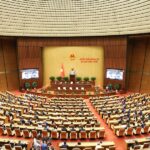
Taking place from October 20 to December 11, the 10th Session of the 15th National Assembly focuses on passing 49 laws, 4 resolutions, and reviewing various economic, social, budgetary, and oversight matters, including a comprehensive summary of the 2021-2026 term.