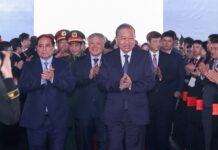
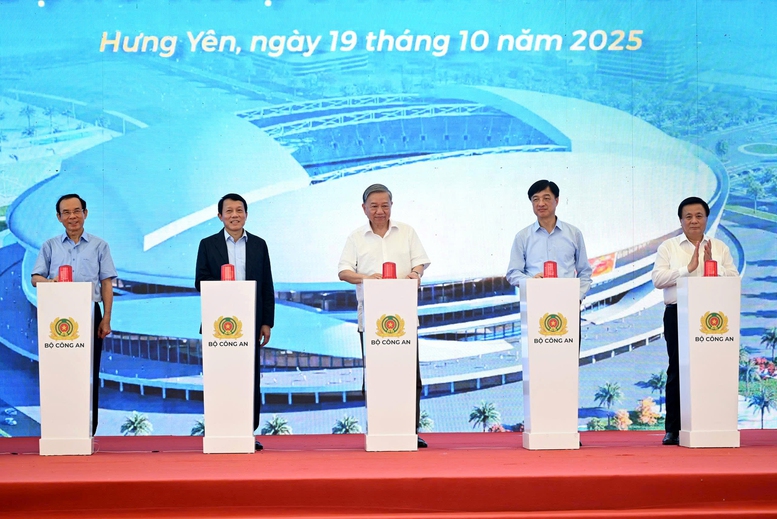
General Secretary To Lam and delegates at the groundbreaking ceremony – Photo: VGP/Duc Tuan
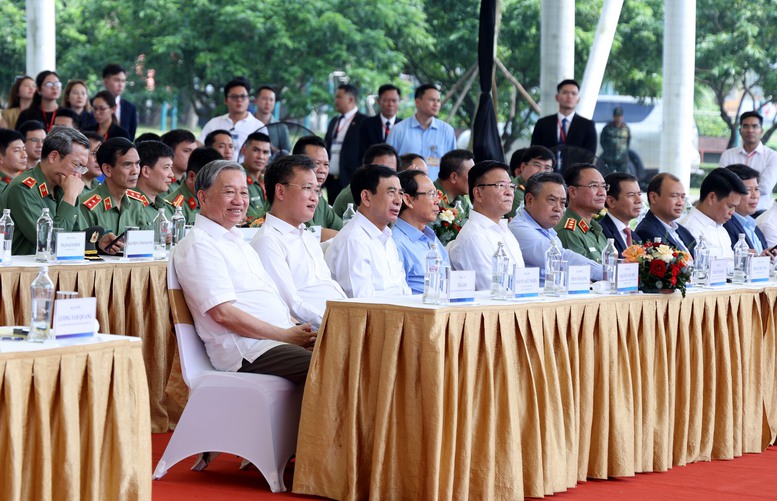
This is not only a venue for cultural and sports events of the People’s Public Security force but also a new international-standard iconic project of Vietnam in its era of ascent.
Attending the groundbreaking ceremony were Politburo members: Nguyen Duy Ngoc, Secretary of the Party Central Committee and Head of the Central Inspection Commission; Nguyen Xuan Thang, Chairman of the Central Theoretical Council and Director of Ho Chi Minh National Academy of Politics; Nguyen Van Nen, Standing Member of the Sub-Committee on Documents for the 14th National Party Congress; General Phan Van Giang, Minister of National Defense; and General Luong Tam Quang, Minister of Public Security.

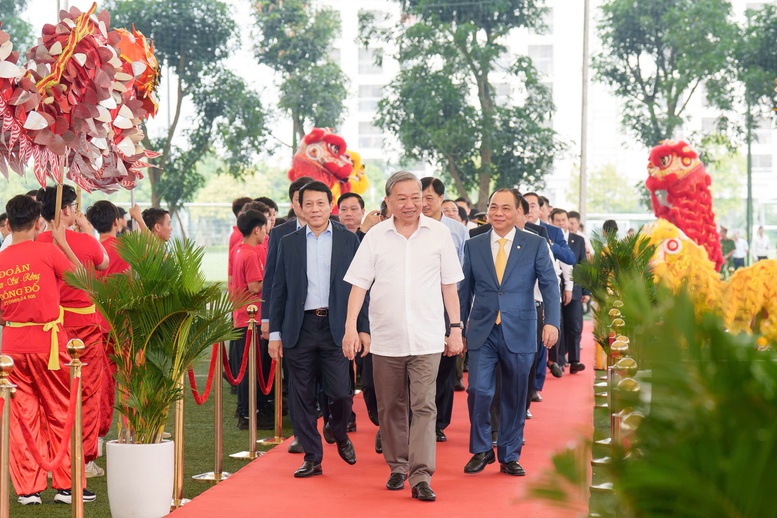
Delegates at the ceremony – Photo: VGP/Duc Tuan
Also present were Deputy Prime Minister Le Thanh Long, Vice Chairman of the National Assembly Tran Quang Phuong, representatives from ministries, sectors, localities, and businesses partnering with the People’s Public Security football.
The stadium is located within the PVF Youth Football Training Center in Nghia Tru commune, Hung Yen province. It is invested by the Ministry of Public Security, with Vinhomes JSC, a member of Vingroup, as the general contractor.
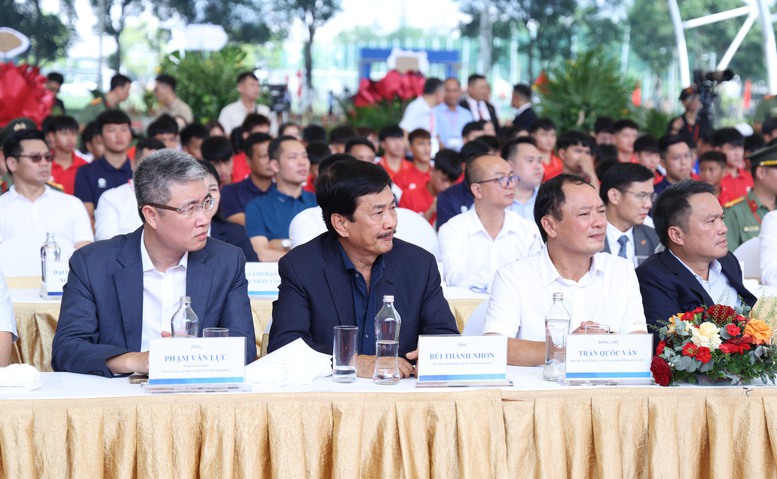
Businesses partnering with the People’s Public Security sports at the ceremony – Photo: VGP/Duc Tuan
Realizing the pinnacle development aspirations of People’s Public Security sports
Speaking at the ceremony, General Luong Tam Quang, Politburo member and Minister of Public Security, stated that the groundbreaking of the stadium is a practical activity to celebrate the 14th National Party Congress and the People’s Public Security force. It also concretizes the “Three Bests” movement – the most disciplined, the most loyal, and the closest to the people, as directed by General Secretary To Lam at the 8th Congress of the Central Public Security Party Committee.
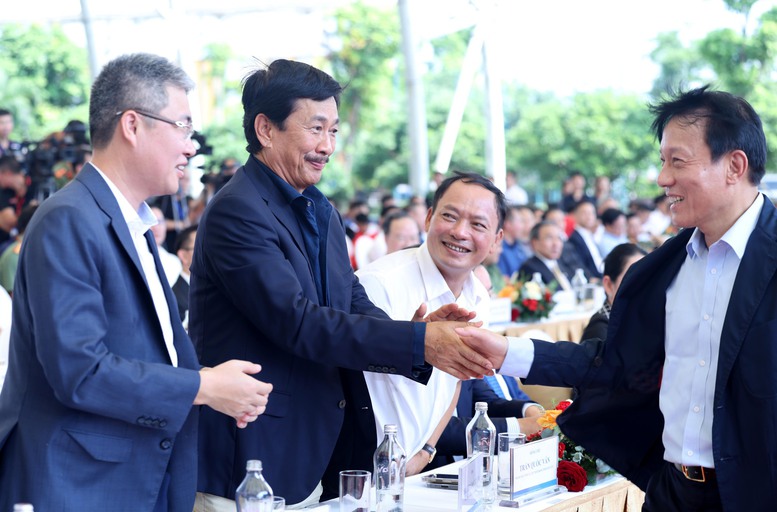
Minister of Public Security Luong Tam Quang and delegates at the groundbreaking ceremony – Photo: VGP/Duc Tuan
Minister Luong Tam Quang emphasized that the PVF stadium project, part of the People’s Public Security sports complex, is a crucial cultural and sports facility. It contributes to realizing the pinnacle development aspirations of People’s Public Security sports in particular and Vietnamese sports in general. The project is expected to further motivate the comprehensive development of Vietnamese people, contributing to the goal of building a strong and prosperous nation as advocated by the Party.
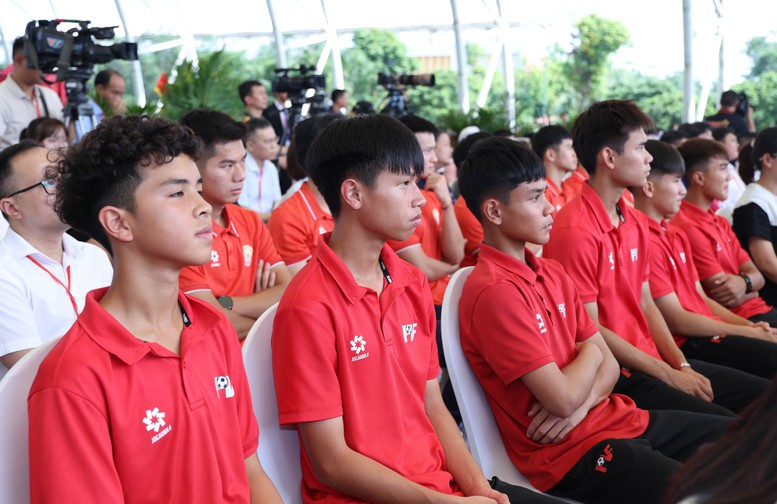
Young players from the PVF Center at the groundbreaking ceremony – Photo: VGP/Duc Tuan
“This will also be a place for people to engage in physical activities, improve their health, and promote the nationwide physical training movement following the great example of President Ho Chi Minh. It will strengthen the close relationship between the public security force and the people,” Minister Luong Tam Quang stressed.
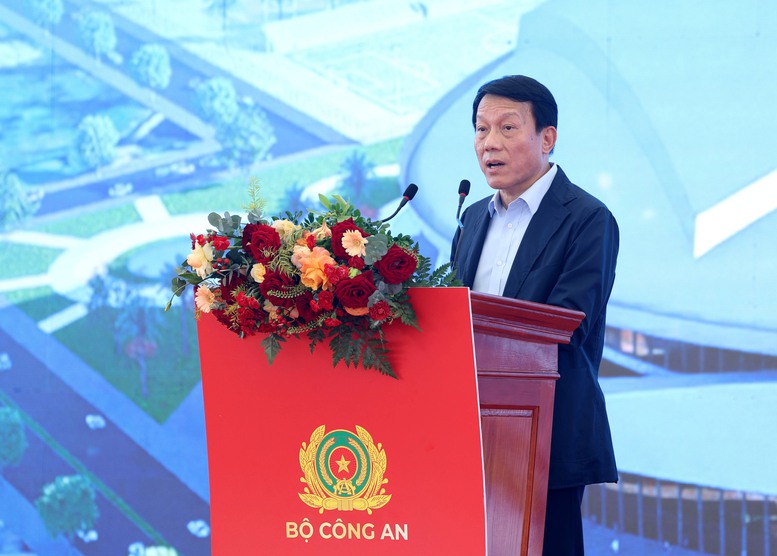
Minister of Public Security Luong Tam Quang speaking at the ceremony – Photo: VGP/Duc Tuan
A Top-Tier Asian Sports Project
At the ceremony, Mr. Pham Thieu Hoa, Chairman of Vinhomes JSC, stated that the PVF Stadium is envisioned to become a top-tier Asian sports project within a 92-hectare sports and service complex. The stadium will have a capacity of 60,000 seats, meeting FIFA standards, and will be eligible to host major international tournaments like the World Cup.
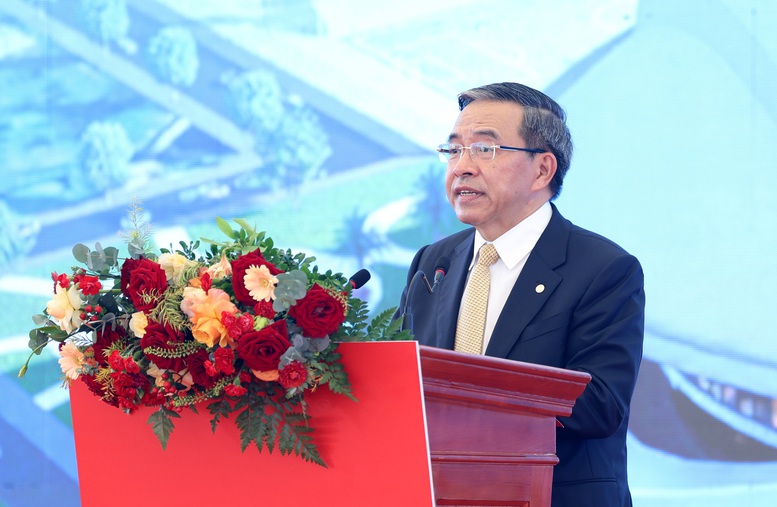
Mr. Pham Thieu Hoa, Chairman of Vinhomes JSC, stated that the PVF Stadium is envisioned to become a top-tier Asian sports project within a 92-hectare sports and service complex – Photo: VGP/Duc Tuan
“This will be the first stadium in Vietnam equipped with a modern automatic retractable roof, modeled after the AT&T Stadium in the United States, currently the largest retractable-roof stadium in the world. A unique feature of the PVF Stadium is its giant dome roof, which can fully open or close in just 12 to 20 minutes—a technology applied for the first time in Vietnam,” said Mr. Pham Thieu Hoa.
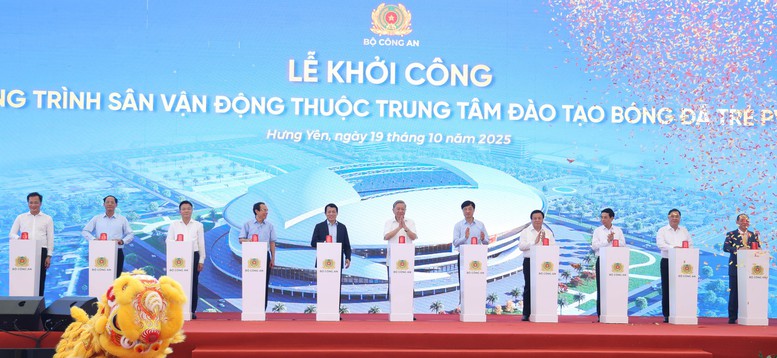
General Secretary To Lam and delegates perform the groundbreaking ceremony – Photo: VGP/Duc Tuan
World-Leading Technology
Designed with a modern vision and world-leading technology, the PVF Stadium will not only serve the physical training and morale-boosting needs of People’s Public Security officers and soldiers but also become a hub for national and international events. It will promote cultural exchange, sports, and tourism, contributing to economic and social development and enhancing Vietnam’s global standing.

General Secretary To Lam and Party and State leaders take a commemorative photo with members of the PVF Youth Football Training Center – Photo: VGP/Duc Tuan
“Given the significance of this key sports project, we commit to implementing it with urgency, discipline, and the highest responsibility. We will mobilize the best resources, focusing on strict quality, progress, and safety management at every stage. Each project component will be executed rigorously, ensuring compliance with design, technical standards, and legal regulations. We will also prioritize sustainability, environmental protection, landscape preservation, and absolute safety for workers,” pledged Mr. Pham Thieu Hoa, representing the general contractor.
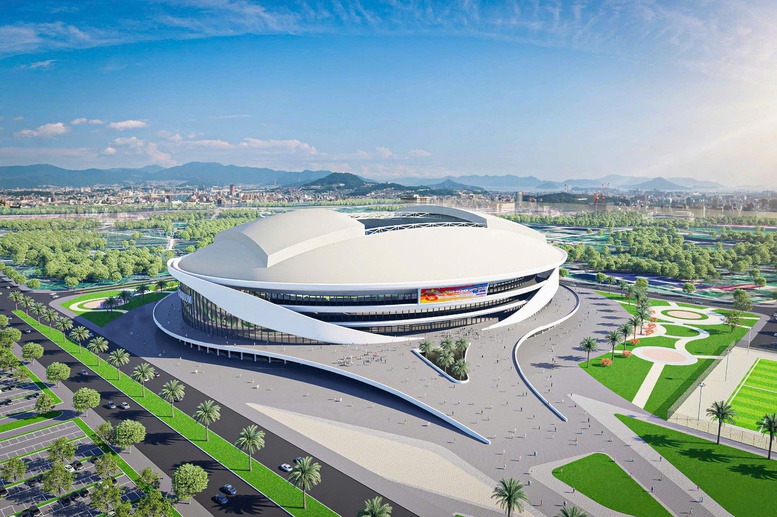
The stadium covers over 55,000 m², with a capacity of 60,000 seats, eligible to host World Cup and regional matches.
The stadium covers over 55,000 m², with a capacity of 60,000 seats, including four main stands (A, B, C, D) and specialized areas: technical, security, broadcasting control center, press, players, VIP, and food service. It also features an 18-hectare outdoor plaza and modern parking area. Designed to FIFA standards, the stadium is eligible to host World Cup and regional matches.
The roof uses advanced PTFE material, blocking UV rays and reducing noise, ensuring a cool, energy-efficient interior with long-lasting durability.
The pitch employs hybrid modular grass technology, combining natural and artificial fibers for enhanced durability, quick drainage, high load-bearing capacity, and easy maintenance. Each grass module can be independently removed, replaced, or relocated, allowing flexible functionality for professional sports events and national/international cultural activities.
The stadium integrates a large LED screen system and modern sound and lighting for live broadcasts, offering a vivid visual experience for spectators.
Upon completion, the PVF Stadium will not only become the “common home” for generations of young Vietnamese players but also a large-scale training and competition center for the People’s Public Security force, supporting physical training, health improvement, and combat readiness for officers and soldiers.
Lan Anh – Duc Tuan
National Assembly’s Economic Committee Applauds Government’s Bold Policies and Visionary Leadership
The National Assembly’s Committee on Economics and Finance (KTTC) commends the Government’s bold, decisive policies, its proactive mindset, and agile, timely leadership. These efforts have yielded significant positive outcomes, with many targets surpassing expectations. This success lays a crucial foundation, bolstering confidence, stabilizing the macroeconomy, and creating favorable conditions for rapid, sustainable development in the upcoming period.
Vietnam Set to Unveil 60,000-Seat Stadium, Surpassing Mỹ Đình with World-Class Technology and Top Asian Ranking
Vietnam’s new stadium will be fully equipped to host major international matches, including the World Cup.
Striving to Commence Construction of the North-South High-Speed Railway by 2026
In the realm of strategic infrastructure development, Prime Minister Pham Minh Chinh has outlined ambitious plans. These include accelerating the implementation of the Lao Cai – Hanoi – Hai Phong railway line, as well as railway connections with China and urban rail projects in Hanoi and Ho Chi Minh City. A key highlight is the targeted commencement of the North-South high-speed railway in 2026.
Prime Minister: Vietnam’s Per Capita GDP Projected to Reach $5,400–$5,500 by 2026
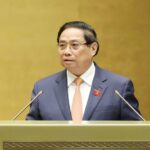
In presenting the projected socio-economic development plan for 2026, Prime Minister Phạm Minh Chính outlined ambitious targets: a GDP growth rate of 10% or higher, per capita GDP reaching $5,400–$5,500, and an average CPI increase of around 4.5%. These goals are supported by ten key task groups and primary solutions.
Today’s Crypto Market, October 19: How a 2-Person Company is Diving into Digital Assets

Bitcoin’s price trajectory is under scrutiny as experts forecast a potential dip to $95,000, with some even suggesting a further decline to the $91,000 range.