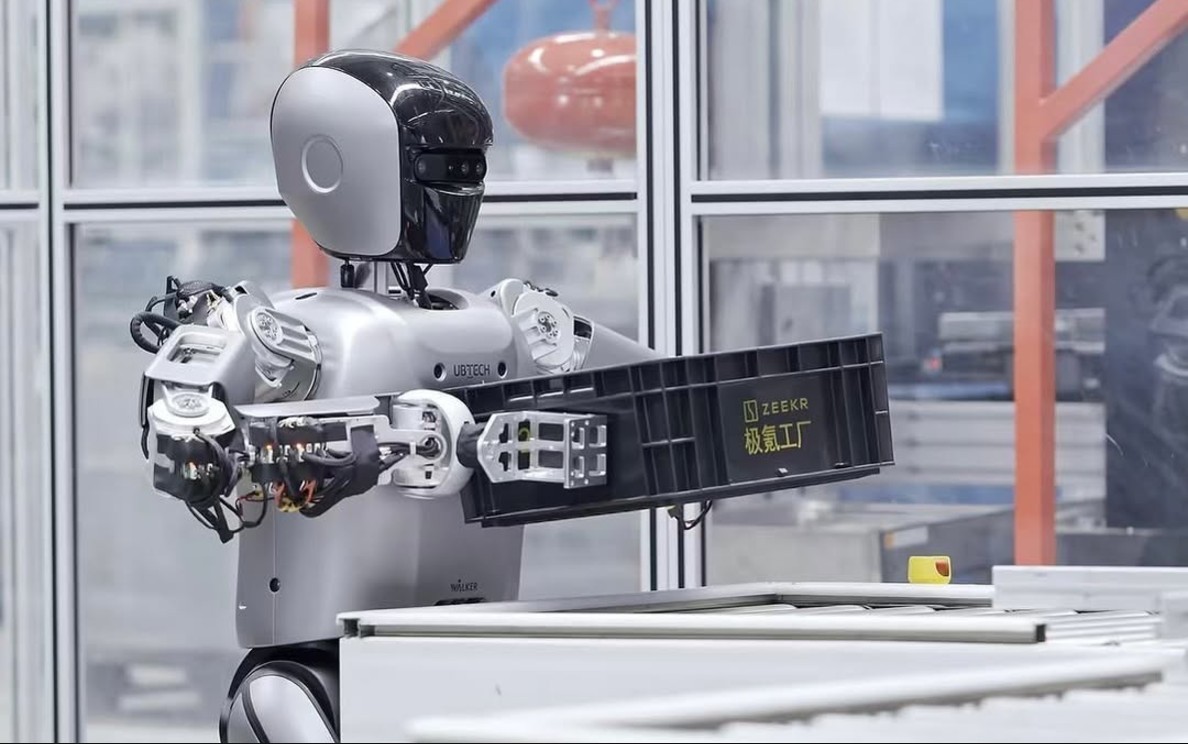
Western business leaders are returning home in a state of shock after witnessing the unprecedented level of automation in China’s factories, where robots operate round-the-clock in “dark factories” devoid of human presence. This spectacle has not only left them stunned but has also raised critical questions about the future of global industrial competition.
Stunned by the “Dark Factories”
According to Futurism on October 14th, citing The Telegraph (UK), a wave of surprise and concern is sweeping through Western industrial circles, particularly in the electric vehicle and renewable energy sectors, following recent executive visits to China. What they witnessed in these Asian factories has been described as “a technological leap that the West had never imagined.”
Jim Farley, CEO of Ford Motor Company, described his visit to several Chinese electric vehicle factories as the “most overwhelming moment” of his career. He noted that the cost and quality of electric vehicles he saw there far exceed current Western standards. In a July interview with The Telegraph, Farley admitted feeling anxious upon realizing that the pace of development and automation in Chinese factories could leave Ford behind within just a few years.
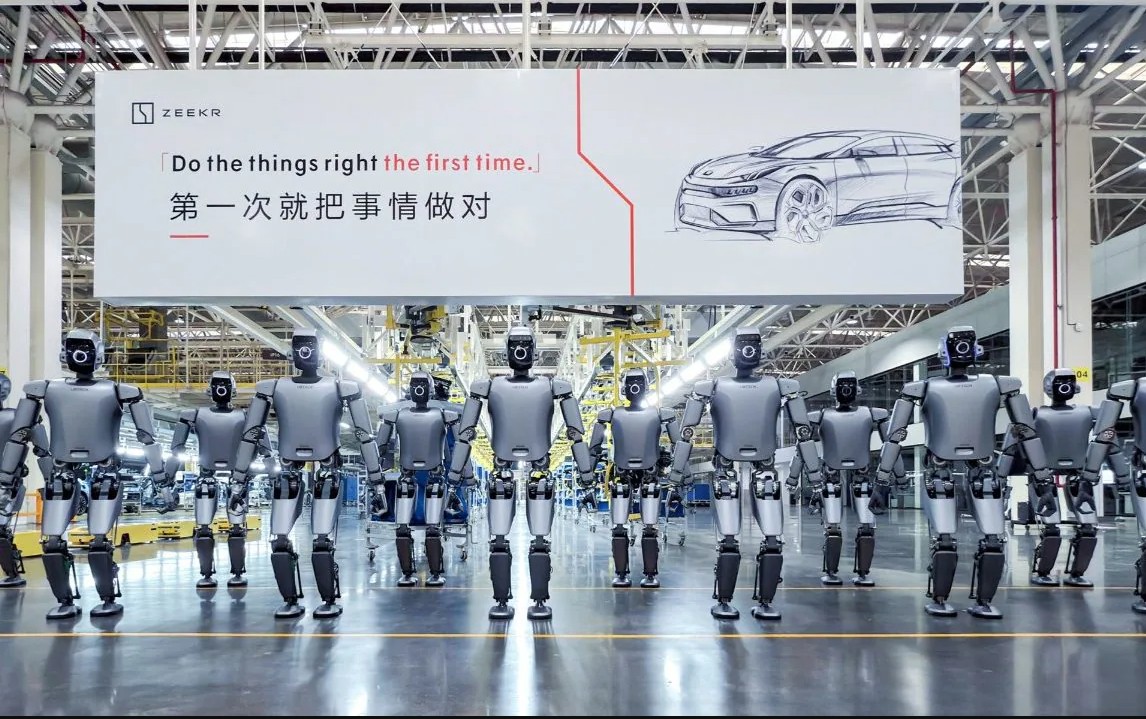
Western business leaders are returning home in a state of shock after witnessing Chinese factories where robots operate round-the-clock in “dark factories” devoid of human presence. (Image: Telegraph)
In a subsequent September interview with The Verge, Ford’s CEO stated that the global automotive industry is entering a fierce competition with China. “We are in a global race, not just for electric vehicles. And if we lose, Ford will have no future,” he emphasized.
Ford is not alone in this realization. Andrew Forrest, founder of the Australian mining giant Fortescue Metals Group, faced a similar situation. After touring several Chinese manufacturing facilities, Forrest decided to abandon his company’s plans to establish its own electric vehicle production line. He recounted that upon entering the factory, he saw no workers. All processes, from assembly and quality control to component transportation, were handled by robots. “There were no people. Everything was fully automated,” he told The Telegraph, asserting that this level of automation far surpasses anything he had seen in Europe or the United States.
Greg Jackson, CEO of Octopus Energy, one of the UK’s largest energy suppliers, shared a similar experience. He described witnessing “dark factories” where thousands of robots work continuously 24/7 without the need for lighting. According to Jackson, China has completely transformed itself, shifting from reliance on cheap labor to knowledge and technological innovation. “You can feel the shift, as China’s competition has moved from subsidized low-cost labor to a talented, creative, and highly skilled engineering workforce,” he said.
China – The Robot Superpower
According to the latest data from the International Federation of Robotics (IFR), China currently deploys more industrial robots than the combined total of the US, Germany, and the UK. The nation has become the world’s largest robotics hub, particularly in the electronics, automotive, and renewable energy sectors.
The significant investment in robotics is not just aimed at reducing labor costs or increasing productivity but is also part of a long-term strategy. China is facing rapid population aging, which threatens to significantly reduce its future workforce. To offset this, the Chinese government has accelerated automation in manufacturing to maintain growth and global competitive advantage.
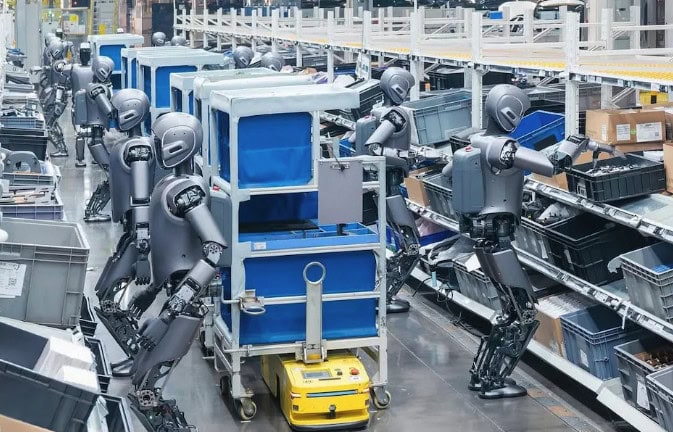
China currently deploys more industrial robots than the combined total of the US, Germany, and the UK. (Image: Telegraph)
Rian Whitton, an analyst at Bismarck Analysis, notes that China has taken a step ahead of the West in recognizing the challenges that developed economies will face: declining populations, rising labor costs, and potential productivity stagnation. Early and aggressive investment in robotics helps China maintain high productivity in the long term and reduces dependence on demographic fluctuations.
Sander Tordoir, Chief Economist at the European Centre for Reform (CER), also warns that the West needs to reassess China’s rapid advancement in automation technology. If China continues to maintain this advantage, many European economies could fall behind. “Effective automation can enhance the productivity of an entire economy. And if China is excelling in this area, we must follow suit, as Europe is aging rapidly,” Tordoir said.
According to Futurism, China currently has over 1.2 million industrial robots in operation, primarily in the electronics, automotive, and green energy sectors. Industrial zones in Guangdong, Shanghai, and Tianjin are seen as models of “smart factories” where the entire process, from production and inspection to packaging, is operated by automated systems and monitored by artificial intelligence.
The New Race in Artificial Intelligence
Automation is just the beginning of China’s industrial strategy. In its 10-year development plan announced earlier this decade, China aims to make artificial intelligence (AI) the primary driver of economic growth. AI is now widely applied in manufacturing, healthcare, transportation, and finance, helping reduce costs, increase accuracy, and minimize reliance on human labor.
The “Made in China 2025” program is also being expanded, focusing on developing core technologies such as industrial robots, semiconductors, energy storage batteries, and intelligent control software. Western experts believe this is a strategic move to solidify China’s position in the era of Industry 4.0, where the boundaries between technology and traditional manufacturing are blurring.
China currently has over 1.2 million industrial robots in operation, primarily in the electronics, automotive, and green energy sectors. (Image: Futurism)
Simultaneously, other sectors such as aerospace and China’s space program are accelerating rapidly. China’s continuous satellite launches, space exploration missions, and goal of landing humans on the Moon by 2030 are causing concern among the US and its Western allies.
Observers note that what has left the West “stunned” is not just the massive scale of China’s manufacturing sector but also the speed of innovation and strategic vision in combining automation with AI to create a production system that is nearly independent of human labor. While many European and American corporations are still grappling with costs, regulations, and labor shortages, Chinese factories have entered an era of self-operating production, where robots can learn from each other and self-adjust processes in real time.
The Future of Global Industry
The growing gap in automation levels between China and the West serves as a clear wake-up call for developed economies. If this trend continues, the gap in costs, production speed, and global competitiveness could tilt decisively in China’s favor in the coming decade.
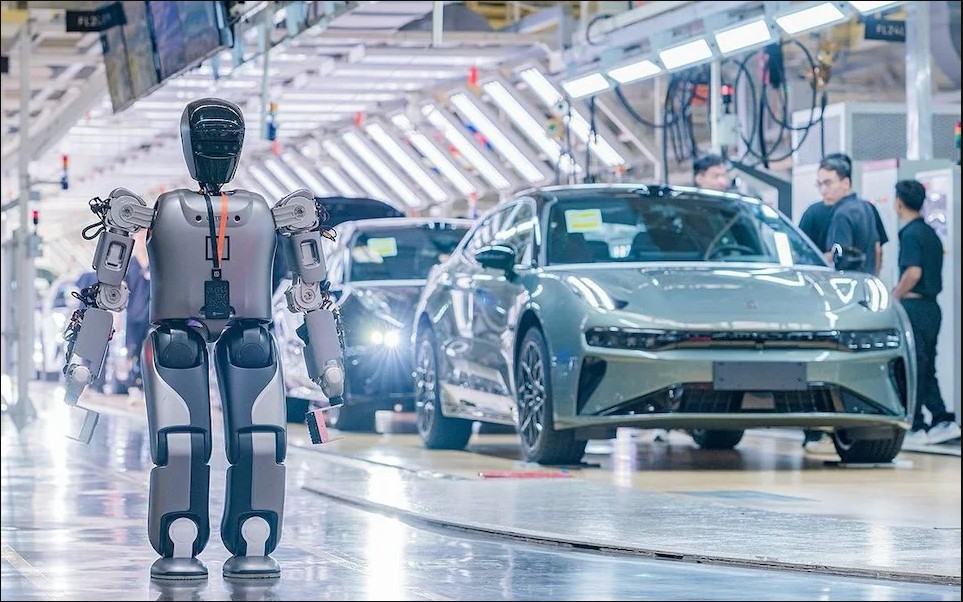
Automation is just the beginning of China’s industrial strategy. (Image: Futurism)
Experts suggest that the most rational response for the West is to increase investment in research, train robotics engineers, and foster public-private partnerships to drive digital transformation in manufacturing. However, catching up with China will not be easy, as China has spent nearly two decades preparing for this phase, with long-term strategies, massive capital, and strong political determination.
These recent executive visits have served as a “wake-up call” for many Western leaders. While robots in China work tirelessly in the dark, the West is still struggling to reignite its fading industrial competitiveness.
China to Double Electric Vehicle Charging Capacity by 2027
China aims to double its electric vehicle charging infrastructure by 2027, ensuring capacity for 80 million vehicles.
Vietnam’s Durian Emerges as a Thai Rival, Eyes Chinese Market Entry, Experts Warn: At Least 2 Years Needed for Success

This nation is actively pursuing direct export opportunities to China, aiming to boost profits by 10–30%. By bypassing intermediaries such as Thailand or Malaysia, it seeks to maximize returns and establish a stronger presence in the Chinese market.
Wuling Mini EV’s Sibling Launches: Affordable MPV with 3 Engine Options, 1,100+ km Range, and Shockingly Low Price Under $13,000
Introducing the latest MPV from Wuling, offering China’s most competitive pricing in its class.
Global Auto Manufacturers Cling to China Despite Heavy Losses and Plummeting Market Share—Here’s the Unbelievable Reason Why

China is not just the world’s largest automotive market where foreign manufacturers must establish a presence—they remain entrenched here for another critical reason, one that significantly impacts global competitiveness.
China’s Green Industrial Powerhouse: The ‘Miracle’ Fueling 30 Million Electric Vehicles and 50,000km of High-Speed Rail
While the world grapples with the electric vehicle revolution, China has quietly constructed a marvel spanning its vast landscape.