















Focus on Completing Administrative Unit Classification
On the morning of October 21, during a group discussion, Minister of Home Affairs Pham Thi Thanh Tra dedicated time to address the two-tier local government model that has been operational for over three months. She assessed that, overall, the model is fundamentally sound, with no disruptions or breaks, ensuring seamless integration, synchronization, and uniformity across the entire system from central to local levels.
According to Minister Pham Thi Thanh Tra, numerous localities have implemented innovative and effective approaches to ensure quality and efficiency following the reorganization and implementation of the two-tier local government model.
Regarding the quality and structure of the civil servant workforce, particularly at the commune level, the Minister highlighted persistent challenges and inadequacies that fail to meet current demands. “We see this very clearly,” shared Minister Tra.
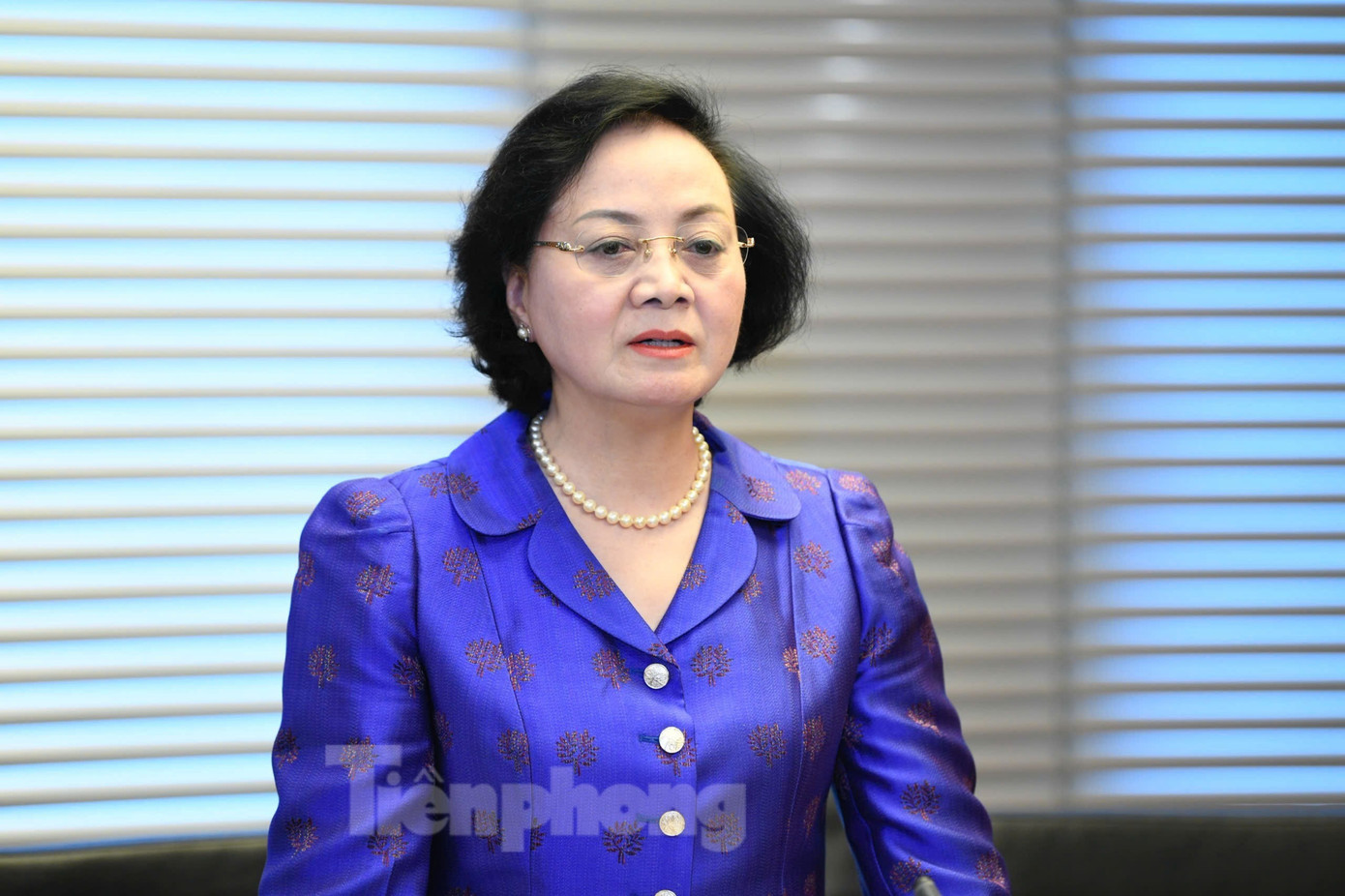
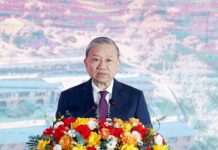
Minister of Home Affairs Pham Thi Thanh Tra. Photo: Nhu Y
Concerning organizational structure, Minister Tra noted that while administrative guidelines have been provided, they have yet to stabilize, necessitating fundamental institutional adjustments to meet requirements.
Regarding decentralization and delegation of authority, after a review, the number of tasks assigned to commune-level authorities has been reduced to 859 from the initial 1,060. Tasks transferred from district to commune levels that overlapped with existing commune responsibilities have been eliminated.
“The central government has delegated up to 949 tasks to provincial levels, a substantial and burdensome volume. This represents a 56% decentralization rate from central to local levels. While this level of delegation is not yet high, it allows localities to decide, act, and take responsibility. We plan to further evaluate and adjust decentralization and delegation in the coming period,” stated the Minister of Home Affairs.
Additionally, Minister Tra acknowledged ongoing challenges with administrative procedures and infrastructure following implementation. She emphasized the critical need to finalize the classification of administrative units, standards for administrative units, and urban criteria.
She described these as the foundation for implementing policies, planning, and development strategies. Furthermore, she stressed that staffing quotas should be allocated based on job positions and administrative unit classifications, avoiding a one-size-fits-all approach.
“This is a significant issue, and we are intensely focused on developing a proposal for the Politburo. We expect to complete it by the end of the month. Following the Politburo’s review, a Decree and a Resolution from the National Assembly Standing Committee will be issued,” Minister Tra informed.
Adjusting Regional Allowances and Position-Based Allowances
The Minister of Home Affairs also highlighted the need to refine various institutional frameworks to optimize organizational structures, including adjustments to base salaries and allowances following administrative unit reclassification. This includes revisiting regional allowances, position-based allowances, and recalibrating all related social welfare policies.
“We must comprehensively review all existing mechanisms and policies, including national target programs, to recalculate and adjust them based on the new administrative unit classifications,” Minister Pham Thi Thanh Tra emphasized.
Currently, ministries are actively progressing on this task. Upcoming laws to be considered by the National Assembly during this session, along with related decrees, are expected to address these issues fundamentally. “This must be done swiftly, without delay,” Minister Tra asserted.
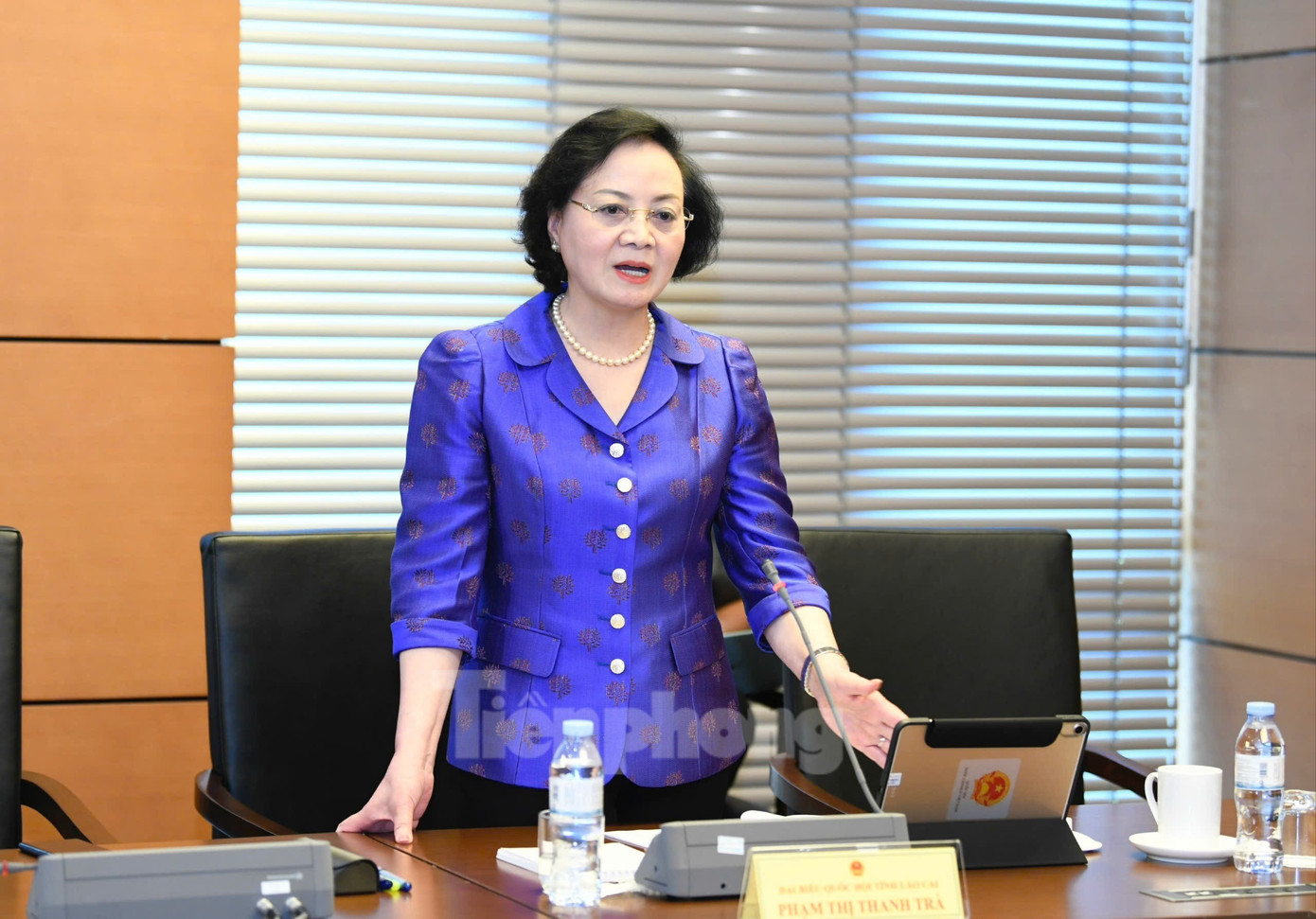
Minister of Home Affairs: “What the team has achieved so far is commendable.” Photo: Nhu Y
Another key focus, according to Minister Pham Thi Thanh Tra, is restructuring and enhancing the quality of the civil servant workforce, particularly at the commune level. Without this, significant challenges will persist. Previously, commune-level tasks were straightforward, but now the workload and responsibilities are considerably greater.
“What the team has achieved so far is commendable, but we must meet two major goals: fostering development and serving the public. We will provide more detailed guidance moving forward,” Minister Tra stated.
The Minister of Home Affairs also indicated that efforts will continue to assess the outcomes and feasibility of decentralization, delegation, and authority allocation. For instance, certain tasks, such as land allocation to businesses, may be beyond commune-level capabilities, leading to initial confusion. Therefore, tasks that communes cannot manage will be reassigned to provincial levels for flexible handling.
Minister Pham Thi Thanh Tra confirmed that a review will be conducted to implement the planned reorganization of villages, hamlets, and neighborhood clusters by May 2026. A draft decree is already in preparation. Regarding the reorganization of public service units, she noted that the Central Steering Committee has a plan in place, and the Government has issued an implementation plan. Initial preparations are underway for reporting to competent authorities.
Dong Thap: Rallying Efforts to Achieve 2025 Growth Targets
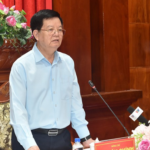
Deputy Prime Minister Mai Văn Chính has urged Đồng Tháp to mobilize all available resources and accelerate efforts in the final months of the year to achieve its socio-economic growth targets. This call to action comes as the province continues to grapple with challenges related to scale, infrastructure, and the pace of public investment.
Proposed Relocation of Land Registration Offices to Commune-Level People’s Committees
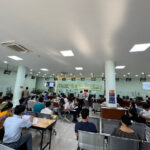
The Land Management Authority proposes transferring the functions and duties of the Land Registration Office to the commune-level land management agency. This consolidation aims to establish a single, unified authority responsible for handling all land-related procedures for both citizens and businesses.
When Will Resigned Employees Receive Benefits Under Decree 178?

The government has mandated that all ministries, agencies, and local authorities promptly finalize the disbursement of benefits and policies as outlined in Decree 178.
Accelerating Land Title Issuance for Undocumented Properties
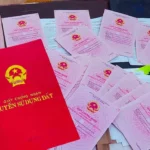
Despite the challenges, establishing an accurate and clean land database is imperative, and issuing land titles for undocumented plots is a necessary step at this juncture.
The Ultimate VIP Transport: Introducing the Armored Lac Hong 900 LX for Global Leaders at the 80th National Day Celebrations.

This exclusive limited-edition vehicle series embodies the essence and cultural identity of Vietnam, serving as a new symbol of Vietnamese pride. With two variants, the Standard and the Bulletproof, this range is an embodiment of resilience and a testament to the indomitable Vietnamese spirit.