

















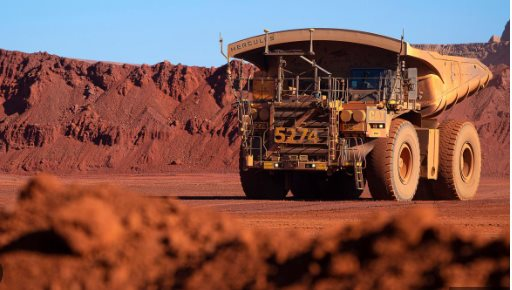
Illustrative Image
As Beijing tightens its grip on the supply of rare earth minerals—essential for electric vehicles, smartphones, and high-tech devices—U.S. President Donald Trump is pushing to establish alternative supply chains to reduce reliance on China. However, analysts caution that this plan may yield limited short-term results.
On October 21, Trump announced that the U.S. would secure “abundant critical minerals and rare earths within just one year,” following an $8.5 billion investment to support Australia’s rare earth projects and expand Washington’s access to these resources.
Under the new agreement, the U.S. and Australian governments will invest over $3 billion in critical mineral projects within the next six months, with an estimated value of $53 billion. The Pentagon will also fund a 100-ton-per-year gallium refinery in Western Australia, while the U.S. Export-Import Bank has pledged $2.2 billion for related initiatives.
China currently controls over 90% of global refined rare earth production. Export restrictions imposed by Beijing this year have disrupted global markets, prompting Washington to strengthen alliances with key partners.
Australia, holding the world’s fourth-largest rare earth reserves and producing nearly half of global lithium, has emerged as a pivotal partner in this strategy. According to the Center for Strategic and International Studies (CSIS), Australia attracted 45% of global rare earth exploration investment in 2024.
Beyond Australia, the U.S. is seeking new regional partners. Pakistan has positioned itself as a potential alternative hub for critical materials after signing a memorandum with the Trump administration to supply rare earths and other minerals. This move aims to diversify supply chains and mitigate risks posed by China’s resource protectionism.
Experts warn, however, that reducing dependence on China will take years. Professor John Mavrogenes of Australian National University notes, “China’s lead is insurmountable. Building a new rare earth supply chain could take decades, even with full commitment.”
Professor Rick Valenta from the University of Queensland highlights that Australia’s rare earth refinery in Western Australia is slated for completion by 2027. “Numerous projects are ready, but final financial backing is critical for production,” he stated.
Given current timelines, Trump’s ambition to swiftly end China’s rare earth dominance appears more long-term than imminent.
Source: CNN
China Sets Record-High Spending on Vietnamese Imports

Compared to September last year, exports of this commodity to China surged by a remarkable 50.7%.
E-commerce Prices Surge Above In-Store Rates: Is China’s Online Retail Losing Its Cost Advantage, Paving the Way for Traditional Retail’s Revival?

The relentless price wars and oversupply in e-commerce have led to a startling reality: online products are now often more expensive than their in-store counterparts.
China Restricts Rare Earth Exports, Prompting U.S. to Secure $8.5 Billion Deal with New Global Supplier: Fourth-Largest Reserve Holder Steps In

This landmark agreement secures a critical supply of strategic minerals essential for defense, renewable energy, and high-tech industries.
Western Leaders Stunned by Visit to Chinese Factory: No Workers in Sight, Only Bizarre Innovations

What have Western business leaders witnessed firsthand within Chinese factories?
China to Double Electric Vehicle Charging Capacity by 2027

China aims to double its electric vehicle charging infrastructure by 2027, ensuring capacity for 80 million vehicles.