According to Dr. Nguyen Van Dinh, Vice Chairman of the Vietnam Real Estate Association (VNREA), construction material costs account for approximately 50% of construction expenses. Therefore, alongside supply and demand dynamics in the market, land prices, and other factors, fluctuations in construction material prices significantly impact housing prices. Prolonged increases in construction material costs will likely hinder any potential reduction in housing prices.
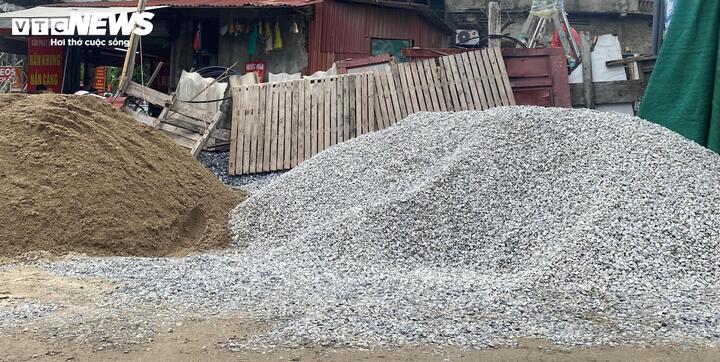
Soaring construction material prices make housing price reductions even more challenging. (Illustrative image: Cong Hieu)
Dr. Tran Xuan Luong, Deputy Director of the Vietnam Real Estate Market Research Institute, previously commented on the rising construction material costs. He noted that this trend significantly increases construction expenses, subsequently affecting the overall pricing of new housing and real estate products. However, Dr. Luong emphasized that the specific impact varies depending on the type of material, its reliance on imports, and domestic production capacity.
Data from the Construction Economics Institute (Ministry of Construction) highlights significant volatility in materials like sand and stone. Natural sand prices in some areas have surged by 58.4% year-on-year, while construction stone prices have increased by 10-18% quarterly since the beginning of the year. In many provinces, sand prices range from 700,000 to 800,000 VND/m³, with some areas exceeding 1 million VND, marking a 30-60% increase from the previous month. Construction steel prices have risen by an average of 100,000 to 270,000 VND/ton, varying by type and region.
“The sharp rise in sand and stone prices has increased the cost of various construction projects by approximately 3% compared to previous levels,” the Institute reported.
Businesses and Citizens Bear the Brunt
From a business perspective, Mr. Kieu Xuan Vinh, CEO of a Hanoi-based construction company, shared that amidst the current surge in raw material costs, developers face significant challenges in managing overall investment levels. There’s a high likelihood that selling prices for apartments will need to be adjusted to offset these additional expenses.
“If construction material prices continue to rise as they are, developers will be compelled to restructure selling prices to maintain financial balance and product quality,” Mr. Vinh stated.
Mr. Vinh recounted that late last year, his company secured a contract to construct a row of houses in an outer district, with a total value exceeding 30 billion VND and a 12-month construction timeline. At that time, he meticulously calculated material costs—including cement, steel, bricks, and sand—and committed to a fixed price with the developer. However, by 2025, material prices skyrocketed: steel by 25%, cement by 15%, and sand and stone prices increased weekly.
This situation left Mr. Vinh’s company in a “Catch-22.” Continuing construction under the original contract would result in losses, potentially worsening if material prices continued to rise. Yet, halting work or requesting price adjustments would breach the contract, damaging the company’s hard-earned reputation.
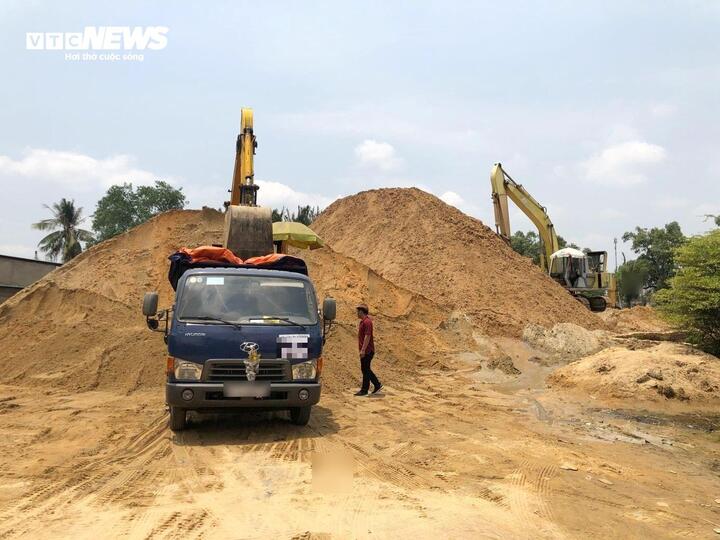
According to the Ministry of Construction, natural sand prices in some areas have surged by 58.4% since the beginning of the year. (Illustrative image: Dai Viet)
The impact extends beyond construction companies to individual homeowners undertaking renovations or new builds.
After years of saving on a modest office worker’s salary, Mr. Phi Minh Tuan (Ung Hoa commune, Hanoi) planned to build a small house on land inherited from his parents earlier this year. After financial planning and consultations, he hired an architect and estimated the cost at just over 1 billion VND for a well-appointed, functional single-story home.
Construction began in April, but within a month, the contractor announced price increases for steel, cement, and other materials—steel alone rose by approximately 1.5 million VND per ton.
“Daily fluctuations in construction material prices led to continuous cost overruns. The contractor suggested either adjusting the budget or modifying the design to reduce expenses. I had to borrow an additional 200 million VND from relatives and cut back on interior features to complete the structural work,” Mr. Tuan recalled.
Ultimately, the house was completed in four months but at a total cost exceeding 1.1 billion VND, far surpassing initial estimates.
“Market volatility far exceeded my expectations. Had I foreseen these conditions, I would have prepared financially before deciding to build,” Mr. Tuan reflected.
Why Are Construction Material Prices Fluctuating?
Explaining the surge in construction material prices, a leader from the General Statistics Office cited several factors, including concentrated public investment in major infrastructure projects (highways, ports, airports), which has sharply increased demand for sand, stone, steel, and cement.
Additionally, local shortages of construction sand and stone have occurred due to supply disruptions: depleted mines, interrupted extraction, and landslides.
Mr. Nguyen Quoc Hiep, Chairman of the Vietnam Construction Contractors Association, noted that current construction material prices pose a significant challenge for the industry and contractors. Some materials have increased by up to 40% in value and are in short supply.
According to Mr. Hiep, during 2021-2022, construction activity slowed, leading to reduced consumption and lower material prices due to fewer projects.
Since 2024, regulatory easing and real estate market recovery have increased project numbers. Notably, several large-scale projects have been launched, absorbing substantial material resources. This has led to material shortages due to limited supply amid high demand.
Mr. Nguyen Quoc Hiep proposed that state management agencies implement policies and plans to increase construction material supply. Additionally, mechanisms should be established to verify whether provincially announced material prices align with market realities, ensuring smooth construction operations and project timelines.
In response to soaring construction material prices, the Ministry of Construction recently requested that provincial People’s Committees direct their Departments of Construction to accurately announce material prices, labor rates, machinery costs, and construction indices in compliance with regulations.
Furthermore, the Departments of Construction were urged to collaborate with local agencies to gather market price data from major material producers, distributors, developers, and contractors. This information will inform official material price announcements.
The Ministry also called for urgent reviews and assessments of local construction material needs to update development plans. This includes identifying and designating areas with potential for common construction minerals (river, lake, and sea sand; construction stone; fill soil) for protection, exploration, extraction, and use in provincial mineral resource plans, subject to approval by competent authorities.
Accelerating the issuance of mining licenses for common construction minerals will increase supply, curb shortages, stabilize prices, and meet local material demands.
Knight Frank: Logistics Firms Dominate Ho Chi Minh City’s Office Rental Market

The Ho Chi Minh City office rental market is undergoing a significant shift in tenant composition, with logistics companies emerging as the primary drivers of demand. Knight Frank Vietnam’s Q3 2025 report highlights how the booming logistics sector is reshaping the city’s office landscape.
Mounting Challenges and Bankruptcy Risks Due to Flawed Construction Material Pricing Mechanisms

Skyrocketing construction material costs have left contractors reeling, with some reporting losses of 15-20% on projects. Multi-billion dong shortfalls and even halted construction sites have become stark realities as companies grapple with the volatile market, desperately awaiting price stabilization.
Urban Darkness: Addressing the “No Streetlights” Crisis and Strategies to Stabilize Housing Prices
Amidst the growing concern of numerous new urban developments lying eerily vacant despite their modern infrastructure, Dr. Nguyen Van Dinh, Vice Chairman of the Vietnam Real Estate Association, has proposed six comprehensive solution groups aimed at restoring housing prices to a reasonable level.
Skyrocketing Real Estate Prices: When a Motorcycle Can Only Buy You… “A Beautiful Window Frame”

Dr. Vo Tri Thanh highlights that Vietnamese real estate prices have significantly outpaced their true value and the purchasing power of citizens, posing a risk of distorting investment structures. Meanwhile, Savills experts attribute the root cause to limited supply and escalating development costs, creating a market imbalance that further distances homebuyers from their dream of stable housing.
Gold Prices Surge Past 160 Million VND/Tael: Investors Lock in Profits, Shift Focus to Coastal Real Estate for Emerging Opportunities
As domestic gold prices surge past 160 million VND per tael, Vietnam’s asset market is witnessing a pronounced shift in capital flows, moving away from traditional safe-haven channels toward tangible assets with higher profit potential. Coastal land plots are poised to emerge as the most attractive investment destination in Q4/2025 and Q1/2026.