














The proposed regulation is outlined in the draft Decree on the construction and management of the information system and database for housing and the real estate market, which will replace Decree 94/2024 by the Government. The Ministry of Construction is currently seeking public feedback on this draft.
According to the proposal, a centralized and unified national database will be established, connecting central and local levels with existing databases on population, land, businesses, credit, and taxation.
The primary objective is to enhance transparency in housing and real estate activities, supporting state management, market regulation, and addressing legitimate societal needs.
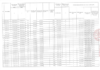
Previously, Decree 94 lacked detailed provisions regarding property ownership information for organizations and individuals. In this new draft, the Ministry of Construction proposes that Vietnamese and foreign entities must provide data fields including identification details (name, identification number, legal documents), property type, address, area, quantity, ownership duration and form, and legal status.
Graphic: Hồng Khanh |
The draft also includes beneficiary information for housing policies and support, such as identification details, beneficiary type (social housing, housing for veterans, low-income housing, etc.), quantity, and duration of benefits. Individuals eligible for social housing must provide personal identification, registration type (purchase, rent, rent-to-own), and the specific project details.
Beyond ownership and transaction data, the Ministry of Construction proposes that the system manage project information, transactions, pricing, inventory, broker certifications, foreign investment, credit balances, and corporate bond issuances in the real estate sector.
The draft encourages citizens to conduct transactions through real estate trading floors, centers, or electronic platforms to enhance transparency, convenience, and oversight. The state will monitor transaction volumes, prices, and values of real estate properties.
If enacted, this information will be integrated into the national information system for housing and the real estate market.
Additionally, the Ministry of Construction proposes creating a unique real estate identification code managed within the information system. Each real estate project will automatically receive a unique code, ensuring consistent identification throughout its data lifecycle. Provincial authorities will generate this code upon project approval and continue to link and update data for each product within the project.
Implementation Timeline
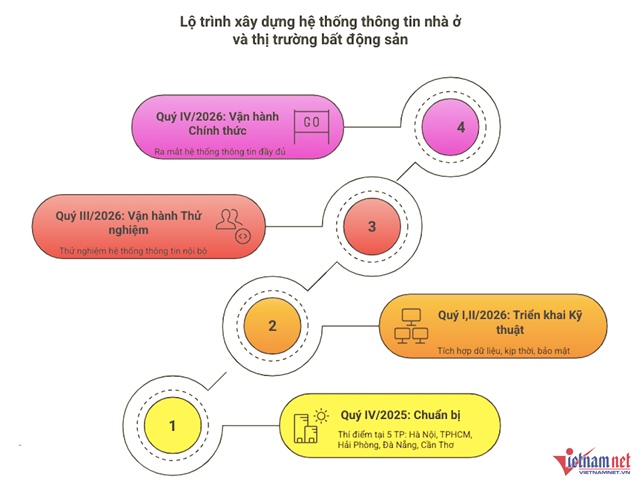
The Ministry of Construction suggests a phased implementation. The preparation phase, starting in Q4 of this year, includes pilot programs in five cities: Hanoi, Ho Chi Minh City, Hai Phong, Da Nang, and Can Tho.
The technical implementation and data update phase will occur in the first two quarters of 2026. Authorities will integrate data to synchronize with the national information system for housing and the real estate market. Data collection, updates, and storage will be prioritized during this phase to ensure timeliness and security.
From Q3/2026, the system is expected to undergo internal testing before its official launch in Q4 of the following year.
Authorities will periodically evaluate the system’s performance, making improvements and maintaining it from 2027 onward.
The Ministry of Construction will invest in, upgrade, or lease infrastructure and technology services to facilitate connections with agencies and localities. It will also develop plans and manage funds allocated for data collection and database construction.
The Ministry of Agriculture and Environment will collaborate to connect and share data from the national land database.
Provincial People’s Committees are tasked with establishing and issuing regulations for coordinating the sharing and provision of housing information within their jurisdictions.
Organizations and individuals are responsible for providing complete and timely information about housing and the real estate market. Once the shared software system is finalized, citizens will submit information online.
Hồng Khanh
– 14:02 25/10/2025
“Over 27 Trillion VND Expressway Project Delayed: Ministry of Construction Urges Immediate Action”
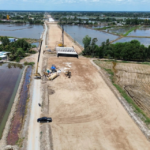
The Can Tho-Ca Mau Expressway project is facing significant delays, prompting the Ministry of Construction to urgently demand the redistribution of workloads to accelerate progress.
Latest Updates on the North-South High-Speed Railway in Vietnam

The Ministry of Construction has collaborated with the Ministry of Science and Technology to develop and finalize drafts of 37 Vietnamese standards, aligning them with international ISO standards. These standards are general in nature and do not directly pertain to the core technologies of high-speed rail systems.
Ministry of Construction: Public Investment Disbursement Reaches Over 54% of Annual Plan
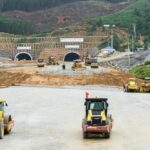
By the end of October 2025, the Ministry of Construction’s disbursement rate is projected to reach approximately 50% of the initial annual plan and surpass 54% of the adjusted plan, following reductions in mandatory expenditures and reallocations to local authorities.
Long Thanh International Airport Set for Second Calibration Flight

On October 25th, the Vietnam Aviation Authority (under the Ministry of Construction) is scheduled to conduct calibration flights for VOR/DME, radar, ADS-B, and traditional VOR/DME flight procedures. This initiative aims to update and enhance the existing flight routes at Long Thanh International Airport.
Proposed Renaming of the North-South High-Speed Railway

The Ministry of Construction has proposed renaming the North-South high-speed railway to the “high-speed railway on the North-South axis,” spanning approximately 1,541 km (a 4 km reduction from the original plan). Notably, the Vinh – Nha Trang segment will be prioritized for investment, advancing its timeline to before 2030, instead of after as initially scheduled.