


















A Clear Roadmap is Essential
On October 24th, during the seminar titled “Maintaining the Land Registration Office Branch Model and Adjusting the Timeline for Transfer to Communes,” Dr. Pham Viet Thuan, Director of the Institute of Natural Resources and Environment Economics in Ho Chi Minh City, stated that to date, 34 provinces and cities have established one provincial-level Land Registration Office and 703 district-level branches (former), operating under the Department of Agriculture and Environment. These offices are functioning stably and uniformly in terms of expertise.
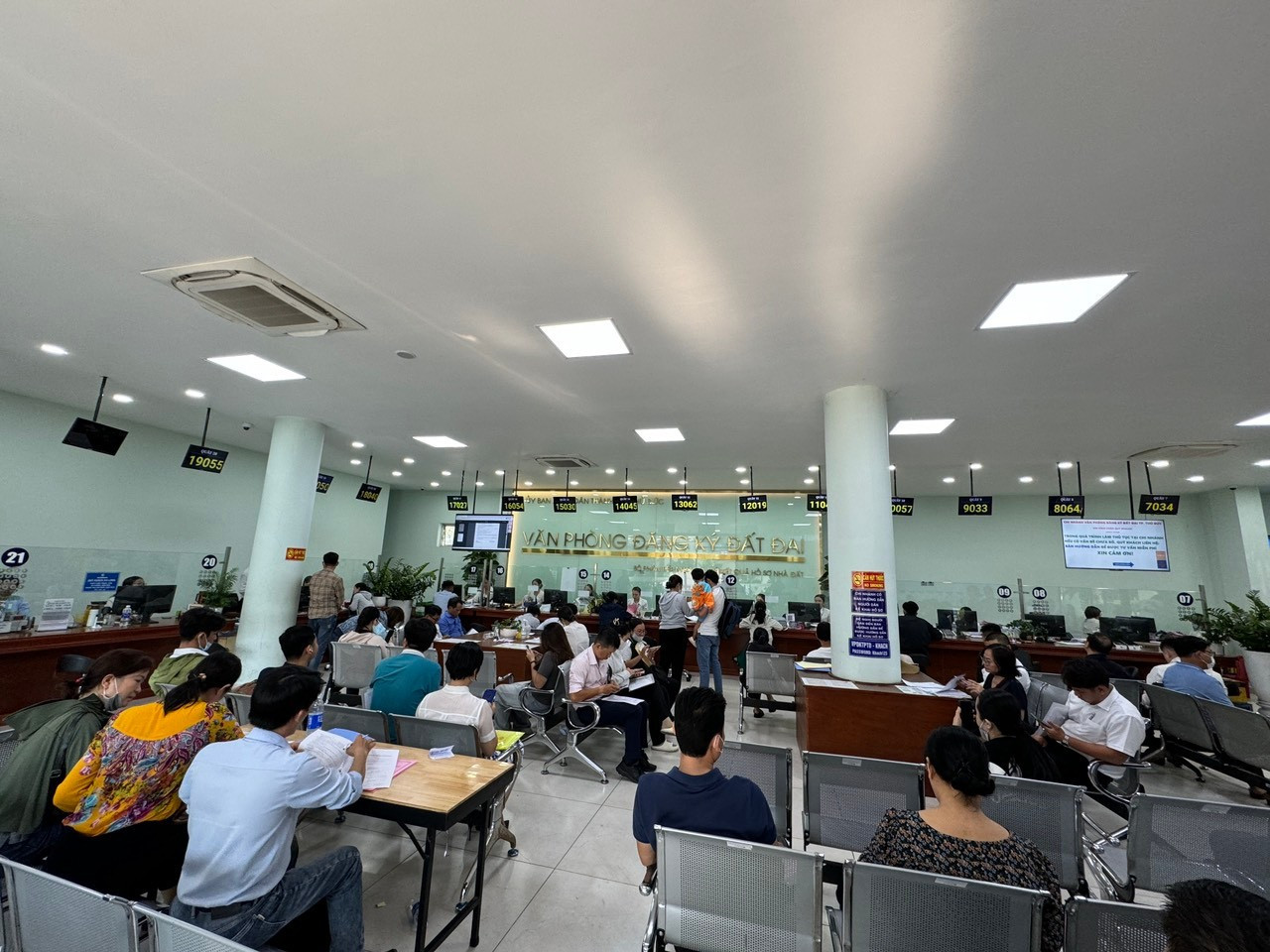
Land Registration Offices are self-funded public service units, reducing the burden on local budgets.
These Land Registration Offices serve as vertical industry hubs, ensuring land measurement, changes in land records, and centralized land data management, interconnected with tax, judicial, banking, and notary services. As self-funded public service units, they alleviate the financial strain on local governments. Transferring these responsibilities to communes would incur recurring costs for infrastructure, data security, and training, exceeding the budgetary capabilities of commune-level administrations.
Therefore, Dr. Pham Viet Thuan proposed retaining the current Land Registration Office branch model to ensure unified management, data security, and quality service for citizens, especially while national digital infrastructure and data systems remain incomplete.
Dr. Thuan also urged the government to consider postponing the transfer to communes until the national land data system is fully developed and operational, ensuring adequate infrastructure, personnel, and financial conditions at the commune level.
“Transferring all Land Registration Office functions to communes before digitization is complete risks data disruption, file inaccuracies, and information security breaches. Maintaining the current branch model safeguards unified state management, ensuring secure, transparent, and efficient national land data administration during the digital transition,” Dr. Thuan emphasized.
Assoc. Prof. Dr. Nguyen Dinh Tuan, former Rector of the University of Natural Resources and Environment in Ho Chi Minh City, also advocated for retaining the current Land Registration Office branch model. Immediate transfer to communes would face challenges due to insufficient human resources and technological equipment.
According to Dr. Tuan, transferring Land Registration Office branches to communes requires four conditions: First, complete digitization of provincial land data and ensure commune-level transmission and equipment. Second, finalize legal frameworks and specific regulations on authority, decentralization, and organizational restructuring. Third, train and reorganize staff, guide civil servant transitions, and provide commune land administration training. Fourth, implement a pilot program, learn from experience, gradually expand, and ensure continuous service oversight.
Non-compliant with the Law
Meanwhile, Mr. Do Duc Doi, former Deputy Director of the Land Information and Registration Department at the Ministry of Natural Resources and Environment, asserted that the purpose of establishing Land Registration Office branches was to separate state management from professional operations. The state handles land planning, allocation, leasing, revocation, and purpose changes, while the branches, as specialized agencies, issue land certificates.

Immediate transfer of Land Registration Office branches to communes would complicate administrative procedures for citizens.
Land Registration Office branches are specialized units under the provincial People’s Committee as per the 2024 Land Law. Transferring them to communes is unlawful, especially as they currently operate effectively despite incomplete and unsynchronized land data.
“With 18 years in this sector, I’ve seen this model perform exceptionally well. Any directives or resolutions must comply with the 2024 Land Law and practical realities. Retaining the current model is best as it operates efficiently,” Mr. Doi stated.
Mr. Doi warned that immediate transfer to communes would complicate administrative procedures for citizens. Government Resolution 316 mandates studying the reorganization of the Land Registration Office system but does not specify commune-level transfer. Reorganizing and finding new models for land registration offices is necessary but should not involve immediate commune-level transfer.
Attorney Hoang Thi Thu, Director of HTVN Law Firm, noted that current laws lack specific guidance on the functions, roles, and operations of Land Registration Office branches under commune management. Since the merger, the new system has not stabilized, and many issues remain unresolved.
Given the effective operation of Land Registration Offices and branches, immediate transfer to communes would face legal and practical challenges. Attorney Thu suggested maintaining the current model for 1-2 years, addressing operational inefficiencies, streamlining procedures, and preparing legal, personnel, financial, and technical conditions for a smoother future transition.

Transferring Land Registration Offices to communes may lead to overload.
Mr. Tran Khanh Quang, CEO of Viet An Hoa Investment Company, noted that communes already handle numerous tasks, and transferring Land Registration Offices could lead to overload. Without complete digital data, such a transfer would shift difficulties between levels and complicate citizen record processing.
“We must first upgrade human and technical infrastructure and synchronize real estate data for transparency before transferring to communes. Immediate transfer would cause significant confusion,” Mr. Tran Khanh Quang said.
A Tax Department-like Structure is Recommended
Mr. Le Hoang Chau, Chairman of the Ho Chi Minh City Real Estate Association (HoREA), suggested organizing Land Registration Office branches like the tax department, operating vertically. For example, the Ho Chi Minh City Tax Department and its 29 district tax offices function as local tax units, organized by region.
Currently, over 80% of communes lack adequate IT infrastructure, with some lacking stable national power grids or reliable internet. Commune staff often juggle multiple roles. A regional approach would bring services closer to citizens, utilizing existing Land Registration Office branch facilities and personnel, saving costs, avoiding new bureaucracy, and improving citizen services.
Previously, the Party Committee of the Land Management Department proposed transferring the functions of Land Registration Office branches to communes to streamline the apparatus. Nationally, there are 703 Land Registration Offices under the Department of Agriculture and Environment, employing 16,683 staff.
Prime Minister Demands Clear Information on Social Housing Applicants

Regarding eligibility for social housing beneficiaries, the Prime Minister mandates transparency and clarity in disclosing who requires housing, who already owns a home, and who does not.
Prime Minister: Streamlining Processes to Ensure Social Housing Projects Are Completed Within 2-3 Years
The Prime Minister emphasized the need to slash administrative procedures by at least 50%, categorizing social housing projects as “green lane” or “priority lane” initiatives to expedite processes and ensure timely implementation. Additionally, flexible methods should be employed to secure cleared land for social housing development, while diversifying funding sources to support its expansion.
Prime Minister Directs Streamlining of Administrative Procedures Using Available Data

Prime Minister Pham Minh Chinh has issued Directive No. 201, urging all ministries, sectors, and localities to promptly review, streamline, and simplify administrative procedures using existing data. This initiative aims to significantly reduce time and costs for citizens and businesses.
Breaking: National Police Propose Major Changes to Land Ownership Certificates for All Vietnamese Citizens

This initiative marks a pivotal step in the national campaign to enrich and purify the land database, ensuring accuracy and reliability for future development and planning.
Land Management Agency Explains Request for Red Book Copies from Citizens

Gathering land certificate copies is essential for auditing, cross-referencing, and enriching land data. Citizens need only provide a copy of their land certificate and citizen ID card when requested by the working group, without the need for notarization. Moving forward, land certificates will be integrated into the VNeID app, enabling citizens to self-declare and verify their information seamlessly.