












Illustrative Image
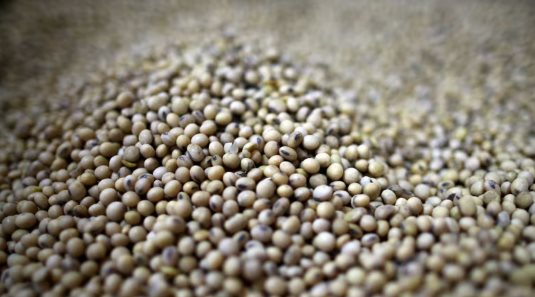
The Japanese government is planning to subsidize storage costs for private companies importing soybeans from the United States, fulfilling commitments made in the bilateral trade agreement signed with the Trump administration. This move comes just ahead of President Donald Trump’s visit to Japan next week.
According to sources from Japan’s Ministry of Agriculture, Forestry, and Fisheries (MAFF), Tokyo is expected to allocate billions of yen—equivalent to tens of millions of USD—in a supplementary budget submitted to the current parliamentary session. These funds will support storage costs for companies importing additional U.S. soybeans beyond their usual volumes, while also boosting domestic consumption.
Currently, most U.S. soybean imports are stored by Japanese companies in warehouses at major ports nationwide. The government is reportedly encouraging businesses to include a specific additional volume of U.S. soybeans in their annual import plans, demonstrating full commitment to the agreed trade terms with Washington.
MAFF data shows Japan’s soybean demand has ranged between 3.5 and 3.9 million tons annually over the past five years. Soybeans are primarily used to produce salad oil and animal feed for poultry, pigs, livestock, and increasingly in aquaculture.
Japan’s self-sufficiency rate for soybeans stands at just 7% by weight in the 2024 fiscal year. Total imports in 2024 increased by 0.5% to 3.17 million tons, with the U.S. accounting for 65.7% of the market share.
Under the bilateral trade agreement, Japan pledged to import approximately $8 billion worth of U.S. agricultural products annually, including soybeans, corn, and bioethanol. The Japanese government is expected to highlight its efforts to fulfill this agreement during the upcoming summit between Prime Minister Sanae Takaichi and President Trump on Tuesday.
This is not the first time Tokyo has implemented such support measures. In 2019, amid escalating U.S.-China trade tensions, Japan announced plans to purchase U.S. corn for animal feed and established a subsidy mechanism to cover all storage costs, addressing crop damage caused by fall armyworms.
This latest storage subsidy for soybeans is seen as a symbolic gesture, underscoring Japan’s commitment to maintaining stable trade relations with the U.S., particularly as both sides prepare for new negotiations on agricultural and energy trade.
Source: Nikkei
Today’s Coffee Prices (Oct 14): Strong Start to the Week with Upward Trend
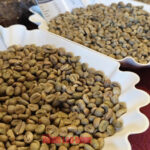
Coffee prices surged today, with both Arabica and Robusta experiencing significant gains. Vietnam’s coffee exports to Japan saw an even more notable increase, surpassing the overall market trend.
Japan’s ‘Green Gold’: The World Scrambles for Its Rare, High-Demand Powder
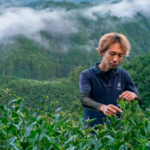
In just a few months, Japan has reaped hundreds of millions of dollars from the sale of this revolutionary powder.
Unrivaled and Unchallenged: This Region Reigns Supreme as Vietnam’s Labor Export Capital

Annually, remittances from overseas workers to their families in Vietnam total an estimated $600–650 million.
Toyota Aims to Expand Green Vehicle Investments, Boost Local Production, and Make Cars More Accessible in Vietnam
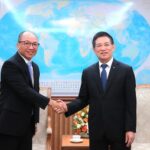
On the morning of September 25th, Deputy Prime Minister Hồ Đức Phớc received Mr. Tiền Quốc Hào, Chairman of Toyota Asia, and his delegation during their working visit to Vietnam.
Honda Unveils New Mini Electric Vehicle: 295km Range, Starting Under $21,000

The N-ONE e: electric vehicle is poised to revolutionize the compact EV market, setting a new benchmark for innovation and performance in its class.