



















After 15 years of delays, the expansion of the Hanoi Highway in Ho Chi Minh City is finally moving forward. The project, led by HCMC Infrastructure Investment Joint Stock Company (CII), has been adjusted for a 2027 completion. Spanning 15.7 km, it includes three segments from Saigon Bridge to Tan Van Junction, expanding to 12-16 lanes with a budget of over VND 4.9 trillion.
Simultaneously, the Tan Van Junction project aims for technical completion by late 2025 and full completion in 2026. As the most complex part of HCMC’s Ring Road 3, it will enhance regional connectivity and spur new development. Other key projects, such as the Binh Thai Junction and the HCMC-Long Thanh Expressway expansion, are also accelerating to alleviate traffic congestion.
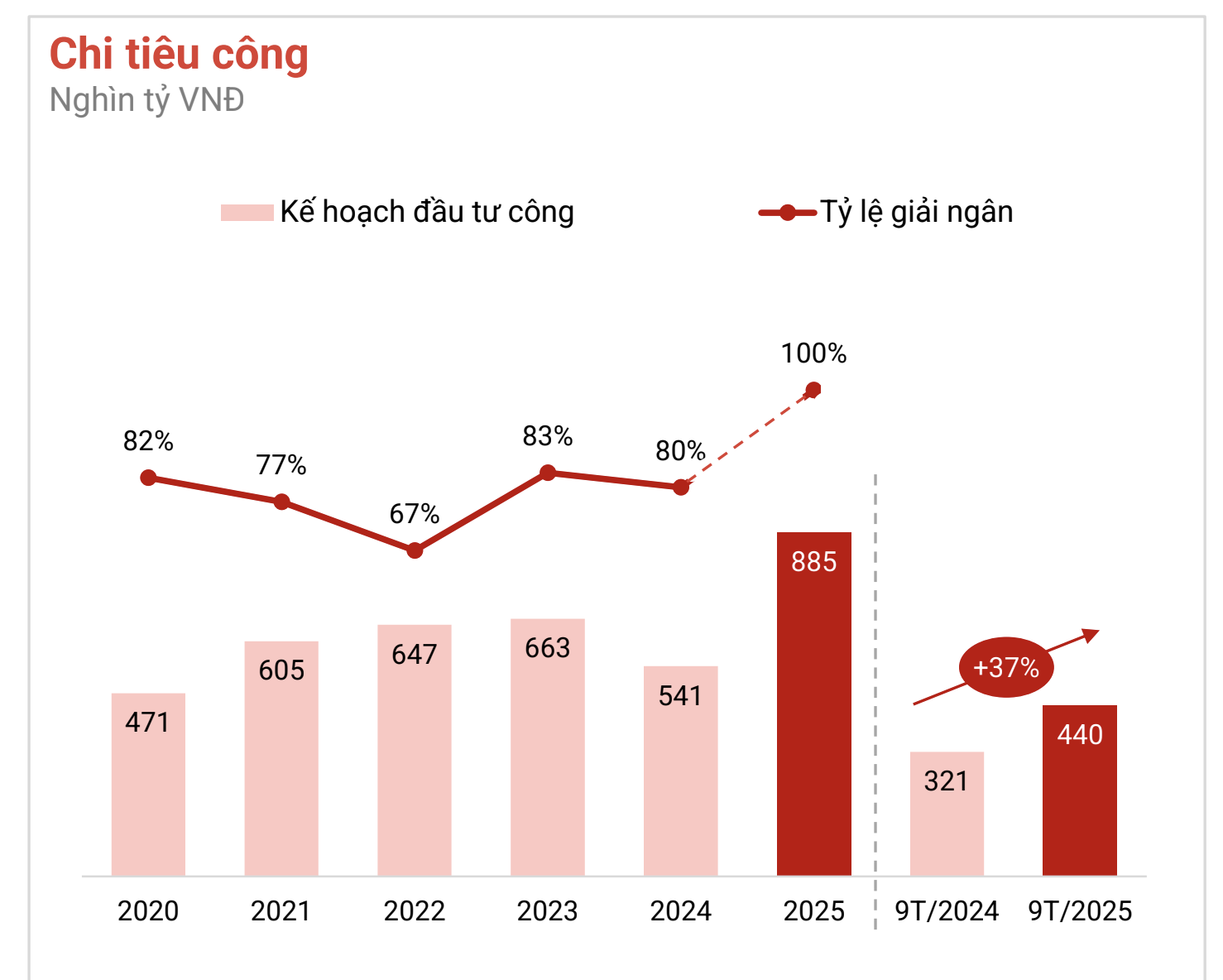
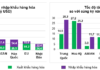
Increased public spending and infrastructure investment are driving GDP growth, impacting the economy and sectors like real estate. Source: NSO
The completion of these projects will significantly boost the regional economy, particularly the real estate market. Properties near these infrastructure developments are expected to see higher demand and future price appreciation.
Strategically located at the intersection of Hanoi Highway and Ring Road 3, The Gio Riverside by An Gia is a prime project near Tan Van Junction. Residents will enjoy seamless connectivity, with a 5-minute drive to Tran Bien Ward (Dong Nai), 10 minutes to the Bien Hoa-Vung Tau Expressway, and 20 minutes to Long Thanh International Airport. This 2025 flagship project features two 40-story towers with 3,000 apartments, surrounded by amenities like the New Eastern Bus Station, Aeon Mall Bien Hoa, and Thu Duc University Village.
Other Eastern HCMC projects like Fresia Riverside, Vinhomes Grand Park, The Classia, MT Eastmark City, The 9 Stellars, and Palm Marina also benefit from improved connectivity and liquidity.
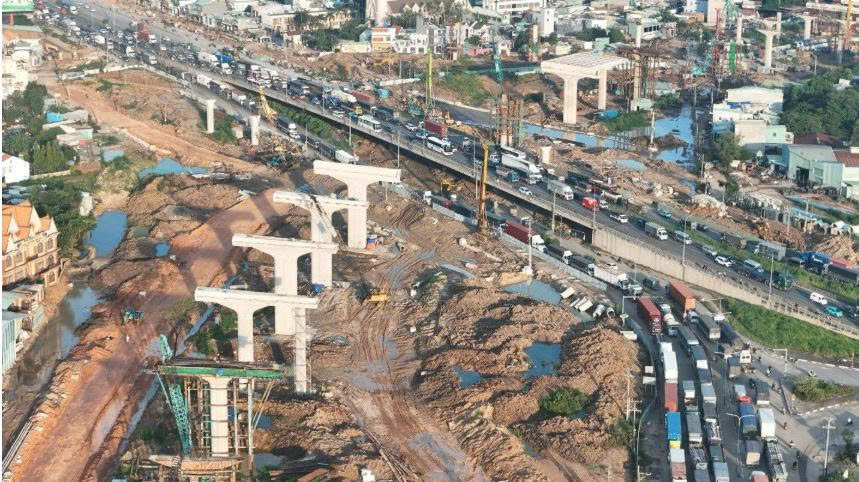
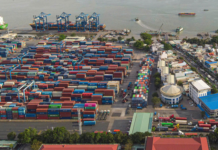
Infrastructure reshapes economic and residential flows, creating significant commercial value. Photo: Tan Van Junction under construction
Experts highlight that completed infrastructure not only reduces travel time but also reshapes economic and residential flows. Projects near key infrastructure will see increased utility and commercial potential.
In a reshaping market, investors and buyers prioritize properties with high utility and real infrastructure connections. The 2025-2028 completion of these projects will significantly reduce travel time from HCMC to Binh Duong and Dong Nai to 15-20 minutes, while fostering logistics, trade, and international investment.
Additionally, metro lines and ring roads will transform the Eastern region, driving real estate growth along and near these routes.
National Highway 13: A $600 Million Expansion to a 60-Meter Wide Roadway

Stretching nearly 6 kilometers along National Highway 13, the segment from Bình Triệu Bridge to Vĩnh Bình is perpetually congested, constrained by its narrow 4-6 lane configuration despite being a vital artery and home to a dense population. By 2026, this critical route will be expanded to a 60-meter width, alleviating the chronic pressure on Ho Chi Minh City’s northeastern gateway.
Eastern Real Estate Market Gains Momentum as Infrastructure Projects Accelerate in the Final Quarter

Real estate in Binh Duong, Dong Nai, Long An, and Ba Ria – Vung Tau (formerly known as such before consolidation) is emerging as a highlight towards the end of the year. Among these, the former Binh Duong area is garnering the most attention, thanks to its advantages in migrant population, land availability, and transportation infrastructure.
$5 Billion Highway Expansion: Saigon Bridge to Tan Van Interchange Set to Widen to 16 Lanes

The Hanoi Highway Expansion Project spans a total length of 15.7 km, extending from Saigon Bridge to the Tan Van Interchange. The expansion is designed to accommodate 12 to 16 lanes, with a total investment of nearly 5 trillion VND.
Unprecedented Progress: Hanoi’s 7 Bridges Set to Transform the City in 2025—A Century’s Worth of Development in Just One Year

In 2025, Hanoi is set to simultaneously commence construction on seven major bridges spanning the Red River. This ambitious plan stands in stark contrast to the past century, during which the city completed a mere nine bridges.
Vietnam’s Largest Bridge Lifting Project: Deploying Over 100 Hydraulic Jacks to Elevate an 11,000-Ton Bridge with Sub-Millimeter Precision
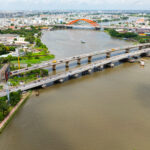
Bình Triệu 1 Bridge spans 555 meters and weighs a staggering 11,000 tons. To achieve this feat, Vietnamese engineers employed 106 hydraulic jacks positioned beneath the bridge sections. These included 76 jacks with a 400-ton capacity and 30 jacks capable of lifting 500 tons.