On October 25th, the capital city of Kinshasa, Democratic Republic of the Congo, and Vietnam’s Vingroup signed a Memorandum of Understanding (MoU) to collaborate on the research and development of large-scale urban and green transportation projects in Congo.
Under the MoU, both parties will jointly study and develop a mega riverside urban project spanning approximately 6,300 hectares, convert over 300,000 gasoline vehicles to electric, and establish an electric bus system along with charging infrastructure.
The project aims to create a modern urban center that enhances the quality of life, transforms the cityscape, and becomes a new tourism destination and development symbol for Kinshasa. The city will grant Vingroup free land for the project.
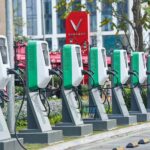
Beyond real estate, the partnership will also expand into green transportation initiatives, including the development of electric bus and taxi systems, as well as charging infrastructure operated by VinFast and GSM.
VinFast will supply suitable electric vehicles to replace Kinshasa’s 300,000 fossil fuel-powered vehicles, alongside researching and providing electric buses and supporting the construction and operation of a Bus Rapid Transit (BRT) system. Kinshasa has committed to providing land for charging infrastructure to accelerate the city’s green transition.
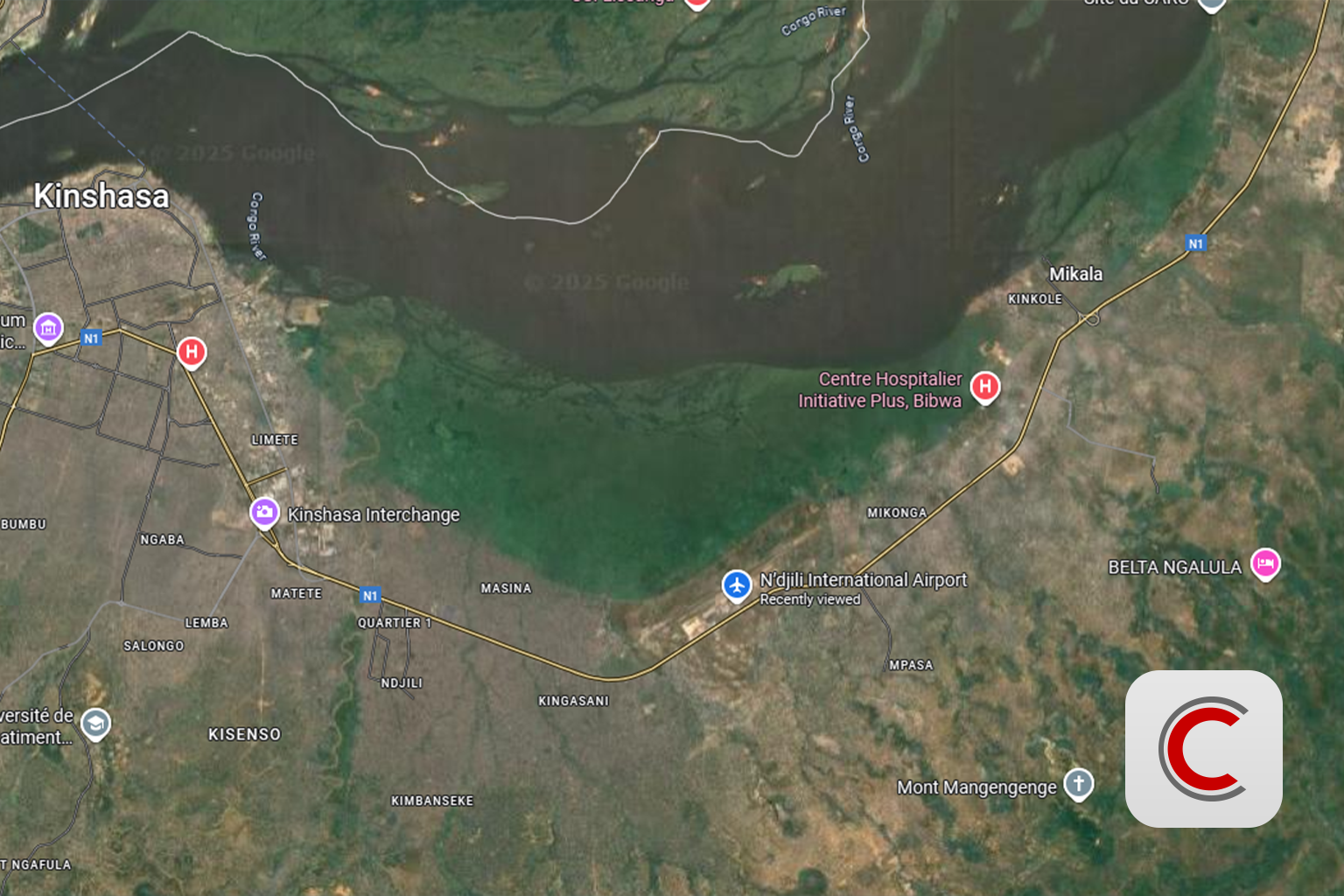
Proposed project location. Image: Google Maps
An intriguing fact about Congo is its status as the world’s largest cobalt exporter. According to the Cobalt Institute, in 2023, the Democratic Republic of Congo (DRC) mined approximately 170,000 tons of cobalt, accounting for 74% of global production. This far surpasses Indonesia’s 13,000 tons and Australia’s 7,000 tons, the second and third largest producers, respectively.
The DRC’s total cobalt reserves are estimated at 3.6 million tons by the US Geological Survey (USGS), representing nearly 50% of the world’s known reserves. The largest cobalt deposits are concentrated in the Katanga region in the southeast, where numerous international mining companies operate.
Cobalt is a critical material for producing cathodes in lithium-ion batteries, which power most electric vehicles today. The Cobalt Institute reports that the electric vehicle and battery industries accounted for 43% of global cobalt demand in 2024, projected to rise to 61% by 2025, reflecting the rapid electrification of the automotive sector.
In electric vehicle batteries, cobalt stabilizes temperature, extends lifespan, and increases energy density—a key factor in determining driving range. Popular battery types like NMC (Nickel-Manganese-Cobalt) and NCA (Nickel-Cobalt-Aluminum) use cobalt in varying proportions.
On average, producing a standard electric vehicle requires 8–12 kg of cobalt. With the market projected to reach 50 million units annually by 2035, global cobalt demand could double in the next decade.
Congo’s cobalt is integral to the supply chains of major battery manufacturers such as CATL (China), LG Energy Solution (South Korea), and Panasonic (Japan). Raw cobalt from Katanga mines is transported through Zambia to ports in Dar es Salaam (Tanzania) or Durban (South Africa) before being exported to Asia for refining.
The cobalt supply chain spans thousands of kilometers, from inland Congo mines to overseas refineries. S&P Global Commodity Insights estimates that refining 1 ton of cobalt requires 3.5–4 tons of raw ore. In 2024, international cobalt prices range from $15–17 per pound, or $33,000–37,000 per ton, down from 2022 peaks but still among the world’s most valuable metals.
According to UN Comtrade, in 2023, the DRC exported over $9.8 billion in cobalt and related products, the largest share of its mineral exports. Key exports include raw cobalt, refined ore, and cobalt alloys, primarily to China, South Korea, and Belgium.
Beyond major mines like Tenke Fungurume, Mutanda, and Kisanfu, Congo is issuing new exploration permits across the country. The Ministry of Mines reports that as of 2024, over 70 active cobalt mining licenses are held by investors from China, Canada, and Europe.
Congo is also working to increase domestic refining capacity. The government is negotiating with international firms to establish a battery refining industrial park in Kolwezi, aiming to boost export value and reduce reliance on raw exports. This initiative is part of the 2024–2030 “local value addition” strategy, focusing on cobalt, copper, and lithium.
In the global energy transition, cobalt is often likened to “the new oil.” As nations accelerate carbon reduction goals and expand electric vehicle infrastructure, cobalt’s role becomes increasingly central. Every electric vehicle on the road today—from Europe to Asia—carries a piece of Congo’s cobalt-powered energy within its battery.
Real Estate Stocks Underperform Expectations
The sharp decline in blue-chip stocks today (October 27) triggered a widespread sell-off across the stock market. Real estate shares were the hardest hit, with numerous stocks such as CII, GEX, CEO, and DIG plummeting to their lower limits.
Unveiling Vingroup’s Bold New Venture in Africa
Vingroup’s recent Memorandum of Understanding (MOU) with the Kinshasa Capital Authority in the Democratic Republic of the Congo has sparked significant media attention and interest from industry observers. The agreement, focused on researching and developing large-scale urban projects and green transportation solutions in Congo, aligns with Vingroup’s established pattern of strategic market entry. Given their past initiatives, the conglomerate’s intentions in this new market appear both clear and purposeful.
Two Congos, One Treasure: Why Billionaire Pham Nhat Vuong Chose the World’s Poorest Nation for Its Most Valuable Electric Vehicle Resource
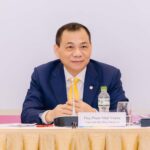
Without cobalt, the global electric vehicle industry would grind to a halt, and the Democratic Republic of Congo (DRC) holds over 70% of the world’s cobalt reserves. Additionally, the DRC boasts one of the largest copper reserves globally, further solidifying its critical role in the future of sustainable transportation and technology.
Vietnamese Billionaire Pham Nhat Vuong Becomes First to Surpass $20 Billion Net Worth, Exceeding Vietcombank’s Market Cap
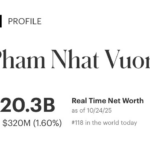
With a staggering net worth exceeding $20 billion, Vietnamese billionaire Pham Nhat Vuong ranks 118th on Forbes’ list of the world’s wealthiest individuals.
U.S. Unveils $2B Investment in Vietnam’s ‘Treasure Trove,’ Slaps 25% Import Tariff, Positioning It as China’s Manufacturing Successor
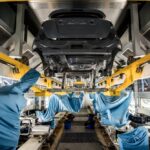
Vietnam stands as a global leader in the export of this critical commodity, renowned for its exceptional quality and reliability.