













Japan’s leading motor manufacturer, Nidec Corporation, is facing its most severe crisis in history after being placed under a Special Alert by the Tokyo Stock Exchange (TSE). This action follows irregularities in accounting reports at the company’s subsidiaries in China and Europe.
According to the TSE, this decision highlights “significant deficiencies in internal governance and financial controls” at Nidec. Failure to make substantial improvements within the next 12 months could result in the company’s delisting from Asia’s largest exchange.
The market reacted harshly to the news. Nidec’s shares plummeted nearly 20% in a single day, reaching an 18-month low and erasing billions in market capitalization. Reuters reported that Nidec was also removed from the Nikkei 225 index and faces potential exclusion from the Topix index, forcing index-tracking funds to offload its shares. Within hours, this once-celebrated tech giant became synonymous with a crisis of confidence.
The saga began in September when Nidec announced an internal investigation after uncovering “irregular” accounting transactions at its Chinese subsidiary, Nidec Techno Motor. Initially believed to involve a ¥10 million inventory devaluation, an independent audit committee later revealed evidence of revenue and asset misreporting spanning multiple quarters.
The investigation quickly expanded to European subsidiaries, including Nidec Global Appliance in Italy, which had previously faced fines for import declaration discrepancies. The situation escalated when independent auditors declined to endorse the 2024 financial report, prompting TSE intervention.
This crisis transcends technical accounting issues. In Japan, a nation renowned for its ethical business standards, Nidec’s special alert status deals a severe blow to corporate credibility. Nikkei Asia described it as “the most serious accounting scandal involving a Japanese tech firm since Olympus in 2011.”
Shareholders are outraged, customers are concerned, and investors are fleeing. Once hailed as “the Toyota of electric motors,” Nidec now risks exclusion from major capitalization indices, potentially losing trillions of yen in passive investment flows from global funds.
Internally, the atmosphere is described as “chaotic and panicked.” Senior executives are scrambling to restore trust: Nidec has established a special committee led by external experts, pledged to overhaul accounting processes, restructured its internal audit board, and reorganized global finance operations. However, analysts warn these measures may be “too little, too late,” as shattered trust cannot be rebuilt in mere months.
Ironically, just years ago, Nidec was celebrated as a model of post-industrial Japanese growth. The conglomerate produces motors for everything from computer fans and washing machines to drones and electric vehicles, partnering with automotive giants like BMW, Hyundai, and Volkswagen. Its 2023 revenue exceeded ¥2 trillion, and founder Shigenobu Nagamori once envisioned Nidec becoming a trillion-dollar corporation.
However, rapid expansion across a network of over 300 subsidiaries in 40 countries appears to have outpaced internal controls. “They were caught in the globalization whirlwind and neglected financial discipline,” commented a Waseda University corporate governance expert.
Nidec’s troubles also expose systemic issues plaguing many Japanese conglomerates: complex governance structures and a culture of “bad news concealment” that allows minor issues to metastasize into full-blown crises. The TSE has warned other firms that failure to enhance financial transparency will result in delisting without exception.
Thus, Nidec’s crisis transcends accounting irregularities. It serves as a cautionary tale in an era of global supply chains: expansion speed must not compromise internal governance. A company may build factories across continents, but without commensurate control systems, its achievements can collapse with a single audit report.
Sources: Nikkei Asia, Reuters
The Upcoming IPO Boom: Highlands, Golden Gate, Điện máy xanh, and Long Châu Set to Make Waves
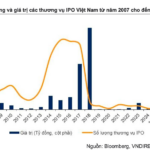
In 2025, a stable macroeconomic foundation, coupled with converging catalysts, is setting the stage for a new wave of IPOs.
PwC: Vietnamese Businesses Accelerate ESG Adoption
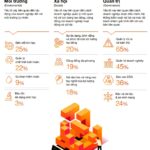
According to PwC’s 2025 ESG Progress Survey, 89% of Vietnamese businesses have already committed or plan to commit to ESG initiatives within the next 2–4 years, marking a significant increase from the previous year’s survey. However, substantial challenges remain, requiring collective efforts from the entire community to address them effectively.
Elevating Market Status: Vietnam’s Blue-Chip Stocks Step onto the Global Stage
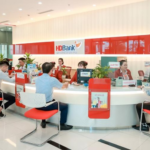
The race to upgrade Vietnam’s stock market has entered a critical phase. Beyond attracting foreign capital, what the market truly needs is a new governance standard—a foundation for Vietnam’s blue-chip companies to compete on the global stage.
PwC: 89% of Vietnamese Businesses Plan to Commit to ESG Within the Next 2–4 Years
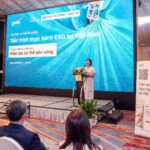
This insight is revealed in PwC Vietnam’s newly released 2025 ESG Practices Progress Survey Report, highlighting a distinct shift among Vietnamese businesses from awareness to action in the areas of Environment, Social, and Governance (ESG).
“Don’t Let the Shareholders’ Meeting Become a ‘Vote-Soliciting Campaign’”

When Investor Relations (IR) activities are executed with diligence and consistency, the Annual General Meeting (AGM) transforms into its true essence—a celebration of ownership. Here, grand strategies emerge from mutual understanding and consensus, rather than devolving into a tense battle to secure votes.