Geologically Challenging Project Drives Industry Giants to Withdraw
The Bien Dong 01 project – developing the Hai Thach – Moc Tinh condensate gas fields (Blocks 05-2 & 05-3, Nam Con Son Basin) – stands as one of Southeast Asia’s most modern and complex gas exploitation endeavors. This marks Vietnam’s first venture into such extreme geological conditions, characterized by exceptionally high temperatures and pressures.
Discovered by BP (UK) between 1993-1995, the Hai Thach – Moc Tinh fields are classified as deepwater, offshore reserves (located ~320km from shore, at depths of 118-145m). Their geological anomalies include reservoir temperatures of ~170°C and pressures exceeding 400 atm, making them among the world’s rarest discoveries.
Due to these technical complexities, despite the fields’ promising gas potential, foreign partners BP and ConocoPhillips withdrew from the contract after nearly 13 years of reserve assessment. They transferred full rights and operational control of Blocks 05-2 & 05-3 to Petrovietnam in late 2008.
The withdrawal of these global oil and gas giants placed Petrovietnam in an extremely challenging position.
However, Petrovietnam’s leadership resolutely committed to advancing the Hai Thach – Moc Tinh development using domestic resources.
Offshore Rigs Engineered by Vietnamese Experts, Equivalent to 1,200 Heavy Tanks in Steel Volume
In early 2009, Petrovietnam established Bien Dong POC to concentrate resources on the project, tasked with bringing the Hai Thach – Moc Tinh fields into commercial production.
The corporation mobilized key personnel from member units to form the core team at Bien Dong POC, alongside a group of young engineers preparing to execute the project.
Petrovietnam’s then-CEO, Mr. Do Van Hau, recalled that the initial phase was marked by both excitement and apprehension due to the project’s unprecedented scale, nature, and risks. However, all involved were determined to maximize internal capabilities to realize the project.
To self-execute the Bien Dong 01 project, Petrovietnam harnessed the collective strength of numerous key entities within the oil and gas sector.
Vietnam Oil and Gas Services Corporation (PTSC), Vietsovpetro JV, Vietnam Petroleum Engineering and Construction Corporation (PVE), PV Drilling, Vietnam Petroleum Institute (VPI), PV Energy Technology Corporation (PV EIC), and PETROSETCO collaborated with Bien Dong POC to synchronously implement all design, fabrication, construction, and drilling components of the project.
PTSC and Vietsovpetro significantly upgraded technical facilities at their Vung Tau fabrication ports to accommodate the project’s unprecedented scale. Concurrently, units enhanced work processes, workforce expertise, and collaboration with foreign supervisory consultants to ensure successful execution of the project’s massive components.
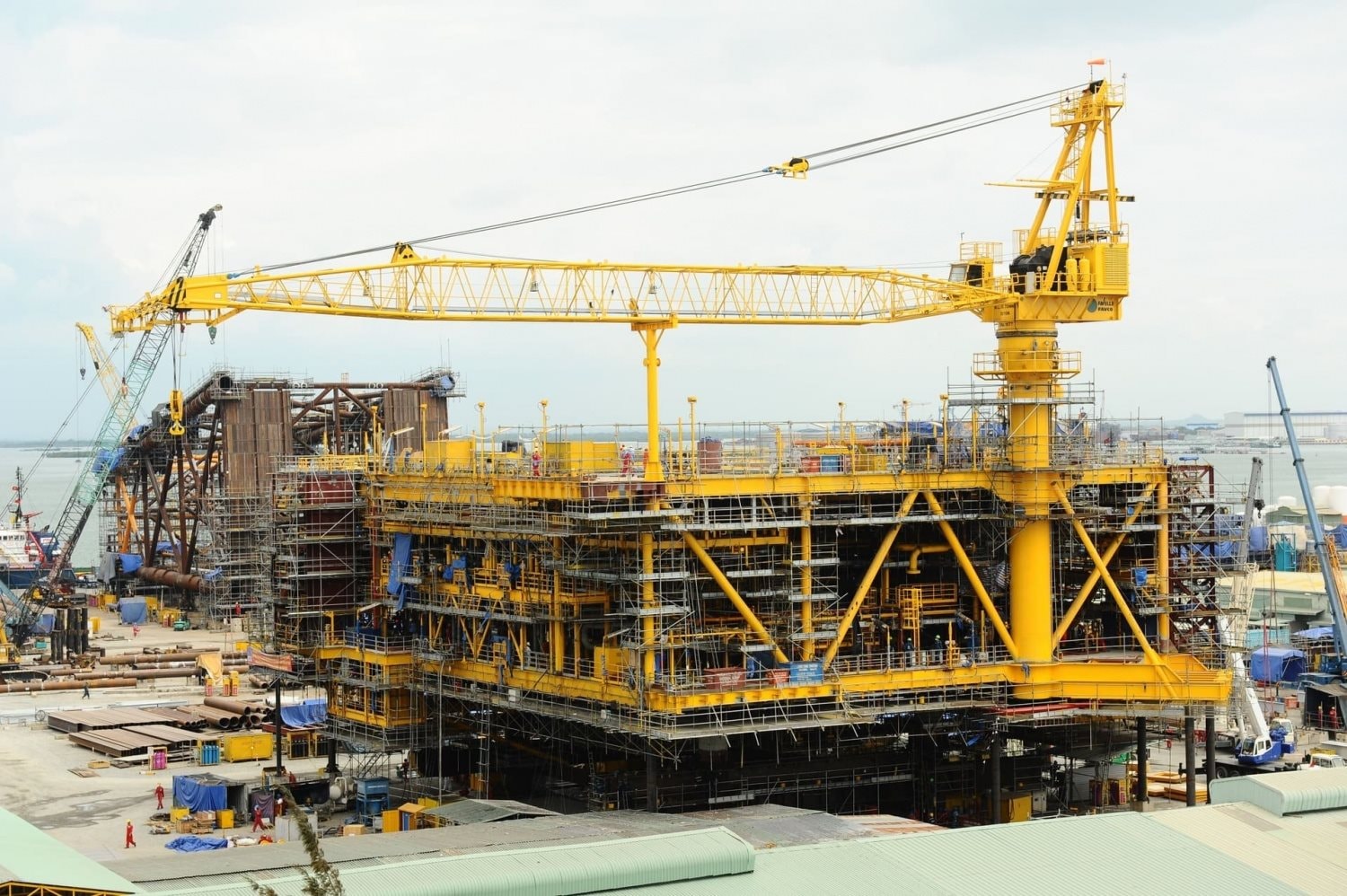
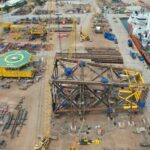
Fabrication of the PQP-HT central processing platform’s jacket and topside at PTSC’s fabrication yard, 2011 (Photo: PVN)
The Hai Thach – Moc Tinh production and processing platforms, engineered by Vietnamese experts, met the most stringent technical and safety standards, rivaling the world’s most advanced oil and gas facilities.
This offshore rig system, the largest ever constructed in Vietnam at the time, comprised two wellhead platforms (WHPs) weighing ~14,000 tons each, a 30,000-ton central processing platform (PQP-HT), and approximately 90 km of intra-field pipelines. The total steel volume exceeded 60,000 tons, nearly triple that of Wembley Stadium (UK), equivalent to 330 Boeing 747s or 1,200 heavy tanks.
After over three years of rapid execution, in August 2013, the first gas streams from the Moc Tinh 1 platform were transported via a 20 km subsea pipeline to the PQP-HT platform at Hai Thach.
On September 6, 2013, the Bien Dong 01 project officially commenced commercial gas production, contributing an average of 2 billion m³/year of gas and 2.5 million barrels/year of condensate. This significantly bolstered supply for power plants and fertilizer facilities in Southeast Vietnam.
PetroVietnam Auctions Stakes in GID and PVTS

PetroVietnam is auctioning off its entire stake of 8.7 million shares in GID and 10.5 million shares in PVTS, with the strategic goal of divesting from these two enterprises.
Vietnam’s Largest Corporation Seeks to Offload Stakes in Two Companies, Targeting Nearly 200 Billion VND to Focus on Core Operations
According to the corporation, divesting from these two companies allows them to concentrate resources on core activities such as oil and gas exploration, production, processing, energy solutions, and high-quality technical services.
Offshore Strategic Project: 100% Vietnamese-Owned and Operated Across the Entire Exploitation and Management Chain
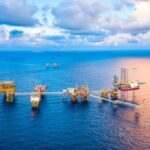
These two projects have collectively generated sales totaling $10.1 billion.
Prime Minister Pham Minh Chinh Unveils New Details on the $9 Billion Nghi Son Petrochemical Refinery Mega-Project
The Nghi Son Refinery and Petrochemical Project (NSRP) is a joint venture between Vietnamese, Kuwaiti, and Japanese enterprises. While all participating parties are currently profitable, the Vietnamese side is currently operating at a loss.
Black Gold Miracle in the South China Sea: Vietnam Unlocks a Precious Energy Vein
This pivotal event marks a groundbreaking milestone for the enterprise in the South China Sea.