












On October 30, Deputy Prime Minister Le Thanh Long addressed the National Assembly, clarifying key issues raised during the discussion on the socio-economic situation in 2025 and the 2021-2025 period. He provided updates on the establishment of a gold trading platform and the management of the real estate market.
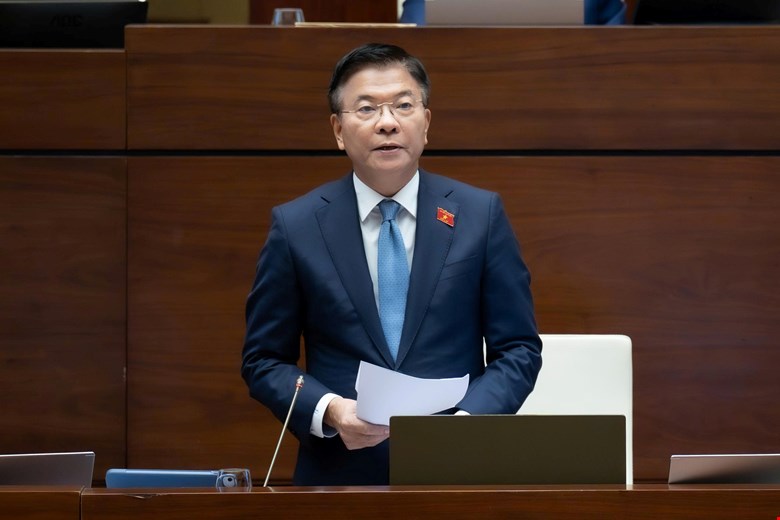
Deputy Prime Minister Le Thanh Long addressing the National Assembly on October 30. Photo: Pham Thang
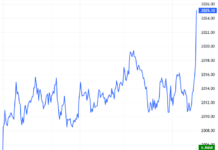
Regarding the gold market, the Deputy Prime Minister noted that global gold prices reached nearly $4,400 per ounce, with the price gap between international and domestic markets fluctuating between $1,000 and $20,000.
He attributed the gold price volatility to geopolitical tensions and shifts in trade policies, alongside domestic market psychology.
To address these challenges, the Government has directed the State Bank of Vietnam and relevant ministries to closely monitor the situation. The Prime Minister has ordered inspections of gold trading activities, involving the State Bank Inspectorate and the Government Inspectorate.
Additionally, the Government has amended Decree 24 on gold trading, eliminating the monopoly on gold bars. Plans are underway to establish a gold trading platform to enhance market transparency.
On the real estate front, the Deputy Prime Minister acknowledged the surge in property prices, making it difficult for citizens to afford housing. In response, the Government has implemented comprehensive measures, including revisions to land, real estate, and housing regulations.
During this session, the Government will submit a draft resolution to amend land-related provisions, including land pricing. Deputy Prime Minister Le Thanh Long emphasized that the implementation of the 1 million social housing units project will help address current real estate market inefficiencies and housing affordability issues. According to the Ministry of Construction, 165 social housing projects have been completed, providing 117,000 units.
Deputy Prime Minister Le Thanh Long: Public Debt Significantly Below Regulatory Limits; Development Investment to Account for 40%

Deputy Prime Minister Le Thanh Long announced a significant shift in Vietnam’s state budget allocation. The current term prioritizes development investment, allocating 32-33% of the budget, compared to 28% in the previous term. Concurrently, recurrent expenditures have been reduced to 57-58%, down from 63.2%. Looking ahead, the 2026-2030 plan aims to further increase development investment to 40%, while recurrent spending is projected to decrease to approximately 50.7%.
Proposed Mechanism for Real Estate Price Regulation by the Ministry of Construction

The Ministry of Construction has introduced a series of market regulation measures, including a resolution on mechanisms to monitor and control real estate pricing.
Deputy Prime Minister Le Thanh Long Inspects Progress of Two Major Healthcare Projects in Ninh Binh

Deputy Prime Minister Lê Thành Long has urged the acceleration of construction progress to ensure the second facilities of both Bạch Mai Hospital and Việt Đức Hospital are operational by November 30th.
Proposed Property Ownership Declaration: Is It Feasible Without a Ready Data Infrastructure?
Experts suggest that the proposal to declare home ownership will enhance market transparency, providing a foundation for management, taxation, and policy planning. However, concerns arise regarding its feasibility, as the current data infrastructure is not yet prepared to support such an initiative.
Ministry of Construction Proposes Series of Solutions to Control and “Cool Down” Real Estate Prices
In major urban areas, housing prices have surged dramatically, often far exceeding the affordability of the majority of residents, particularly those with low to middle incomes. This escalating trend underscores the urgent need for robust market regulation to ensure stability and accessibility.