















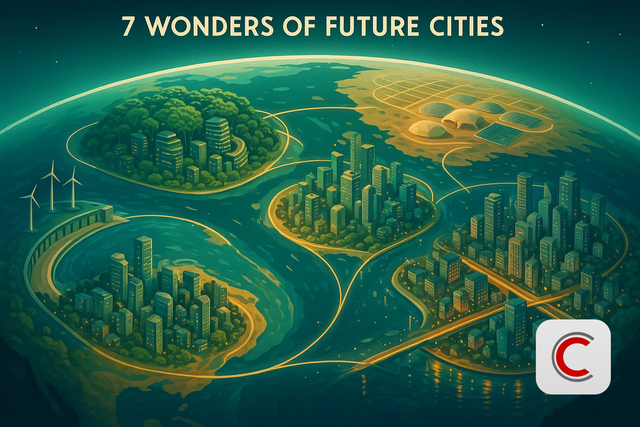
7 Wonders of Future Cities: A Global Vision of Aspiration
The “7 Wonders of Future Cities” is a groundbreaking global initiative led by the Future City Alliance and numerous international organizations. This project aims to celebrate cities that pioneer technology, sustainable development, livability, and resilience in the face of climate change. For the first time, the world is witnessing a voting program of this scale, engaging urban planners, scientists, architects, and millions of citizens worldwide.
Unlike traditional rankings of “most livable cities” or “smart cities,” this initiative focuses on long-term vision—where cities are not just modern but also embody humanity’s ability to shape the future. The evaluation criteria include green technology applications, social connectivity, sustainable planning, smart urban governance, and contributions to the global community.
The preliminary list of nominees features iconic contemporary cities: Dubai, with its solar-powered desert metropolis; Singapore, Asia’s leading smart urban management hub; Tokyo, where technology and tradition coexist; and Copenhagen, Europe’s model for comprehensive greenification. Emerging contenders like Riyadh (Saudi Arabia) with its NEOM project and Seoul’s AI-first city model also stand out.
International experts view this program as more than symbolic—it’s a “map of the future,” prompting nations to reflect on their urban development models. It reflects a shift from numerical growth to enhancing quality of life, from physical infrastructure to intellectual and emotional infrastructure, placing humans at the heart of design.
Vietnam’s Rise on the Global Urban Future Map
In this global landscape, Vietnam is emerging as a new Southeast Asian highlight. In recent years, Vietnam’s urbanization rate has surpassed 40%, but more importantly, there’s a shift from “building to expand” to “building to live better.”
Major cities like Hanoi, Ho Chi Minh City, Da Nang, and Hai Phong are entering a phase of urban planning redevelopment, robustly adopting digital transformation in governance, smart transportation, waste management, renewable energy, and green spaces. Smart city control centers are being implemented across localities, enhancing management efficiency, reducing pollution, optimizing energy use, and improving residents’ quality of life.
The National Smart City Development Strategy by 2030, with a vision to 2045, is a critical foundation. It aims to establish a highly connected urban network based on open data and artificial intelligence. Cities are gradually piloting and deploying models like green transportation, digital payments, and data-driven planning—key components of future “urban wonders.”
Another advantage is Vietnam’s young, dynamic population and its rapid digital transformation pace, among the fastest in the region. Vietnamese youth are shaping new lifestyles—prioritizing sustainability, creativity, and global connectivity. They are the core force building cities with Vietnamese identity that resonate globally.
Additionally, Vietnam is witnessing a robust transformation in strategic infrastructure—from highways and metro systems to high-tech zones and international financial centers. Once these foundations are complete, Vietnamese cities could become new regional development hubs, where technology, culture, and people converge to create modern living values.
Many experts believe Vietnam could become a “wonder of adaptation”—symbolizing the transition from a developing nation to a future-shaping one. By leveraging technology, renewable energy, and human-centered planning, Vietnam can define a new urban model where economic growth aligns with social happiness.
Participating in the “7 Wonders of Future Cities” voting is not just an opportunity to promote Vietnam’s image but also a chance to join the global dialogue on urban futures. From Hanoi, a UNESCO-recognized creative city, to Ho Chi Minh City’s ambition to become an international financial-technology hub, Vietnam is crafting its unique story: a nation not just keeping pace but actively shaping humanity’s future living standards.
Exciting News for Hai Phong Residents: A $828 Million Road Project Connecting 9 Wards, 2 Urban Centers, and Multiple Industrial Zones is on the Horizon
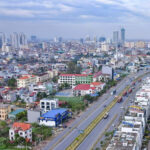
The proposed route will seamlessly connect two major urban hubs—the central metropolis of Haiphong and the satellite city of former Hai Duong—serving a population of approximately 1.7 million. This development promises to significantly reduce travel time, enhancing connectivity and efficiency across the region.
Quảng Ninh Aims to Become a Centrally-Governed City by 2030
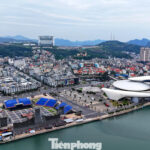
The People’s Committee of Quang Ninh Province has unveiled a comprehensive plan to enhance the quality of urban areas and residential zones, aiming to elevate the province to the status of a centrally-governed city by 2030.
Unveiling the Winning Consortium for the $1 Billion Quy Nhơn ‘Golden Land’ Project
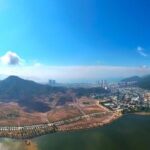
After a decade of neglect, the Phu Hoa Lake Urban-Tourism-Cultural-Sports Complex has emerged from its slumber, transforming into a staggering 22,000 billion VND project.
Charmora City by Sun Group: Pioneering the Sponge City Model in Khánh Hòa

In November 2025, Sun Property, a proud member of the Sun Group, unveiled Charmora City—a groundbreaking urban development at the heart of Nha Trang. As Vietnam’s pioneer in implementing the Sponge City model, this 227-hectare masterplan features 60 hectares of water bodies, seamlessly divided into three islands and nine diverse parks. Charmora City stands as a symbol of sustainable, vibrant, and green living, redefining prosperity within the coastal cityscape.
Unauthorized Shacks and Metal Roof Structures Turn Prime Residential Garden into Eyesore in Hanoi’s Densest Urban Area
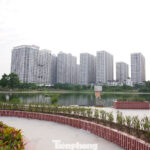
After multiple campaigns to clear encroached public land, a vibrant community garden has now been established in one of the most densely populated urban clusters in the capital city.