

















Illustrative Image
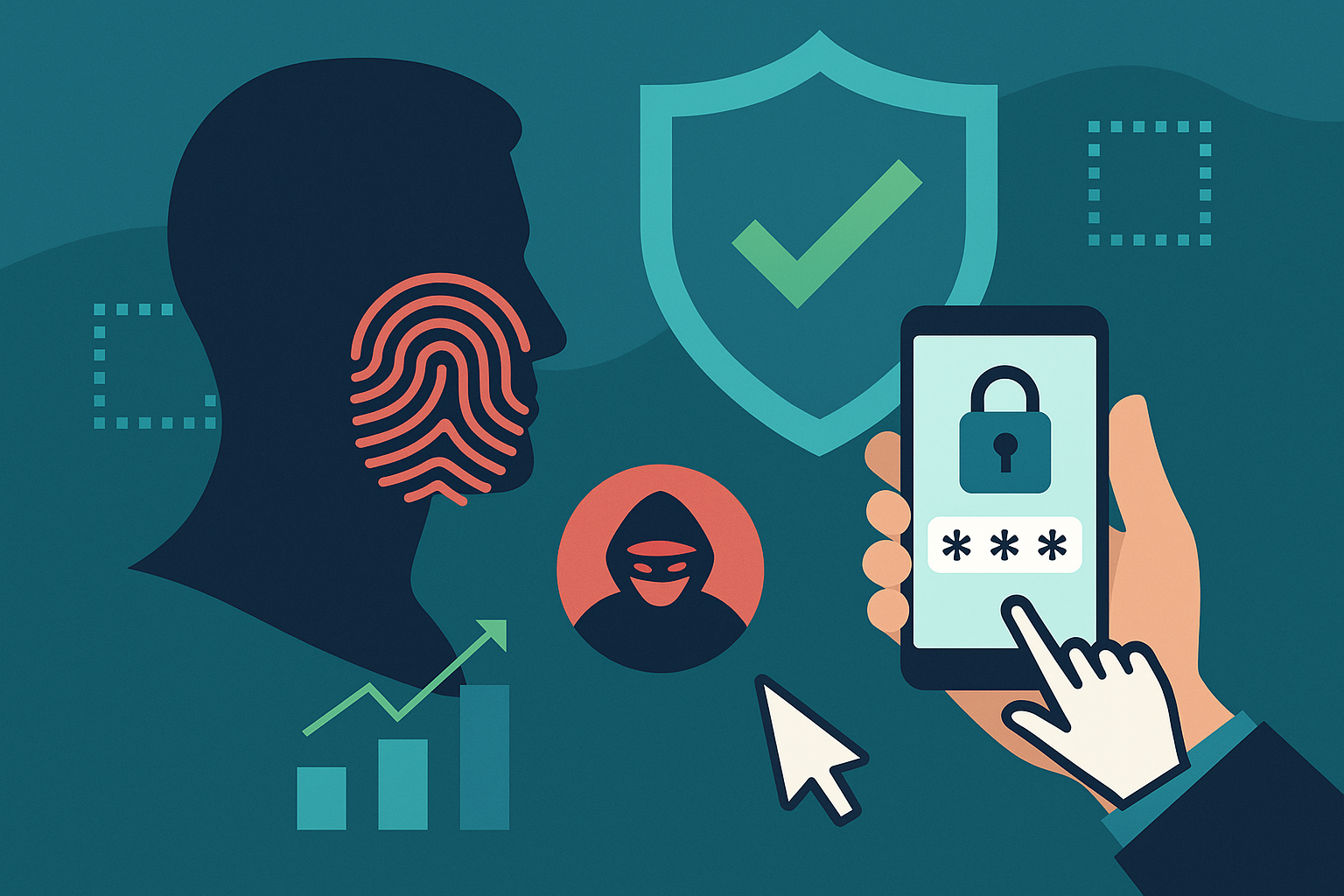
According to Juniper Research’s report, “Top 10 Trends in Fintech and Payments for 2025,” one of the most prevalent biometric authentication methods today is facial recognition—a form of static biometrics requiring users to perform a single verification step. Once completed, users gain full access to their accounts and linked information. While this method is difficult to forge, cybercriminals continually devise sophisticated ways to bypass it.
Behavioral Biometrics: Passive, Continuous, and Intelligent Authentication
Static biometrics make it challenging to detect intruders before they cause damage. Juniper Research predicts that 2025 will see widespread adoption of behavioral biometrics—a passive authentication method enabling businesses to continuously monitor user behavior and verify identities throughout their session. This approach significantly aids in KYC (Know Your Customer) compliance and optimizes resource allocation.
It’s important to note that this method should not be used in isolation, as its security effectiveness diminishes. When combined with static biometrics, it forms a multi-factor biometric system, merging physical and behavioral factors for unparalleled security.
Both active and passive behavioral biometrics leverage artificial intelligence (AI) to automate user monitoring and flag suspicious activities. As AI becomes more integrated into fintech, Juniper forecasts that 2025 will mark the explosion of behavioral biometric methods in identity verification and fraud prevention. This surge is driven by businesses seeking to enhance security without disrupting user experience or adding complexity.
Frictionless Experience: Seamless Security Users Barely Notice
Users demand seamless, “frictionless” online experiences, a factor businesses must consider when designing or updating security measures. The ideal solution lies in non-intrusive behavioral biometric methods, applying authentication levels tailored to each user and preventing fraud before it infiltrates the system. Integrating passive, continuous authentication mechanisms ensures a smooth user experience while maintaining vigilant fraud detection.
A prime example of advanced biometric authentication is recording and analyzing user keystroke patterns and screen swipe behaviors. Systems can monitor typing speed, keystroke pressure, and mouse movement habits. Each user has a unique “behavioral signature” reflecting their web browsing or app usage patterns.
This enables businesses to swiftly detect anomalies, such as unauthorized login attempts or actions deviating from established habits. It also fosters trust between businesses and legitimate users, as the system gradually “learns” and recognizes genuine customers.
This is achieved by building behavioral profiles for each user during their website or app activity, enabling continuous, passive authentication that remains nearly invisible.
Digital banking has proven effective in driving growth and attracting new customers for financial institutions. To sustain this advantage, they must adopt innovative solutions that enhance security while improving user experience.
Behavioral biometrics allow banks to swiftly verify new customers’ authenticity through trusted behavioral patterns, automatically adjusting authentication levels based on whether users match these patterns.
Juniper Research predicts that by 2025, financial institutions will heavily invest in passive authentication to combat fraud like account takeovers (ATO) and social engineering—especially in account-to-account (A2A) payment environments, where fraud risks are higher.
Thus, digital banks and financial institutions are expected to integrate behavioral biometrics as a new defense layer in 2025, creating a multi-layered security system that enhances fraud detection while delivering a smoother, safer, and more reliable user experience.
Proactive Strategies to Prevent Bank Security Vulnerabilities

The State Bank of Vietnam is currently seeking public input on the draft Circular amending and supplementing certain provisions of Circular 50/2024 regarding safety and security in the provision of online banking services. This latest draft is notable for its innovative features and stricter technical requirements for banking applications, aiming to enhance protection for both individual and corporate customers.
URGENT ALERT: Banks Will Never Call You From These Numbers—100% Scams

Here are the phone numbers and prefixes urgently flagged by the bank as potentially fraudulent.
“Cybersecurity Agency Representative: Scams Target Humanity’s Primal Instincts of Fear and Greed, Making It Impossible to Track Every Scheme”

According to Colonel Dr. Nguyễn Hồng Quân, Director of the Training Center under the Department of Cybersecurity and High-Tech Crime Prevention (A05), comprehensively identifying all fraud schemes is “impossible.” These schemes are orchestrated by organized “criminal syndicates” that constantly evolve their tactics. The majority of current online scams originate from transnational criminal networks operating in countries such as Cambodia, Myanmar, the Philippines, and the Middle East.
Teens as Young as 15 Can Now Open Online Accounts via Sacombank Pay

Sacombank has officially launched a groundbreaking feature allowing customers aged 15 and above to open payment accounts directly through its digital banking app, Sacombank Pay, eliminating the need to visit a branch. This significant milestone in Sacombank’s comprehensive digitalization journey not only empowers young individuals to access modern financial services but also fosters early habits of personal financial management.
Enhancing Early Warning Systems for Suspicious Transactions to Mitigate Fraud Risks in Financial Institutions

Early warning systems that provide proactive alerts and reminders to customers, helping them identify suspicious transactions and potential fraud, have proven highly effective. Their success underscores the need to prioritize, enhance, and expand these initiatives for broader impact and continuous development.