
















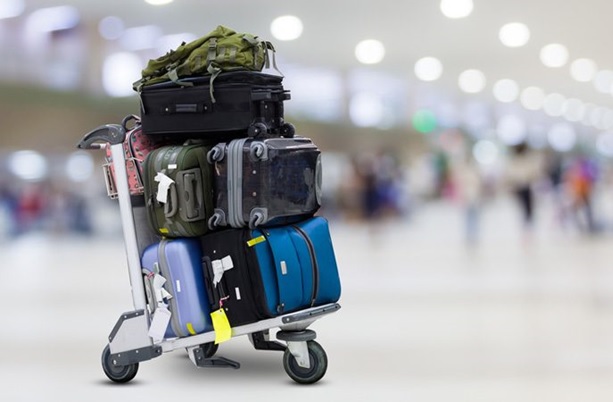
The Tale of the Scale at the Aircraft Gate
A scene increasingly common at Vietnamese airports: passengers, after completing all check-in procedures, are asked to place their carry-on luggage on a scale just before boarding. If it exceeds the allowed weight, they must pay an excess baggage fee on the spot.
Vietjet has long implemented this carry-on luggage reweighing practice. The national carrier Vietnam Airlines followed suit starting November 3, 2025.
This development signals that weighing is no longer an exception but a standard industry procedure. Public backlash isn’t just about the extra fees but stems from witnessing an asymmetry: if airlines scrutinize every ounce of passenger luggage, why can’t they be equally punctual—a core obligation?
The Airline’s Perspective: The Logic Behind the Scale
Technically, actual luggage weight directly impacts fuel consumption and aircraft load balance. Cabin luggage compartments have specific weight limits; overweight carry-ons can endanger passengers seated below. Strict weight control ensures aircraft operate within safety standards.
Another critical factor is ancillary revenue. Airlines don’t just profit from ticket sales, which have thin margins. Instead, fees for add-ons—seat selection, meals, checked baggage—are increasingly vital revenue streams for Vietnamese and global carriers alike.
Globally, unbundling services is an irreversible trend. Traditional airline models resembled restaurant set menus, while the new model is à la carte—each service priced separately.
Ancillary revenue includes fees and add-ons beyond the base fare. These are goldmines for airlines due to high margins. For instance, handling checked baggage costs far less than the fees charged.
By charging separately for privileges like seat selection or overweight luggage, airlines advertise lower base fares while earning more from passengers upgrading their experience. This model enables price discrimination, maximizing profits based on passenger willingness to pay: price-sensitive travelers choose basic fares, while convenience-seekers pay extra.
Major US airlines excel at unbundling. In 2023, United Airlines earned $9.5 billion in ancillary revenue, Delta $9.4 billion, and American Airlines $8.4 billion.
From technical and business perspectives, strict luggage weight control is logical. Yet, this one-sided logic highlights an imbalance.
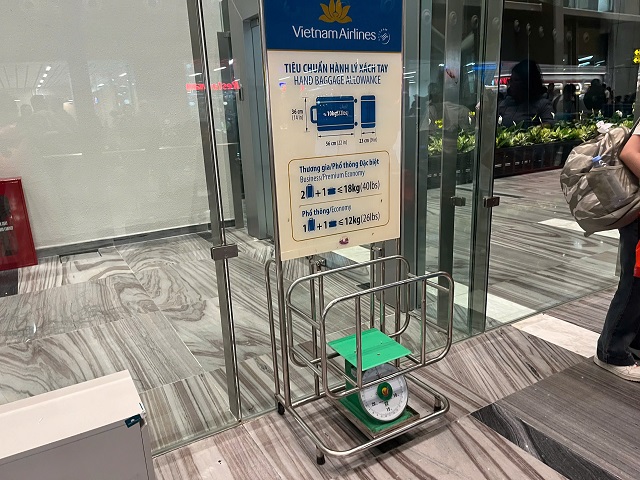
National carrier Vietnam Airlines began weighing carry-on luggage at boarding gates from November 3, 2025. Photo: TM
|
Passenger Perspective: A Two-Way Contract
Buying a ticket establishes a service contract. Passengers must comply with airline rules—timely arrival, proper documentation, and weight limits. Airlines must safely transport passengers from A to B on schedule.
Public frustration arises from contract enforcement asymmetry. Passengers face immediate financial penalties for non-compliance (e.g., overweight luggage). Yet, when airlines fail (e.g., delays), passengers often receive only brief announcements.
Delays cause tangible economic harm: missed connections, prepaid hotel/transport losses, and opportunity costs like missed meetings or contracts.
If fairness is the goal, why not apply the same logic both ways? If passengers pay for non-compliance, shouldn’t airlines compensate for operational delays (excluding weather/security issues)? Or is this a one-sided contract?
Toward a Fairer Playing Field
In progressive jurisdictions, passenger rights are protected. EU Regulation 261 mandates up to €600 compensation for delays/cancellations, with simplified claims processes.
Vietnam has updated delay compensation rules (Circulars 19/2023/TT-BGTVT, 27/2017/TT-BGTVT, 14/2015/TT-BGTVT). However, compensation requires long delays (typically 4+ hours) and remains modest compared to lost time/opportunities. Claim processes lack automation.
Strict luggage control is justified but will only gain public acceptance if airlines apply the same rigor to themselves. Passengers accept fairness when it’s mutual. It’s time for automatic, transparent, and proportional delay compensation—valuing passenger time as precisely as luggage weight.
|
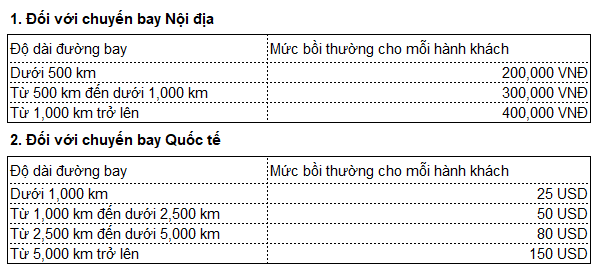
Circular 19/2023/TT-BGTVT defines a “delayed flight” as departing over 15 minutes late. Circular 14/2015/TT-BGTVT defines “prolonged delay” as 4+ hours late. Non-refundable compensation is distance-based:
This fixed compensation is unrelated to actual passenger losses. |
– 11:03 04/11/2025
Soaring High with VJC: The Aviation Industry’s Rising Star (Part 2)
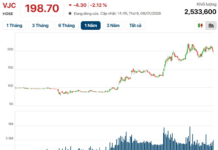
Despite lingering challenges that require attention in the coming period, Vietjet Aviation Joint Stock Company (HOSE: VJC) continues to captivate the investment community with its strong appeal. According to valuation model results, VJC’s stock price remains attractive for long-term investment opportunities.
Latest Updates from Vinh Airport After Three Months of Temporary Closure

Vinh International Airport, located in Nghe An, is strategically planned to meet 4E standards, with a projected capacity of 8 million passengers annually by 2030 and 14 million by 2050.
The Sky’s the Limit: How Airlines Are Soaring to New Heights This Holiday Season
The Aviation Authority directs the industry’s efforts to meet the travel demands of the people during the “Great Festival of the Nation”.
The Airport Investors Speak Out: Addressing the Rising Issue of Delayed and Cancelled Flights at Tan Son Nhat and Noi Bai Airports.
The inauguration of Terminal 3 at Tan Son Nhat International Airport and the expansion of Noi Bai International Airport’s Terminal 2 are pivotal milestones in alleviating the perennial woes of flight delays and cancellations that have long plagued Vietnamese aviation.
Over a Quarter of Vietnamese Airlines Flights “Delayed”
The average on-time departure performance of airlines for the first three quarters of 2024 was a mere 74.2%, a decline compared to previous years.