

















Reviewing Regulations and Implementation Practices
Speaking at the session, delegate Lê Thị Ngọc Linh (Cà Mau Delegation) suggested that the drafting agency should clearly define the types of mandatory statistical reports, their frequency, format, and the responsible authority. This ensures synchronized implementation and avoids overlaps. Additionally, a transitional clause should be added to prevent disruptions when the law takes effect.
Regarding the authority to issue statistical reporting regimes, the delegate recommended a thorough review of the Ministry of Finance’s regulations against local implementation practices to avoid conflicts. This should align with the two-tier local government model.
The delegate also proposed adding provisions on the rights of individuals surveyed in statistics, consistent with the 2025 Law on Personal Data Protection and the 2015 Law on Cybersecurity. This will enhance personal data protection, foster public trust in statistical activities, and improve the quality, reliability, and transparency of national statistical data.
Discussing the amended Price Law, delegate Lê Thị Ngọc Linh supported granting price stabilization authority to commune-level People’s Committees, aligning with the two-tier local government model. However, she emphasized the need to assess feasibility, particularly regarding human resources and implementation conditions at the commune level, to ensure effective and practical execution.
The delegate suggested flexible decentralization, with provincial People’s Committees setting price frameworks and commune-level People’s Committees determining specific prices based on local conditions. This approach would help regulate markets and protect citizens’ interests.
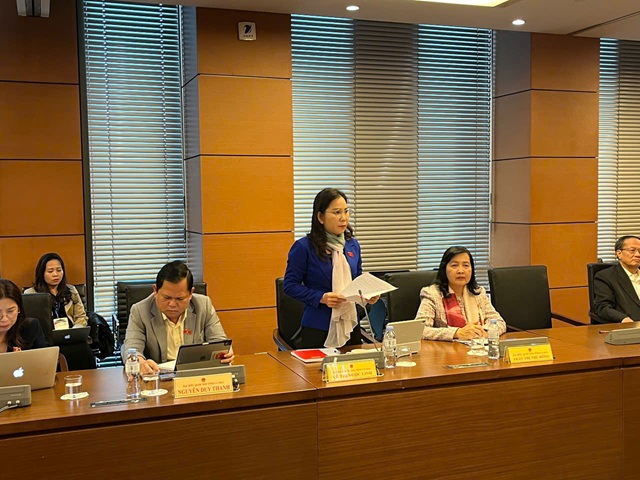
Delegate Lê Thị Ngọc Linh (Cà Mau Delegation) – Photo: VGP/Nguyễn Hoàng
|
Stabilizing Through Market Mechanisms, Not Administrative Orders
To refine the draft law, delegate Nguyễn Như So (Bắc Ninh Delegation) addressed three critical issues in the price stabilization mechanism.
First, the list of price-stabilized goods and services must be reviewed and updated to support inflation control and macroeconomic stability amid global economic and climate change impacts. This list should be scientifically based, reflecting essentiality, price volatility risks, and state intervention capacity. Price stabilization must target the right subjects, timing, and tools to be effective.
The delegate argued that retaining livestock and aquaculture feed in the price-stabilized list is no longer appropriate. These sectors now operate under transparent market competition, with stable prices driven by supply and demand. Administrative interventions are unnecessary and could distort markets, hinder innovation, and undermine sustainable development.
Second, livestock feed prices depend heavily on external factors, with over 80% of raw materials imported. State intervention cannot control global commodity prices, exchange rates, or transportation costs. Such measures risk squeezing producer profits, reducing supply, and ultimately harming farmers.
Third, administrative price controls in a market-driven sector like livestock feed can stifle competition, innovation, and investment. Instead, the state should focus on supporting domestic raw material development, strategic reserves, and market transparency to empower farmers and businesses.
“We must stabilize through market mechanisms, not administrative orders. A well-functioning, transparent, and competitive market is the foundation for ensuring long-term benefits for both businesses and farmers,” emphasized the Bắc Ninh delegate.
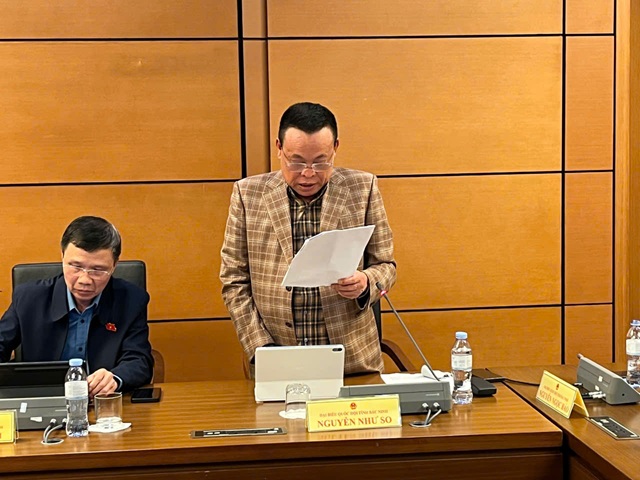 Delegate Nguyễn Như So (Bắc Ninh Delegation) commenting on the amended Price Law – Photo: VGP/Nguyễn Hoàng
|
The second issue concerns stabilization measures. Effective price stabilization relies not just on tools but on ensuring supply. For scarce goods like fuel, temporary measures are insufficient without addressing supply security. Stabilization must be integrated into macroeconomic policies, focusing on production capacity, reserves, and import reduction through tax, credit, land, energy, and logistics support.
The third issue involves implementation. While provincial authorities are empowered to stabilize prices locally, this decentralization lacks oversight, risking price disparities and market fragmentation. The delegate proposed a centralized monitoring mechanism under the Ministry of Finance to ensure national price policy coherence.
– 20:45 03/11/2025
Revising the Price Law to Align with Two-Tier Local Governments and Price Management Practices

On the morning of November 3rd, as part of the 10th session agenda, the National Assembly will review the Presentation and Verification Report on the draft Law amending and supplementing certain articles of the Price Law.
Gold Price Surge Leaves Couples Struggling to Afford Wedding Rings, Says Delegate Nguyen Lam Thanh

Amidst soaring gold prices, members of the National Assembly have voiced significant concerns, urging the government to implement robust and effective regulatory measures to address the issue.
Unlocking Housing Supply: The Key to Controlling Property Prices

Renowned economist Dr. Nguyễn Văn Đính asserts that the key to lowering housing prices lies not in dampening demand, but in bolstering supply. To achieve this, he advocates for government intervention focused on streamlining legal processes, expediting project approvals, and alleviating cost burdens.
Why Do Property Prices Keep Rising? Exploring Effective Solutions to Curb the Trend

In recent years, the relentless surge in real estate prices, particularly in housing and condominiums, has far outpaced the average income of the majority of workers. Despite numerous aggressive and continuous solutions being implemented, the challenge of stabilizing property prices remains a complex puzzle yet to be solved.
Navigating the Next Bull Run: Overcoming the Challenges Ahead

The potential for Vietnam’s stock market to surge is immense, according to Lã Giang Trung, CEO of Passion Investment. Speaking at the Vietnam and the Indices event on September 4th, he shared his insights on the market’s prospects. While the most robust growth phase may have passed, there’s still room for significant upside. However, investors should be aware that the landscape is changing, and strategic adjustments are necessary to navigate the upcoming challenges successfully.