The Vietnam Pepper and Spice Association (VPSA) reports that since the new VAT Law took effect on July 1, the pepper industry has faced significant challenges.
Numerous businesses, cooperatives, and agents have withdrawn from the market, unable to advance the 5% VAT payment to the government while their actual profit margins hover around just 1%.
Due to capital shortages, many entities have temporarily halted procurement, causing a substantial withdrawal of funds from the pepper market—redirected to bank deposits or investments in other sectors.
Some enterprises are also experiencing financial strain due to large sums tied up in unrefunded VAT payments.
Meanwhile, foreign-invested enterprises (FIEs) dominate the market, leveraging their strong financial capabilities, lower borrowing costs, and ease in securing export orders. Vietnamese small and medium-sized enterprises (SMEs) face an imminent risk of losing market share even in their home territory.
The pepper industry is particularly concerned about losing its largest export market, China, which accounts for 50,000–60,000 tons annually via sea and border trade.
Agents report that since July 1, each container of pepper exported to China requires a provisional tax payment of VND 225 million (for black pepper) and VND 360 million (for white pepper), with no refunds issued to date. Given that profits per container range from VND 30–40 million, many agents face capital shortfalls.
The strategy of “raising prices to shift tax burdens onto partners” is unfeasible, as it would elevate prices above those of Brazil and Indonesia—both offering 0% export taxes—thus eroding competitive advantages.
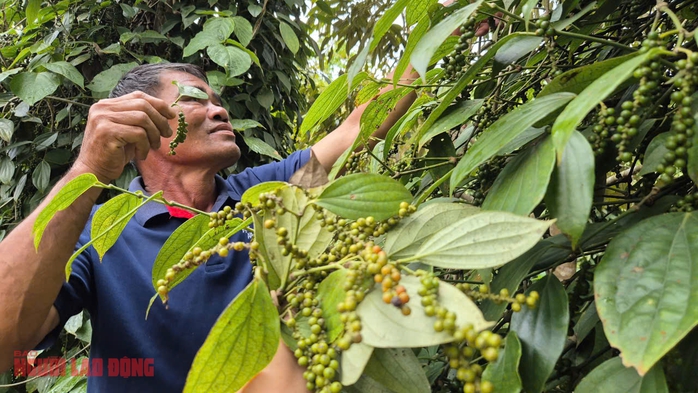
Farmers harvesting pepper
According to the Ministry of Finance, imported agricultural and aquatic products are currently exempt from VAT upon entry into Vietnam, creating an inequitable playing field between domestically produced goods and imports.
.