














On November 5th, the Ho Chi Minh City Institute of Natural Resources and Environment Economics (IEEr) submitted a formal request to the Ministry of Home Affairs, Ministry of Public Security, and Ministry of Agriculture and Environment. The proposal advocates for a reevaluation of the provincial-level Land Registration Office (LRO) structure, urging alignment with legal frameworks and local governance realities.
IEEr’s proposal stems from the Prime Minister’s directive in Official Dispatch No. 10217/VPCP-TCCV dated October 22, 2025. This directive tasked the Ministry of Home Affairs with reviewing the institute’s recommendation to retain provincial LROs and postpone their transfer to commune-level management.
The institute argues that the specialized nature of natural resource management justifies maintaining provincial offices. This approach aligns with current policies and ensures effective state administration of land resources.
Dr. Pham Viet Thuan, Director of IEEr, highlighted that the Ministry of Home Affairs’ Report No. 9864/BC-BNV dated October 29 mentions reorganizing LRO staff under commune management. However, IEEr contends this lacks legal basis, as neither the Central Office’s Notice No. 371-TB/VPTW dated October 4 nor the Government Steering Committee’s Dispatch No. 20/CV-BCĐ supports such a transfer.
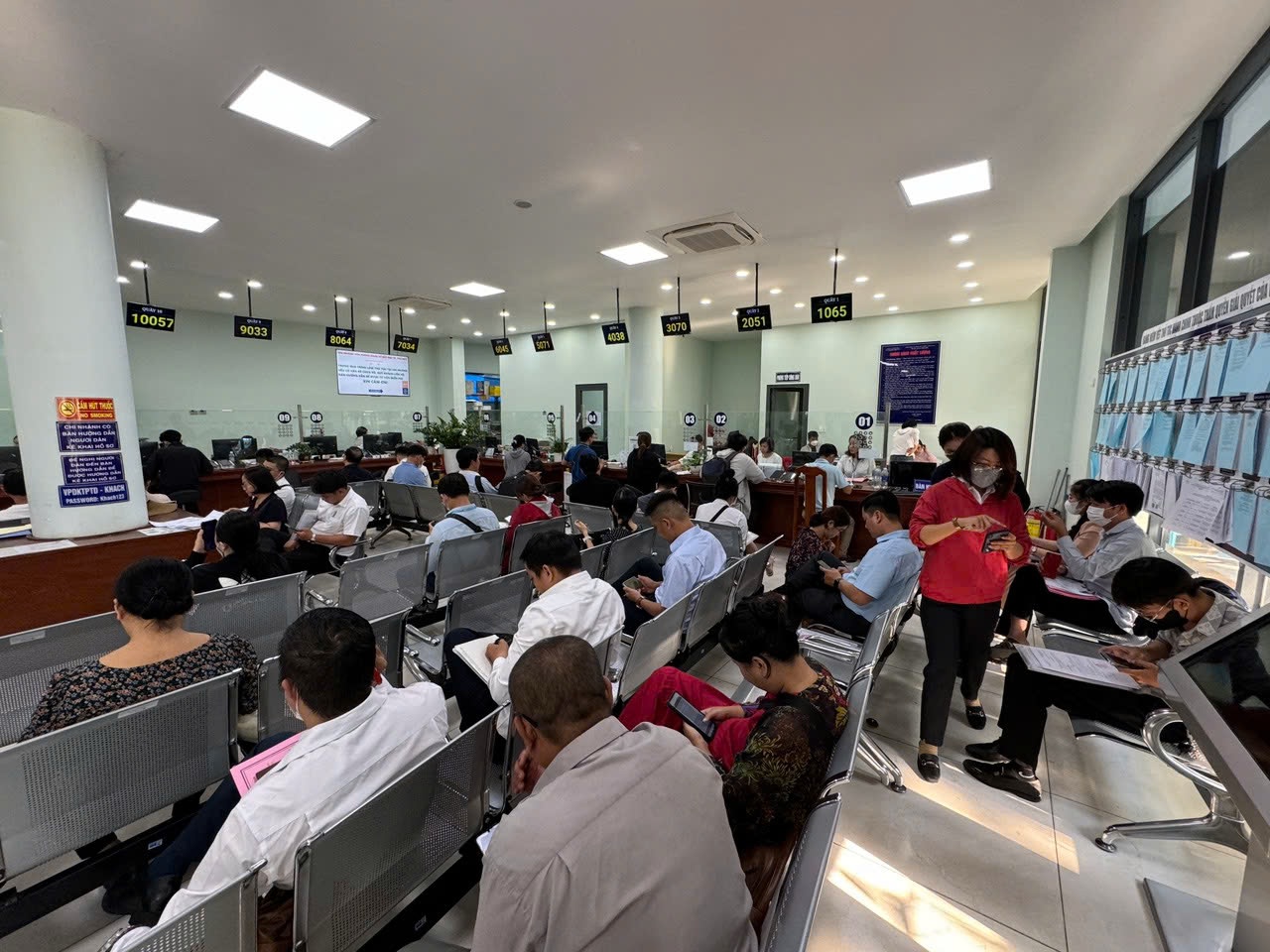
A bustling Land Registration Office in Ho Chi Minh City
IEEr’s analysis underscores the technical complexity of natural resource management, particularly in surveying, mapping, boundary delineation, and digital data management. Ensuring data integrity requires centralized provincial oversight. Thus, resource data digitization should follow a two-tier governance model, with provincial LROs serving as technical, data, and expertise hubs.
IEEr proposes two solutions. The first involves functional separation: provincial LROs handle technical resource management, while communes manage land administration. This structure must comply with the 2024 Land Law, Decree 102/2024, and Resolution 316/NQ-CP/2025, preserving provincial LROs’ expertise.
The second solution advocates for provincial LROs as the sole entities processing all land and resource procedures, including initial land title issuance. This ensures lean commune governance, reduces administrative burdens, and enhances management efficiency.
Dr. Thuan emphasized the importance of retaining provincial LROs, given the sector’s technical demands and its role in the national digital transformation strategy for resource data. Premature restructuring without a clear roadmap risks significant disruption.
Deputy Prime Minister Pham Thi Thanh Tra Outlines Roadmap for Wage Reform

Vice Prime Minister Phạm Thị Thanh Trà announced that the Government is developing a comprehensive plan for wage policy reform. The Central Committee’s Policy and Strategy Department will lead the re-evaluation of Resolution 27, with a report to be submitted to the Central Committee in the first quarter of 2026.
Relocating Land Registration Offices to Commune Level Must Comply with Land Law

The Land Registration Office Branch is a specialized operational unit, classified as a revenue-generating public service entity under the direct management of the Provincial People’s Committee, as outlined in the 2024 Land Law. Decentralizing its operations to the commune level would incur recurring expenses in infrastructure, information security, and training, which exceed the financial capacity of commune-level budgets.
Optimizing Local Governance: Preventing Overburdened Communes While Ensuring Provincial Officials’ Productivity

During the implementation of the two-tier local government model, representatives have highlighted a significant imbalance in personnel allocation between the provincial and grassroots levels.
Retain Land Registration Office Branches Amid High Workload Demands

Amid proposals to transfer the functions of the Land Registration Office branches to the commune level, several localities have advocated for retaining the current model to ensure consistent and efficient service delivery to citizens.
Merging Thái Nguyên and Bắc Kạn: The Rise of a New Urban Core in Bách Quang

Following the consolidation of administrative units, Thai Nguyen has entered a robust phase of spatial restructuring for development. Among these changes, Bach Quang Ward has emerged as a new urban-industrial hub in the southern region of the province.