
















The Urgent Need to Reduce Intermediate Units
Following the implementation of the two-tier local government model, several intermediate units—such as Land Registration Office (LRO) branches, regional agricultural extension stations, and regional project management boards—have revealed limitations in efficiency and management consistency.
Drawing from this reality, Mr. Nguyễn Ngọc Nam, Deputy Chief of the Bắc Ninh Provincial People’s Committee Office and Director of the Provincial Public Administration Service Center, proposed a swift reorganization of these units. He suggested transferring all responsibilities either to the provincial or commune levels. For LRO branches, Mr. Nam recommended consolidating them under commune authority, as communes are the closest administrative level to citizens.
According to a representative from Yên Bài Commune (Hanoi), land changes occur frequently in mountainous areas. However, Hanoi only provides cadastral maps to LRO branches, leaving communes without access or update rights.
Consequently, when citizens submit applications for land-use certificates or land-use purpose changes, communes must forward these documents to LRO branches for verification. This prolonged process delays citizen services.
“LRO branches currently handle land transfers, inheritances, and donations. If their functions are transferred to communes, citizens can complete all necessary procedures at the commune level, ensuring faster and more convenient service,” the representative explained.
The Yên Bài Commune representative also noted: “Managing land changes at the commune level would better align with current data-cleaning requirements.”
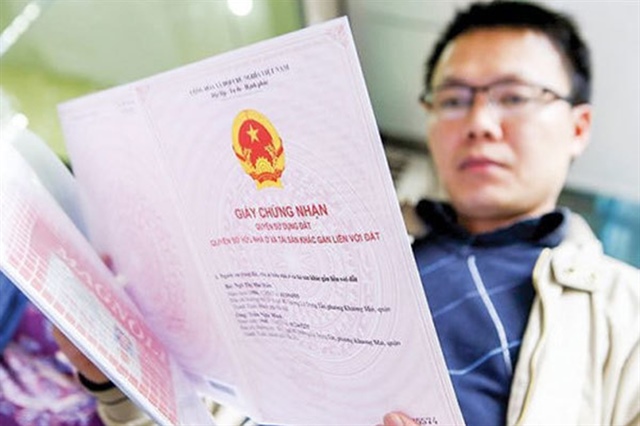
In many localities, information gaps between communes and LRO branches create challenges for both citizens and local authorities. Illustrative image |
A leader from the Economic Department of a Hanoi commune shared that LRO branches currently perform basic land management tasks.
Communes, being the closest administrative units to citizens, should handle procedures like land subdivision. This would allow citizens to resolve all land-related matters—subdivision, new registrations, and changes—at a single location, quickly and efficiently.
“If communes are granted authority, citizens can complete procedures at one stop, ensuring speed and transparency. Now is the ideal time to transfer LRO branches to communes, unifying management and cleaning data,” they emphasized.
Toward a “One-Level, One-Agency” Model
In response to this reform demand, the Land Management Department’s Party Committee submitted two proposals on October 7 to the Ministry of Agriculture and Rural Development’s Party Standing Committee for transferring LRO branch authority and functions to communes.
Proposal 1 suggests establishing commune-level public service units to assume all LRO branch authority and functions.
Proposal 2 involves transferring land certificate issuance and confirmation authority for land changes to commune chairpersons, while assigning LRO branch functions to commune land management agencies (Economic Departments/Economic-Infrastructure Departments), with at least two LRO branch staff reassigned to these agencies.
The Land Management Department’s Party Committee considers Proposal 2 more feasible, aligning with government goals for streamlined organization and decentralized authority to local governments.
This proposal adheres to the “one-level, one-agency” principle, unifying land registration tasks, streamlining bureaucracy, and enhancing state management efficiency and flexibility.
Speaking at the National Assembly on October 30, Deputy Nguyễn Hữu Thông from Lâm Đồng Province highlighted 2025 as a pivotal year for implementing the two-tier local government model and administrative unit restructuring. This reform aims to streamline bureaucracy, enhance state management efficiency, and create new development opportunities for localities.
Deputy Thông acknowledged the smooth and effective restructuring process despite its short timeframe. However, he noted emerging challenges, particularly in land management—a key concern for constituents.
“In many localities, citizens still face multiple visits and intermediary steps for land procedures. This is partly due to LRO branches remaining under provincial management, misaligned with the two-tier model and counter to meaningful decentralization,” Deputy Thông stressed.
He urged the Government and relevant ministries to promptly review and issue policies transferring LRO branches to commune management, under commune People’s Committee oversight.
“This practical step will reduce processing time and costs for citizens, improve service efficiency, and strengthen local government accountability,” Deputy Thông stated.
He also called for detailed guidance on personnel, financing, infrastructure, and operational procedures to ensure system-wide consistency and effectiveness.
Thái Khang (People’s Representative Newspaper)
– 07:29 04/11/2025