Vietcombank has recently expanded its VCB Alert feature, which warns customers of potential fraud or scam risks when receiving money. This enhancement now covers internal bank transfers via VCB Digibank and over-the-counter transactions.
When customers initiate online money transfers, the system automatically flags accounts exhibiting suspicious indicators, such as: recipient details not matching the National Population Database; accounts listed on government watchlists; or accounts flagged for potential risks.
For in-branch transactions, Vietcombank staff will proactively notify customers if the recipient’s account shows similar suspicious signs.
Based on these alerts, customers can decide whether to proceed with the transaction.
Since its launch on June 30, VCB Alert has issued hundreds of thousands of warnings, helping customers avoid potentially fraudulent transactions.
 Banks continue to urge customers to remain vigilant and protect their personal information to prevent fraud. |
Agribank offers its AgriNotify service, a free feature integrated into the Agribank Plus platform, designed to detect and alert customers about accounts suspected of fraud, thereby safeguarding their interests.
|
Several banks, including Vietcombank, BIDV, MB, and Agribank, have piloted fraud alert systems to enhance customer protection. |
When customers input a recipient’s account number, the system automatically cross-references it with databases from authorities (e.g., Ministry of Public Security, State Bank of Vietnam) and internal records before processing transfers within Agribank or via NAPAS 24/7.
If an account is flagged for potential fraud, the system immediately notifies the customer, advising caution before completing the transaction.
Alerts include: high-risk accounts linked to official warnings; medium-risk accounts with unusual activity; and unverified accounts with recipient details not matching the National Population Database.
According to the Payment Department of the State Bank of Vietnam, over five months, the SIMO fraud alert system has helped banks prevent approximately VND 1.79 trillion in suspicious transactions, protecting 468,000 customers.
|
Banks advise customers to stay alert, safeguard personal and service-related information, and regularly monitor risk alerts and safety guidelines from banks and authorities. |
Thái Phương
– 11:40 06/11/2025
Top 20 Most Profitable Listed Companies in Q3 2025: 10 Firms Surpass 15 Trillion VND in Earnings, Including 7 Banks and 3 Real Estate Giants
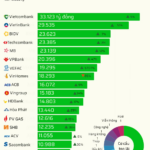
The banking sector continues to dominate, with a strong presence in the top rankings. Notably, 7 banks secure positions in the top 10, while 11 banks claim spots within the top 20.
Q3/2025 Financial Report Deadline: BIDV, Petrolimex, Gemadept, Vinpearl, and More Announce Updates by October 31st

Vietcombank and VietinBank have both reported impressive pre-tax profits for Q3/2025, surpassing the VND 10,000 billion mark.
Full Overview of 9-Month Business Results of Major Banks as of October 30: Surprising Updates from Vietcombank, VietinBank, and BIDV
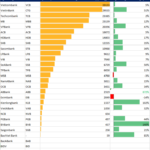
On the afternoon of October 30th, several major banks, including MSB, Eximbank, HDBank, Vietcombank, VietinBank, and BIDV, released their financial reports for the third quarter of 2025.
Six Banks Projected to Earn Over 20,000 Billion VND in First Nine Months, 11 Banks Set to Profit in Trillions
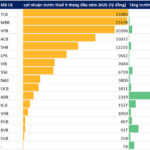
Eleven banks are projected to report profits exceeding 10,000 billion VND in the first nine months of the year. These include Vietcombank, VietinBank, BIDV, Agribank, MB, Techcombank, VPBank, ACB, HDBank, SHB, and Sacombank.
Vietcombank Reports 5% Surge in Pre-Tax Profit for Q3, Bolstered by Robust Reserves
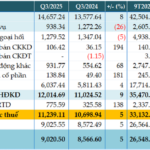
Vietcombank (HOSE: VCB) has reported a pre-tax profit of over VND 11,239 billion in Q3/2025, marking a 5% year-on-year increase despite a significant rise in risk provisioning costs, as revealed in its recently released consolidated financial statement.