
















With nearly 20 years of experience as a mechanic at a garage on Phan Van Tri Street (An Hoi Tay Ward, Ho Chi Minh City), Mr. Duong Hoan Vu believes that converting gasoline motorcycles to electric ones is an encouraging idea—if done correctly.
“If it can be done well, it’s beneficial, as it helps reduce environmental pollution. However, transforming a gasoline vehicle into an electric one while ensuring safety and meeting technical standards is extremely challenging,” he notes.
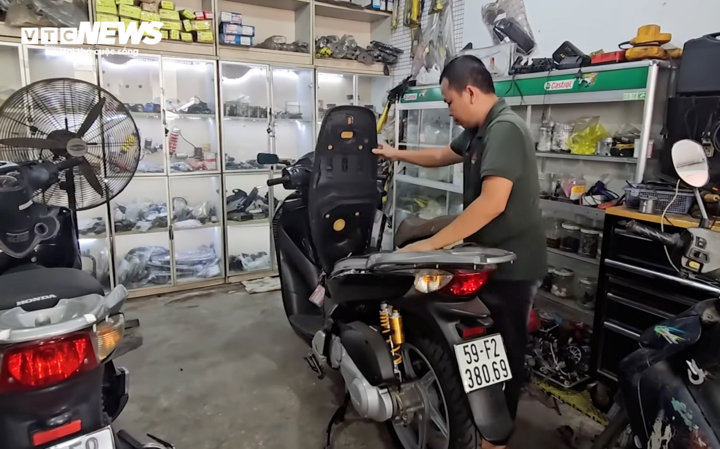
Mechanics express concerns about the safety of converting gasoline motorcycles to electric ones.
According to Mr. Vu, adding an electric motor to a gasoline vehicle is not new. In recent years, some individuals have experimented with installing an electric motor on the front wheel while retaining the gasoline engine on the rear wheel for dual operation.
However, the results were not as expected. The handlebars became heavier and harder to control, with tangled wires and the battery occupying the entire storage compartment. Many attempted this but later abandoned it due to inconvenience and safety concerns.
Mr. Vu suggests that if the conversion is carried out by technically capable companies, with pilot permits and rigorous inspections, people would feel more confident using these vehicles. Motorcycles are daily essentials, so even minor imbalances or structural flaws can lead to risks.
Mr. Nguyen Thach Lan, representative of Motorcycles TV—the organization proposing an electric conversion system for gasoline vehicles to the Ho Chi Minh City Department of Construction—states that conversion does not mean replacing the entire gasoline engine.
“We are not fully converting gasoline vehicles to electric ones. Instead, we install an additional electric motor called a hybrid retrofit, allowing the vehicle to operate on both gasoline and electricity without altering the original structure,” he explains.
Specifically, the electric motor is attached to the wheel, while the battery and controller fit neatly into the storage compartment. The vehicle retains its original structure, including the frame, power output, and registration specifications. Users can switch operating modes based on their location, using gasoline for suburban travel and electricity for urban areas.
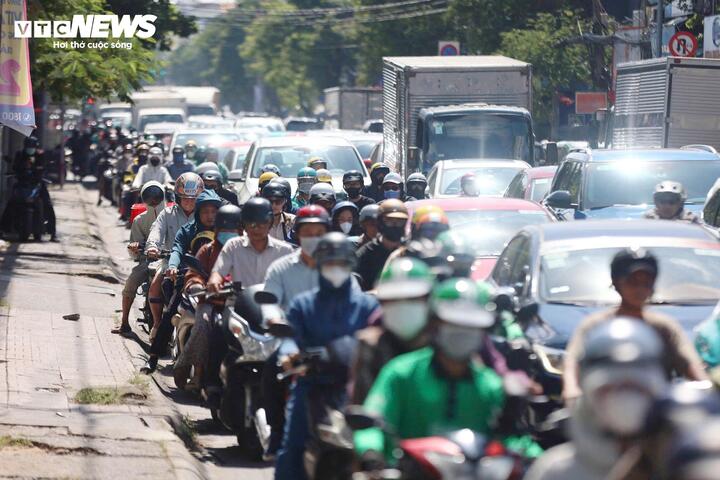
Traffic congestion during peak hours in Ho Chi Minh City highlights the pressure on transportation and pollution from millions of vehicles.
According to Motorcycles TV’s calculations, this conversion system can triple the travel distance to approximately 150 km per liter of gasoline, compared to the original vehicle’s 50 km. The electric motor uses sodium batteries, which are resistant to fire and water damage.
In an interview with VTC News, Dr. Tran Dang Long from the Department of Transportation Engineering at Ho Chi Minh City University of Technology (Vietnam National University) stated that the idea of converting gasoline vehicles to electric or hybrid ones is entirely feasible from a technical perspective.
He explains that electric vehicles have 3-4 times the energy efficiency of gasoline vehicles when driving in urban areas, especially in congested conditions with frequent stops and starts. Theoretically, this solution is ideal for urban transportation, significantly reducing emissions.
However, Dr. Long notes that the biggest challenge lies in technical safety and inspection standards. Depending on the weight and placement of the battery, the vehicle frame may require structural adjustments. All additional components must be waterproof, moisture-resistant, and fully insulated.
“If components are only temporarily attached without supplementary structural design, the risk of fire or electrical failure is real. Conversion can be a viable approach, but only with established technical standards, certified parts, and clearly approved procedures,” he remarks.
Dr. Tran Dang Long also emphasizes that conversion activities should only be conducted at licensed facilities with technical procedures and under the supervision of management agencies. Additionally, a periodic inspection system and maintenance accountability regulations are necessary to prevent unauthorized modifications.
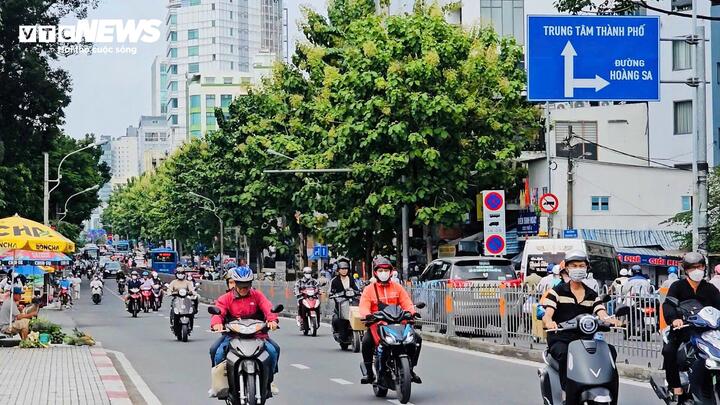
Ho Chi Minh City is promoting solutions to reduce emissions from motorcycles, with plans to pilot low-emission zones.
Regarding this issue, Prof. Dr. Nguyen Hong Quan, Director of the Institute for Circular Economy Development (ICED), considers converting gasoline motorcycles to electric ones a “reasonable intermediate solution” in Vietnam’s green transition roadmap.
He believes that the goal of the green transition is not to immediately replace all gasoline vehicles with electric ones but to reduce emissions from motorized vehicles through various methods.
“For example, in Germany, they implement transitional solutions such as installing emission-reducing filters, developing hybrid models (vehicles running on both gasoline and electricity), or retrofit models (converting and adding electric components to old vehicles) to reduce pollution without generating mechanical waste,” he cites.
According to Prof. Dr. Nguyen Hong Quan, if researched and implemented correctly, conversion can extend the lifespan of vehicles, prevent waste, and accelerate emission reduction.
However, for the gasoline-to-electric motorcycle conversion model to operate sustainably, three critical factors must align: public understanding, business investment confidence, and clear regulatory control from authorities.
He cautions that if any of these three elements fail, the policy will struggle to be implemented. Additionally, monopolies or group interests must be avoided, as only with multiple participating businesses and genuine consumer choice can this solution endure long-term.
The Ho Chi Minh City Department of Construction has submitted a document to the Vietnam Register regarding a company’s proposal to convert electric motors for gasoline motorcycles. This aims to establish a legal framework for such activities, contributing to the implementation of green transition commitments and the national Net Zero goal.
According to the Department of Construction, several companies in the city have proposed pilot projects to convert gasoline motorcycles to electric ones, aiming to conserve fuel, reduce emissions, and utilize vehicles still within their operational lifespan.
However, current laws lack regulations, technical standards, and safety guidelines for modifying or converting electric motors in motorcycles and mopeds.
The Department emphasizes that to ensure technical safety, environmental protection, and compliance with national standards, a clear legal basis and unified guidance from central ministries and agencies are essential.
Therefore, the Department proposes that the Vietnam Register study, review, amend, and supplement relevant circulars on vehicle inspection. Additionally, they should issue regulations, technical standards, and safety guidelines for converting electric motors in motorcycles and mopeds.
Revolutionary Business Concept: Converting Gasoline Vehicles to Electric Power
Ho Chi Minh City proposes establishing a legal framework to facilitate the conversion of gasoline-powered vehicles to electric engines, thereby advancing the city’s green transition goals.
Elevating Bilateral Ties: General Secretary’s UK Visit Set to Usher in a New Era of UK-Vietnam Relations

The upcoming visit of General Secretary To Lam marks a significant milestone in the relationship between the United Kingdom and Vietnam, paving the way for an elevated bilateral partnership, according to UK Ambassador to Vietnam Iain Frew.
Ho Chi Minh City Authorities Mandate Completion of Electric Ride-Hailing Scheme by October 31
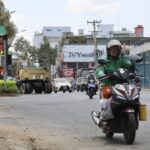
Ho Chi Minh City is accelerating its green transformation in transportation by increasing the adoption of electric vehicles, expanding charging station infrastructure, and preparing a comprehensive plan to transition all ride-hailing services to electric fleets.
Why Did Ho Chi Minh City’s Four Key Departments Receive Urgent Environmental Directives?

The Chairman of the Ho Chi Minh City People’s Committee has recently directed various departments and agencies to undertake a series of critical tasks focused on environmental protection, green transition, and sustainable national development.
European Business Confidence in Vietnam Reaches Three-Year High
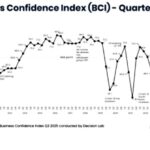
The EuroCham Business Confidence Index (BCI) for Q3/2025 soared to 66.5 points, marking its highest level in three years. This surge reflects the growing optimism among European businesses operating in Vietnam, driven by administrative reforms, green transition initiatives, and resilience amidst global challenges.