












Vietnam’s real estate market showed clear signs of recovery in the first nine months of 2025, rebounding from the stagnation of previous years. However, several legal bottlenecks still require thorough resolution. In a recent media interview, Dr. Nguyen Tri Hieu, a financial and banking expert, offered optimistic forecasts for the real estate market in the upcoming year of 2026.
 |
Reporter: As a financial and banking expert, how do you assess the real estate trends for 2026?
Dr. Nguyen Tri Hieu: While it will take time for new regulations to be implemented uniformly, these developments signal positive momentum for the entire market. I believe segments such as townhouses, shophouses, and tourism-linked real estate will continue to dominate, especially in coastal areas with natural advantages and improving infrastructure.
The Central Coast region is emerging as a dynamic growth corridor. Da Nang and Nha Trang have already established themselves as prominent destinations for tourism and investment. Meanwhile, Quy Nhon, with its breathtaking natural scenery, significant growth potential, and long-term planning, is gradually becoming a new focal point for investors. Recently, Quy Nhon was also featured in Lonely Planet Australia’s list of the top 25 destinations for 2026.
Reporter: Currently, Quy Nhon is often compared to Da Nang and Nha Trang a decade ago. Do you agree with this assessment?
Dr. Nguyen Tri Hieu: Quy Nhon is indeed at a similar stage to where Da Nang and Nha Trang were about ten years ago. All three are coastal cities with comparable natural conditions, cultural heritage, and infrastructure. Of course, Quy Nhon lags in development, but this provides an opportunity to learn from the successes and challenges of these predecessor markets.
Quy Nhon is at the beginning of a new development cycle, and it’s crucial to pursue stable, sustainable growth rather than short-term gains.
Reporter: How do you evaluate the current real estate projects in Quy Nhon?
Dr. Nguyen Tri Hieu: I expect new urban projects in emerging markets like Quy Nhon to set a benchmark for model urban development, meeting three key criteria: transparent legal frameworks, synchronized infrastructure, and comprehensive amenities.
A successful project should offer more than just housing—it should provide a convenient and sustainable living environment, including schools, healthcare, transportation, wellness services, green spaces, and entertainment options.
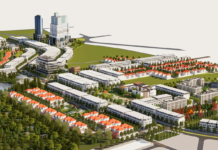
Location remains decisive. A successful project must be integrated into the local transportation and economic network. For instance, Quy Nhon Iconic, situated near the river and sea, close to Phu Cat Airport, National Highway 19, industrial zones, and aligned with the city’s planning, is a promising venture.
Reporter: How do you envision Quy Nhon’s urban landscape shaping its position in Vietnam’s real estate map in the future?
Dr. Nguyen Tri Hieu: With well-executed and planned projects, Quy Nhon’s urban landscape will transform dramatically in the coming years. The city will develop new growth centers, easing population density in the core areas while creating fresh growth poles for the Central region.
Each project should leave a unique imprint while maximizing local advantages. For Quy Nhon, this means leveraging its rivers, seas, stunning landscapes, and cultural richness. Urban developments that harmonize riverside and seaside locations with natural and urban living will have strong sustainable growth potential in this market.
Reporter: Finally, what advice do you have for real estate investors in 2026?
Dr. Nguyen Tri Hieu: Alongside opportunities, the market presents challenges. I urge all investors, consumers, and policymakers to closely monitor factors influencing Vietnam’s 2026 real estate market, making timely adjustments. In conclusion, I believe 2026 could be a breakthrough year for Vietnam’s real estate sector.
Thank you for sharing your insights!
Services
– 15:00 06/11/2025
Bắc Ninh: The Emerging Growth Hub of Satellite Cities
Backed by an increasingly robust inter-regional infrastructure, abundant FDI capital, and vast land reserves, Bac Ninh has emerged not only as a vibrant industrial hub but also as a key satellite city in the North, particularly with its new administrative center.
South of Da Nang: The Emerging Hotspot for Second Home Investments

The rise of remote work, the growing emphasis on wellness, and a desire for closer connection to nature are driving many to seek a long-term second home. In this trend, Da Nang emerges as an ideal “second home” market, seamlessly blending vacation, residency, and investment opportunities.
Sustainable Urban Development: Building Climate-Resilient Green Cities

Amidst escalating annual damages from storms, floods, saltwater intrusion, and landslides, many existing infrastructure systems are proving inadequate. Consequently, investing in resilient urban infrastructure has become an urgent imperative.
How Vietnam’s Youthful Resident Community is Reshaping the Apartment Market

In the past, the primary buyers were financially established groups, but today, Millennials and Gen Z—a young, increasingly affluent workforce—are emerging as the key drivers shaping product trends and sales strategies in the real estate industry.
Legal Deadlock: The Critical Factor Halting Numerous Real Estate Projects
The government’s delayed determination of land use fees, coupled with its intent to retroactively collect payments from businesses, has brought multi-billion-dollar projects to a standstill. Financial obligations for these projects remain unresolved, creating significant uncertainty and hindering progress.