

















On the morning of November 7th, the National Assembly held group discussions on the amended Law on Planning, the Law amending and supplementing several articles of the Law on Urban and Rural Planning, and the adjustment of the National Master Plan for the 2021–2030 period.
Planning Must Have a Long-Term Vision
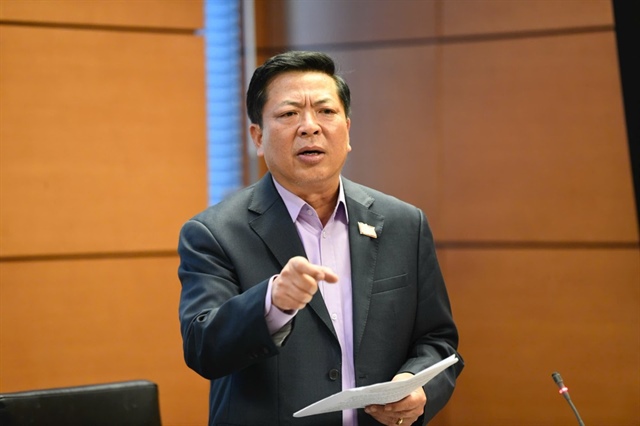
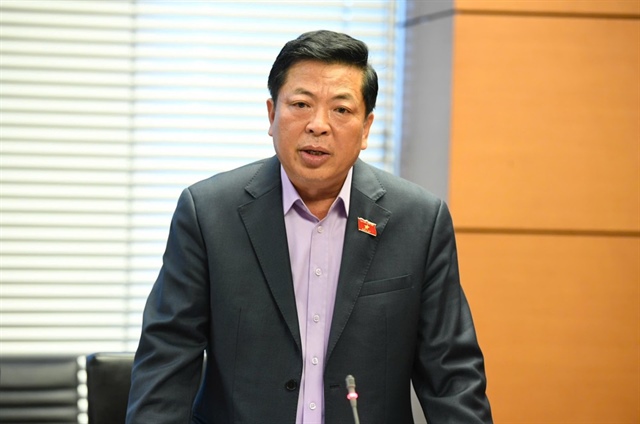
Minister of Construction Trần Hồng Minh, in his response to delegates’ comments, emphasized the critical role of planning in socio-economic development, particularly within the context of the newly implemented two-tier local government model.
“Planning serves as the bridge ensuring continuity and succession across levels and sectors, while also fostering participation from agencies, organizations, individuals, and harmonizing national, regional, local, and citizen interests,” the Minister stated.
He stressed that planning must be scientifically grounded, leverage modern technology, ensure connectivity, and maintain high feasibility. Without proper planning, there is a risk of haphazard development, environmental degradation, and long-term socio-economic consequences.
“For instance, in Hanoi and several other localities, these shortcomings are evident,” Minister Minh noted.
 |
Addressing concerns that Vietnam’s planning remains short-term, typically spanning 10–30 years, compared to other nations’ 50–100-year visions, Minister Minh attributed this to resource limitations. He affirmed that the Ministry of Construction, alongside relevant agencies, would carefully consider these points during the legislative drafting process.
He cited examples such as seaport development, where current plans extend only to 2030, accommodating 50,000-ton vessels, while global trends favor 200,000-ton ships. Similarly, airport planning often targets 4C status by 2030, falling short of the 4E or 4F requirements needed for larger aircraft.
“Without adjusting our planning horizon, we risk falling behind,” the Minister warned.
Focus on Water Resource and Disaster Prevention Planning
Regarding disaster prevention and water resource planning, Minister Minh noted that existing laws are relatively comprehensive but require detailed reviews by sector and region. Recent heavy rainfall has caused breaches in weak embankments, leading to severe flooding in areas like Thái Nguyên and Bắc Giang.
“Therefore, planning must account for elevation, drainage systems, water retention, and embankment safety to ensure effective water management. These elements must be consistently integrated from the national master plan to sectoral and provincial plans, ensuring top-down alignment,” Minister Minh explained.
 |
He highlighted challenges in cities like Hanoi and Ho Chi Minh City, which frequently face flooding and subsidence. Hanoi’s pumping stations and drainage systems lack coordination, while Ho Chi Minh City grapples with tidal influences and weak geological foundations.
“To achieve effective responses like those in the Netherlands, detailed urban planning is essential,” the Minister remarked.
Minister Minh also addressed current planning challenges, including land use conflicts, stalled projects, and overlapping zones, which waste societal resources.
“Many plans are completed but then abandoned, hindering future initiatives. Rigorous research and expert evaluations are needed to ensure planning delivers tangible results,” he urged.
He added that the Ministry of Construction would collaborate with the Ministry of Finance to study planning “lifespans,” ensuring long-term vision and alignment with development trends.
“We must shift from term-based to strategic, long-term planning, tied to sustainable national development goals,” Minister Trần Hồng Minh emphasized.
|
Urban Planning Must Address Pollution, Congestion, and Flooding Scenarios Speaking at the National Assembly’s group session on November 7th, Nguyễn Phi Thường, Director of Hanoi’s Department of Construction, noted that major cities like Hanoi, Ho Chi Minh City, and Da Nang face mounting pressures from waste, emissions, flooding, and traffic congestion. These issues not only diminish quality of life but also hinder sustainable urban development. Director Thường advocated for provincial and urban planning to incorporate scenario analyses for environmental pollution, congestion, and flooding. “Without anticipating these risks, planning cannot effectively guide urban development,” he stressed. |
REPORTING TEAM
– 13:14 07/11/2025
Dr. Nguyen Tri Hieu: Quy Nhon is at the Dawn of a New Development Cycle

According to financial and banking expert Nguyen Tri Hieu, Quy Nhon currently shares many similarities with Da Nang or Nha Trang a decade ago. With its natural advantages and increasingly developed infrastructure, Quy Nhon is entering a new phase of stable and sustainable growth.
Bắc Ninh: The Emerging Growth Hub of Satellite Cities

Backed by an increasingly robust inter-regional infrastructure, abundant FDI capital, and vast land reserves, Bac Ninh has emerged not only as a vibrant industrial hub but also as a key satellite city in the North, particularly with its new administrative center.
South of Da Nang: The Emerging Hotspot for Second Home Investments

The rise of remote work, the growing emphasis on wellness, and a desire for closer connection to nature are driving many to seek a long-term second home. In this trend, Da Nang emerges as an ideal “second home” market, seamlessly blending vacation, residency, and investment opportunities.
Sustainable Urban Development: Building Climate-Resilient Green Cities
Amidst escalating annual damages from storms, floods, saltwater intrusion, and landslides, many existing infrastructure systems are proving inadequate. Consequently, investing in resilient urban infrastructure has become an urgent imperative.
Hưng Yên Invests in High-Speed Road with Velocity Up to 120 km/h

On November 4th, Nguyễn Khắc Thận, Chairman of the People’s Committee of Hưng Yên Province, convened a meeting to review the investment proposal for a high-speed road project. The proposed road, designed for speeds up to 120 km/h, will connect Phố Hiến Ward to Hưng Hà Commune in the former Thái Bình Province. The Department of Construction presented the plan during the session.