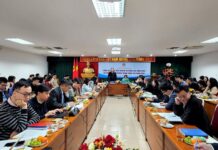
















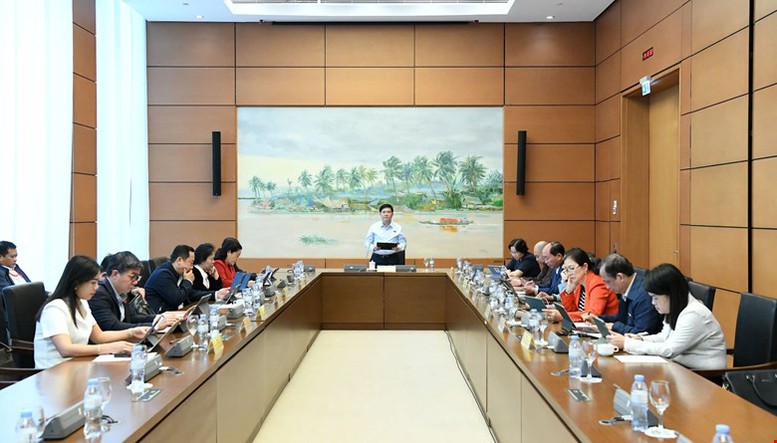
National Assembly delegates discuss three draft laws in Group 11.
On the afternoon of November 5th, continuing the agenda of the 10th Session, the National Assembly held group discussions on three draft laws: the Law on Tax Administration (amended); the Law on Personal Income Tax (amended); and the Law on Thrift and Waste Prevention.
Among these, the draft Law on Personal Income Tax (amended) garnered significant attention from delegates, who provided in-depth analyses of tax policies in the current context and emphasized the need for fairness across income groups.
Delegates agreed that after 18 years of implementation, the Law on Personal Income Tax has significantly contributed to fostering tax compliance and creating a sustainable revenue source for the state budget.
However, in the new context of a rapidly developing digital economy, with the emergence of new types of assets and income such as virtual assets, carbon credits, and auctioned license plates, amendments to the law are essential.
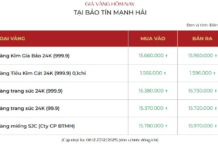
Taxation on Gold Bar Transfers: A Clear and Transparent Roadmap Needed
Participating in the discussion in Group 11 (comprising delegations from Can Tho and Dien Bien), Delegate Le Thi Thanh Lam (Can Tho delegation) focused on the personal income tax rate for gold bar transfers.
She acknowledged that the policy aims to control speculation and enhance market transparency. However, she emphasized the need to clearly distinguish between speculative activities and personal savings to avoid impacting individuals who purchase gold solely as a form of savings. Traditionally, allocating a portion of income to buy gold has been a common practice among Vietnamese citizens, serving as a savings method for future needs.
Therefore, Delegate Le Thi Thanh Lam suggested that setting a threshold for taxable gold bar transfers would only be effective if implemented with a clear and transparent roadmap.
Additionally, she proposed establishing a flexible reporting and deduction mechanism, allowing gold trading organizations, future trading platforms, or commercial banks to handle tax deductions and payments on behalf of individuals, thereby reducing administrative burdens.
She also recommended integrating electronic tax reporting through the national tax data system to synchronize information, enhance monitoring capabilities, and increase transparency and efficiency in policy implementation.
Progressive Tax Brackets: 5 or 7 Tiers?
Discussing in Group 4 (comprising delegations from Khanh Hoa, Lai Chau, and Lao Cai), delegates agreed on the necessity of amending the Law on Personal Income Tax.
Notably, the proposal to reduce the progressive tax brackets from 7 to 5 tiers sparked extensive analysis during the group discussion.
Delegate Nguyen Thanh Trung (Lao Cai delegation) advocated for retaining the 7-tier structure with a 5% interval between brackets, while also studying appropriate taxable income thresholds for each tier.
He analyzed that the draft law proposes varying intervals between brackets: 10% for brackets 1, 2, and 3, and 5% for brackets 4 and 5. This would place a higher tax burden on individuals in brackets 2 and 3 compared to the current regulations, despite this group representing the majority, primarily middle-income earners who need economic encouragement. He also cited international examples where some countries in the region maintain 7 brackets.
Conversely, Delegate Nguyen Huu Toan (Lai Chau delegation) supported the 5-tier proposal, arguing that in a globalized context, maintaining high progressive rates (especially for higher income brackets) could lead high-skilled, high-income individuals to register for taxation abroad to avoid double taxation or excessive levies.
Delegate Nguyen Huu Toan suggested that reducing the progressive slope (5%, 10%, 15%, 25%, 30%, 35% for 5 brackets) would encourage high-skilled, high-income individuals to register for taxation in Vietnam, particularly in the current trend of global remote work.
Several delegates also addressed taxation policies for inherited real estate. Delegate Do Ngoc Thinh (Khanh Hoa delegation) proposed fully exempting inheritance tax for income transferred between parents and children, and spouses.
Citing examples from countries that consider inheritance tax on real estate as a significant revenue source, Delegate Do Ngoc Thinh urged the drafting agency to study and develop a roadmap for applying personal income tax to large-value inherited assets for other relationships: grandparents and grandchildren, siblings. When the value of inherited assets exceeds a certain threshold, the personal income tax payable on the excess value could be determined using the progressive tax brackets.
Furthermore, some delegates proposed introducing region-specific family circumstance deductions instead of a uniform national rate. Given the significant cost-of-living disparities between urban and rural areas, a single deduction rate would not ensure tax fairness for those residing in high-cost regions. They suggested supplementing the mechanism with deductions based on regional minimum wage levels.
If Saved Assets Are Also Taxed, Then…

“Taxation on savings raises significant concerns, especially when considering the broader implications. While a 0.1% tax rate may seem negligible, it warrants careful scrutiny. As Representative Hoàng Văn Cường highlights, the cumulative effect of buying and selling incurs a 2.5% loss for individuals. Conversely, speculators who frequently trade land for profit only pay 2%, creating an evident disparity. This inequity demands attention and reevaluation.”
Distinguishing Gold Speculation from Savings: National Assembly Delegates Debate Taxation on Gold Bullion Transfers
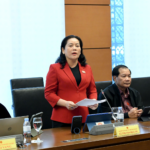
“For generations, allocating a portion of income to purchase gold has been deeply ingrained in the mindset and habits of Vietnamese people. ‘Whenever there’s money, save it to buy gold for future necessities,’ shared Lê Thị Thanh Lam, a National Assembly delegate from Cần Thơ City.”
New Personal Income Tax Bracket Regulations Submitted to Congress
In the proposed amendments to the Law on Personal Income Tax, the government has suggested revisions to the progressive tax bracket system.
Expanding Construction Permit Exemptions: Reducing Costs for Citizens and Businesses

The revised Construction Law further enhances the investment and business environment, streamlining administrative procedures to foster ease, fairness, and equality for both citizens and enterprises.
Prime Minister Pham Minh Chinh Highlights Achievements in ‘Reorganizing the Nation’

Referring to the two-tier local government system operational since July 1, Prime Minister Pham Minh Chinh emphasized that this marks a significant achievement following the “reorganization of the nation.” We have swiftly transitioned, leveraging digital transformation, to shift from management to fostering development and serving the people.