

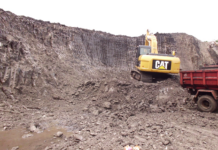







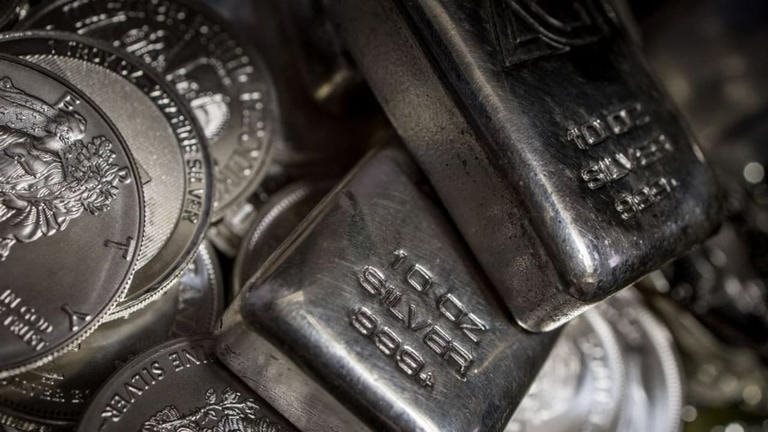
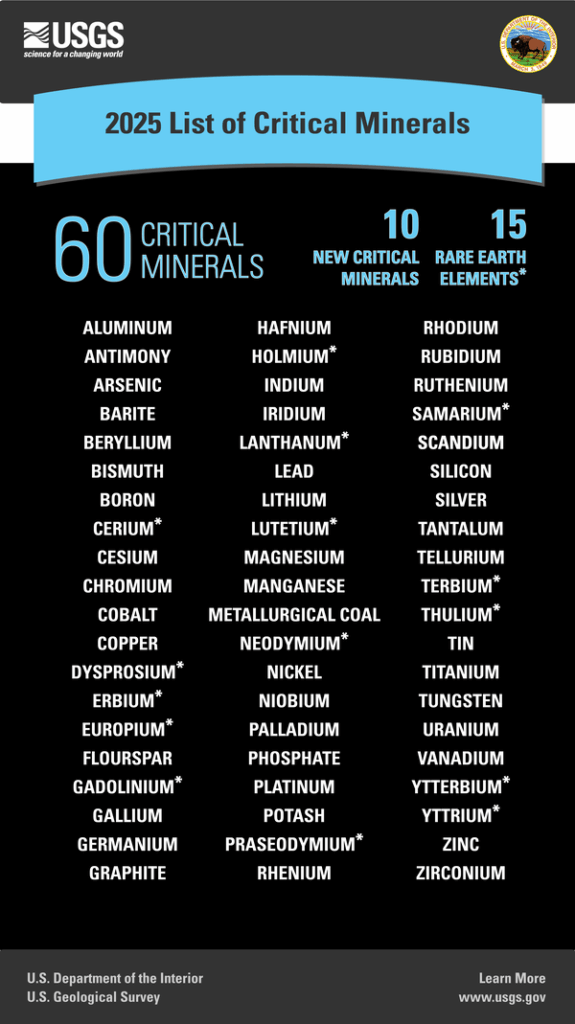
The U.S. Department of the Interior has recently added several minerals, including silver, copper, and coke, to its list of critical minerals. This move, as reported by the Financial Times, could pave the way for new tariffs on these commodities in the future.
The U.S. Geological Survey (USGS) updates this list every three years, guiding Washington’s trade policies and material security strategies. Inclusion on the list not only determines potential tariffs under Section 232 of the U.S. Trade Act—a measure aimed at safeguarding national security—but also influences whether domestic mining projects qualify for federal support.
The Trump administration has long prioritized securing the supply chain for critical minerals, especially those used in manufacturing, energy, and defense. The U.S. has also expanded its definition of “critical minerals” to include materials it produces in abundance, such as coke and boron, which it even exports.
The addition of copper and coke was anticipated by analysts. However, the inclusion of silver has drawn particular attention, as this precious metal could become a focal point if the U.S. decides to impose import tariffs.
According to Suki Cooper, an analyst at Standard Chartered, whether the U.S. will impose tariffs on silver remains “unclear.” However, adding silver to the list marks the first step in the tariff consideration process. Cooper notes that the U.S. has excluded certain silver tariff codes, meaning some refined or industrial silver forms may be exempt.
Although no specific decisions have been made, the global silver market has reacted strongly. Silver reserves on the New York exchange reached record levels last month, while London—the world’s largest silver trading hub—experienced a temporary shortage. The U.S. currently imports about two-thirds of its domestic silver consumption, primarily for electronics, solar panels, jewelry, and investment purposes.
Silver prices surpassed $50 per ounce in October, the highest level in years, driven by increased demand from renewable energy sectors and risk-averse investment flows.
Beyond silver, the inclusion of copper reflects U.S. efforts to strengthen supply chains for critical industries, particularly electricity, construction, and clean energy production. Copper is essential for manufacturing electrical wires, electric vehicles, and power transmission infrastructure.
According to the USGS, this move aims to reduce reliance on imports—primarily from China and Chile—while encouraging domestic mining and refining. Being listed as a “critical mineral” also means copper mining projects can access federal financial support and incentives more quickly.
In addition to silver, copper, and coke, this update includes elements like lead, phosphate, silicon, uranium, and rhenium—used in jet engines. The USGS also flagged several elements at high risk of supply chain disruptions, including rhodium, gallium, germanium, tungsten, several rare earth elements, and potash, most of which are imported from Canada.
The USGS defines critical minerals as “commodities essential to the economy or national security, with supply chains vulnerable to disruption, and whose shortage could significantly impact the U.S.”
The U.S. Department of Energy (DOE) maintains a similar list of 41 elements, last updated in 2023. The parallel expansion of these lists underscores the U.S. accelerating its material self-sufficiency strategy, a cornerstone of the Trump administration’s “Make it in America” industrial policy.
Source: FT