

















Addressing the issue, the Ministry of Agriculture and Environment stated that Clause 6, Article 25 of Decree No. 101/2024 issued by the Government outlines regulations for land surveys, registration, and the issuance of land use right certificates, as well as the Land Information System. These provisions provide detailed guidance on Clauses 1 and 3 of Article 139 of the Land Law.
Accordingly, Article 139 of the Land Law specifically addresses cases where households or individuals have violated land laws prior to July 1, 2014. This includes instances of land misuse, where the land was not used for the purpose originally assigned by the state through allocation, lease, or recognition of land use rights, provided the violation occurred before the aforementioned date.
“Therefore, Clause 6, Article 25 of Decree No. 101/2024/NĐ-CP does not provide resolutions for cases occurring after July 1, 2014,” the Ministry of Agriculture and Environment clarified.
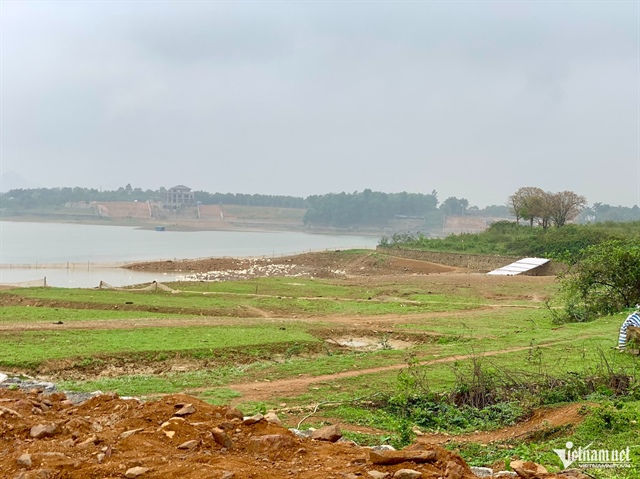
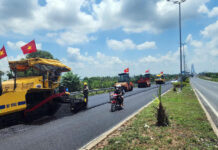
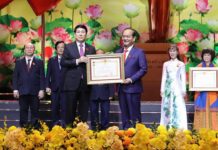
Illustrative image: Hồng Khanh |
Article 39 of the Land Law addresses the resolution of cases involving households or individuals who violated land laws before July 1, 2014.
Under Clause 1 of this Article, if land encroaches upon safety corridors of public infrastructure after the state has announced and marked these areas, or if it encroaches upon roadways, sidewalks, or public spaces after the state has established construction boundaries, or if it encroaches upon land designated for government offices, public projects, or other public facilities, the state will reclaim the land to restore it to its original purpose. No land certificates will be issued for the encroached areas.
However, if adjustments to land use planning or construction planning have been approved by competent authorities, and the encroached land no longer falls within safety corridors, road construction boundaries, or is no longer designated for government offices, public projects, or other public facilities, the current land users may be considered for land certification. They must fulfill their financial obligations as required by law.
Clause 3 stipulates that in cases where households or individuals are using land through encroachment, but not under the conditions outlined in Clauses 1 and 2, or in cases of land misuse where the state has allocated, leased, or recognized land use rights, if the land is being used stably and aligns with county-level land use planning, general planning, zoning planning, construction planning, or rural planning, the users may be considered for land certification. They must also fulfill their financial obligations.
If the case does not meet the criteria specified in point a of this Clause, the land user may continue to use the land temporarily until the state reclaims it. During this period, they must maintain the current state of land use and register the land as required.
|
Clause 6, Article 25 of Decree No. 101/2024 specifies that households or individuals using land for purposes other than those for which the state allocated, leased, or recognized land use rights, but whose land use aligns with county-level land use planning, general planning, zoning planning, construction planning, or rural planning approved by competent authorities, shall be handled as follows: If no land certificate has been issued, the initial certification process shall be conducted in accordance with Clauses 1 of Articles 28, 31, and 36 of this Decree. If a land certificate has already been issued, changes in land and property status shall be registered as per Articles 29 and 37 of this Decree. Land users must fulfill their financial obligations for the area where the land use purpose was changed, as per the legal requirements at the time of filing for land certification. |
Hồng Khanh
– 12:51 09/11/2025
Exclusive Pilot Program: 54 Agricultural Plots in Ho Chi Minh City Approved for Commercial Housing Development

Ho Chi Minh City boasts 54 land plots spanning over 6 million square meters, with nearly 213,000 square meters of rice fields repurposed for residential development. These plots are primarily located in the former Ba Ria – Vung Tau area, totaling more than 6.3 million square meters. The unified deadline for these projects is March 31, 2030.
Ho Chi Minh City: 54 Organizations Pilot Agricultural Land Allocation for Commercial Housing Projects
The total land area allocated for pilot commercial housing projects exceeds 6.5 million square meters, with approximately 213,000 square meters of rice cultivation land slated for re-purposing.
Proposed Land Compensation Based on Price Tables and Adjustment Factors

The government has proposed a new approach to land compensation, suggesting that it be calculated using a price table and adjustment coefficients, rather than being based on “specific land prices.”
Proposed Interim Fee Collection for Red Book Issuance in HCMC Post-Merger

For properties in Ho Chi Minh City, the fee for issuing the Certificate of Land Use Rights and Ownership of Houses (Pink Book) is directly collected by the Ho Chi Minh City Department of Agriculture and Environment and submitted to the state budget. In contrast, for former provinces of Binh Duong and Ba Ria – Vung Tau, the fee is collected and managed by the People’s Committees of wards and communes.
Unlocking Land Allocation Challenges for Public Projects in Urban Developments
HoREA advocates for resolving land allocation challenges in commercial housing projects and urban areas to facilitate the development of healthcare and educational facilities. This initiative aims to safeguard residents’ interests and promote the synchronized growth of social infrastructure.