












Mr. Duong Van Thuy (resident of Hanoi) submitted an inquiry to the Hanoi E-Portal, stating that his family owns a plot of land exceeding 450 square meters, which was granted a Land Use Rights Certificate (red book) in 2004. The entire area is classified as residential land.
In 2000, the family constructed a 70-square-meter house on this land. However, in 2019, when Mr. Thuy’s parents applied to convert the red book to a pink book to divide the land among their children, the Land Registration Office only approved 300 square meters as residential land, reclassifying the remaining area as perennial cropland.
Mr. Thuy received 89 square meters from his parents, comprising 40 square meters of residential land and 49 square meters of perennial cropland. The 70-square-meter house built in 2000 is situated on this 89-square-meter plot.
In 2025, when the family submitted an application to convert the land use purpose to legalize the 49 square meters of perennial cropland as residential land, a commune official stated that the house must be demolished before the request could be processed. Mr. Thuy argues that this requirement is unreasonable, as the house was built when the land was still classified as residential. He urges the authorities to consider and resolve the issue fairly and reasonably.
In response, the Hanoi People’s Committee stated that, according to Article 121, Clause 1(b) of the 2024 Land Law, converting land use from perennial cropland to residential land requires approval from the competent state agency.
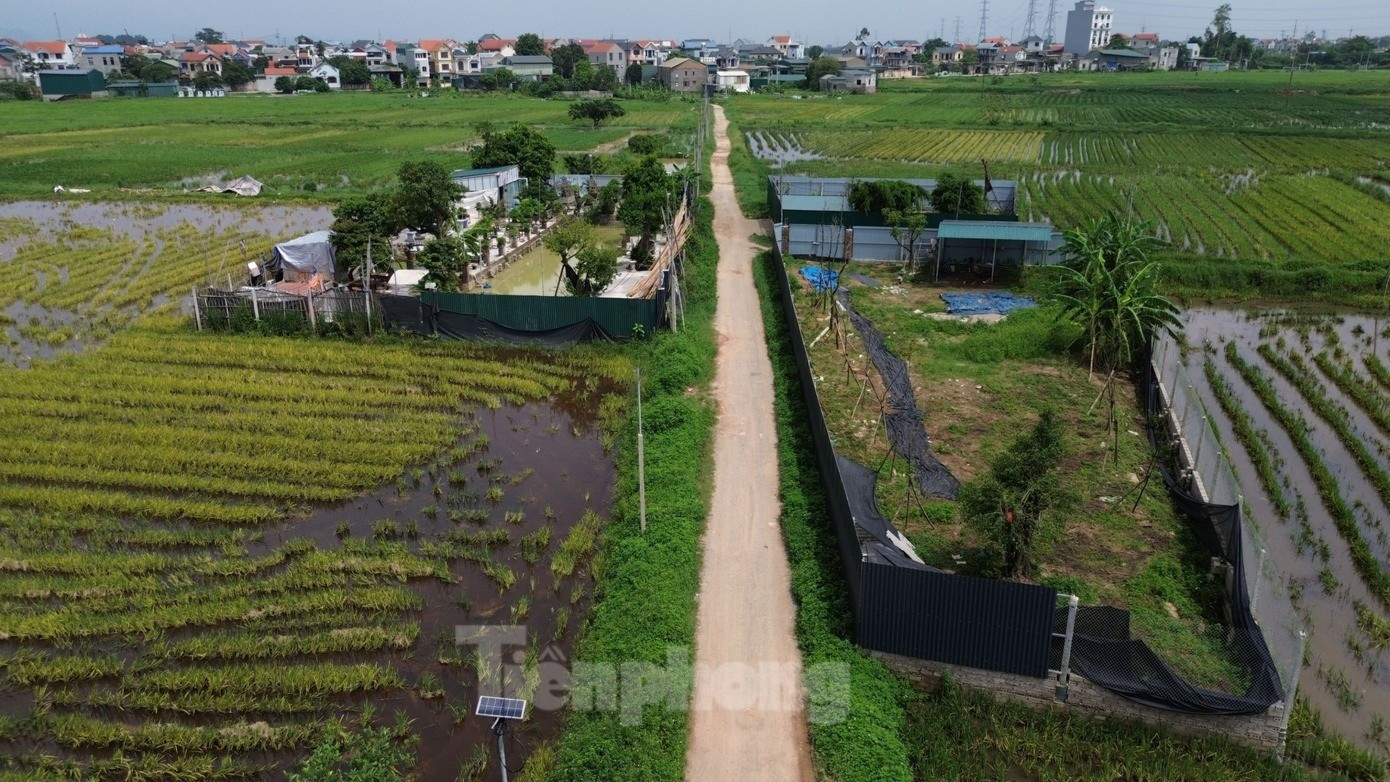
Many localities apply land laws rigidly when citizens seek to change land use purposes.
Under Article 116, Clause 5 of the 2024 Land Law, the basis for converting agricultural land within residential areas or within the same plot containing residential land to residential land for households and individuals is the district-level land use plan (now the commune-level plan) or an approved general or detailed plan.
The procedure for land use conversion follows the provisions of Clauses 2, 3, 4, and 6 of Article 44 in Decree No. 102/2024/NĐ-CP dated July 30, 2024, issued by the Government.
On June 12, 2025, the Government issued Decree No. 151/2025/NĐ-CP, which defines the authority of local governments at two levels and delegates powers in the land sector (effective from July 1, 2025). The procedure for land use conversion is detailed in Section I, Part III of the appendix to Decree No. 151/2025/NĐ-CP.
Citizens can contact the local Land Registration Office where their land is located for guidance in accordance with the regulations.
Rigid Application of the Law?
Attorney Nguyen Tuan Anh from Minh Minh Nghiem Law Firm (Hanoi Bar Association) noted that, under Article 5, Clause 1 of the 2024 Land Law, building a house on garden land is considered an unauthorized change of land use, violating legal provisions.
Violators are subject to penalties under Decree 123/2024/NĐ-CP, which mandates restoring the land to its original state before the violation occurred.
Thus, violations must be addressed before citizens can exercise other rights, including the right to change land use. “Restoring the original state means demolishing the house and returning the land to its agricultural status,” explained Attorney Tuan Anh.
However, under Article 139, Clause 3 of the 2024 Land Law, if the garden plot is within a residential land use plan, restoration to the original state is not required, and a red book may be issued after financial obligations are fulfilled.
Therefore, the official’s response requiring house demolition and restoration of agricultural land before approving the land use change is inconsistent with current laws.
Additionally, in 2000, the entire 450-square-meter plot was classified as residential land. The family’s construction of the house at that time was entirely legal and compliant with the issued red book.
Attorney Tuan Anh criticized the commune land officer’s approach as overly rigid, failing to consider the land’s historical use and changes in government management over time.
He urged central ministries to promptly issue detailed, accessible guidelines to facilitate citizens’ compliance and resolve local land management challenges.
Quy Nhơn Iconic: Phát Đạt Completes Financial Obligations

Phat Dat Real Estate Development Corporation (HOSE: PDR) has successfully fulfilled all financial obligations for the land allocation decision of the Quy Nhon Iconic project. This significant legal milestone underscores Phat Dat’s credibility and execution capabilities during its organizational restructuring phase.
Proposed Retention of the Land Registration Office Branch

The Ho Chi Minh City Institute of Natural Resources and Environment Economics argues that eliminating Land Registration Office branches from October 15, 2025, to streamline land procedure services at the commune level through a one-stop-shop model will face significant challenges.
Retain the Land Registration Office Model: A Critical Proposal

The current Land Registration Office System operates seamlessly, boasting robust security measures and impressive data management capabilities.
Lost Land Title? Beware These 4 Surprising Pitfalls When Reapplying!
Decree 101/2024/NĐ-CP clearly outlines the procedures, authority, and responsibilities of relevant agencies in reissuing lost land-use right certificates, making the process more accessible and transparent for citizens.
Proposed Relocation of Land Registration Offices to Commune-Level People’s Committees

The Land Management Authority proposes transferring the functions and duties of the Land Registration Office to the commune-level land management agency. This consolidation aims to establish a single, unified authority responsible for handling all land-related procedures for both citizens and businesses.