


















Investment of VND 12.5 Trillion in Maintenance and Repair of Thang Long Bridge
The Hanoi Department of Construction has issued Decision No. 2942/QĐ-SXD approving the project for the repair and traffic safety enhancement at both ends of Thang Long Bridge, with a total investment of VND 12.5 trillion from the city’s budget. The project, represented by the Infrastructure Maintenance Board, is set to commence in 2025.
According to the Department of Construction, the project focuses on addressing damages to the asphalt concrete surface at both ends of the bridge—areas with high traffic volume and frequent heavy loads. Additionally, the project aims to synchronize traffic organization and add necessary features to enhance safety for both pedestrians and vehicles.
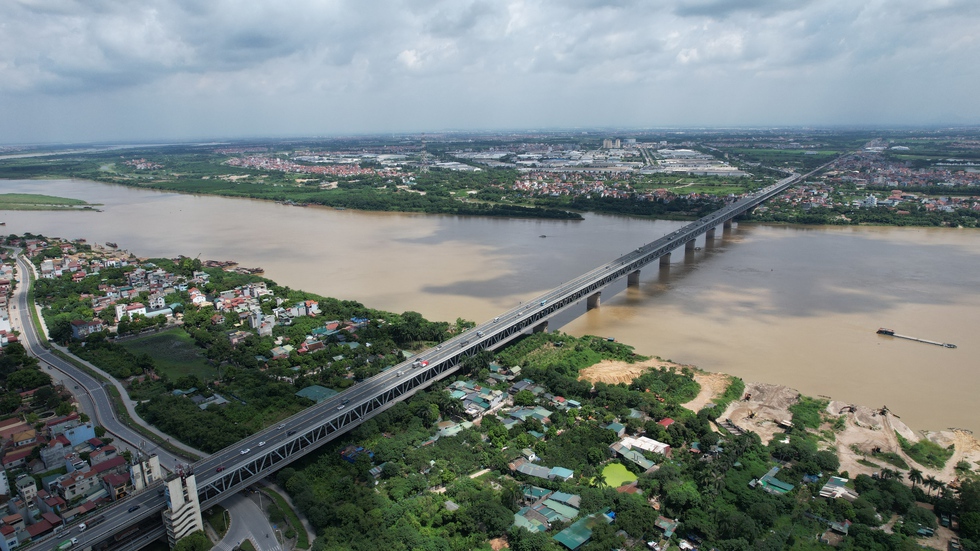
Current state of Thang Long Bridge. Photo: Dai Doan Ket
Experts emphasize that the primary goal of the project is to ensure traffic safety while meeting the growing demands for travel and cargo transportation at the northern gateway of the capital. Timely repairs are expected to reduce safety risks, minimize congestion, and improve the overall efficiency of the road.
The Department of Construction requires all participating units to strictly adhere to state and city regulations regarding investment management, quality, and costs. They must also ensure compliance with technical standards and timelines during construction. The Maintenance Board and consulting units are responsible for the accuracy and feasibility of technical documents, volumes, and design solutions in the submitted reports.
“Century Project” in Hanoi Once Mobilized 8,300 Workers, Utilizing Unprecedented Technology
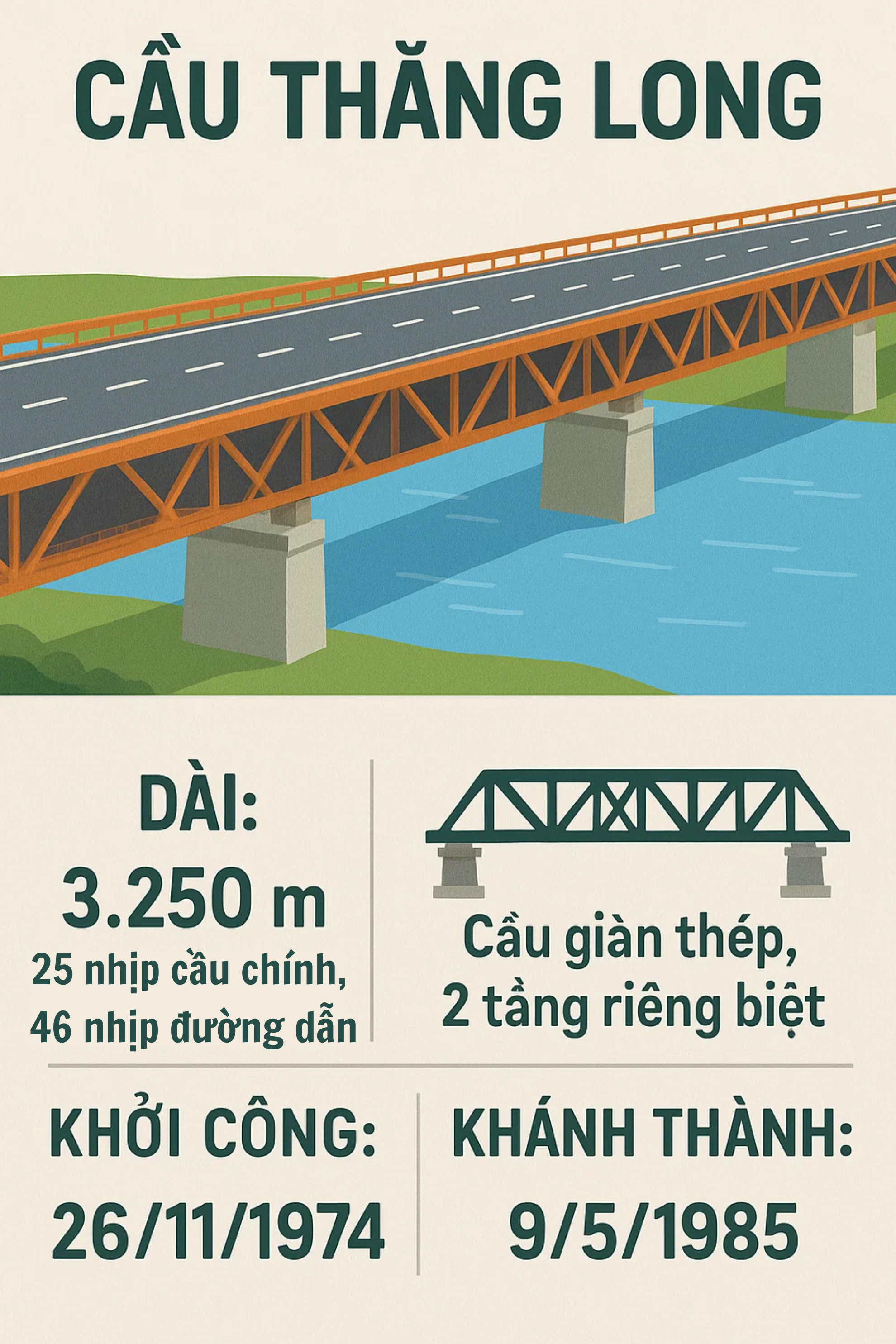
Thang Long Bridge, the second bridge across the Red River in Hanoi after Long Bien Bridge, began construction on November 26, 1974, and was officially inaugurated on May 9, 1985, after 11 years of continuous work. The project is considered a symbol of Vietnamese-Soviet friendship and a significant milestone in the capital’s infrastructure development.
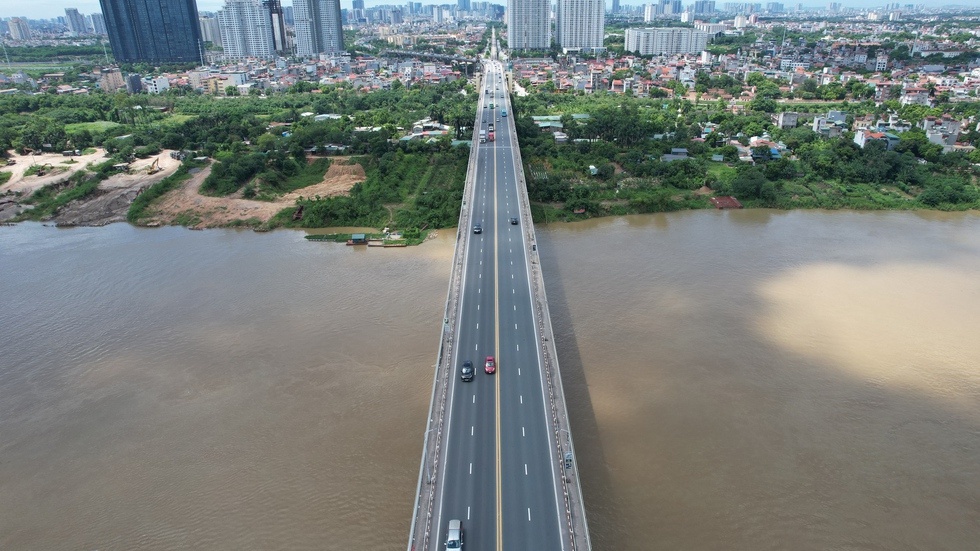
Current state of Thang Long Bridge. Photo: Dai Doan Ket
Located at km6+300 on the Nam Thang Long route, a vital artery connecting Noi Bai International Airport to Hanoi’s city center, the bridge is approximately 11 km upstream from Long Bien Bridge. Thang Long Bridge serves as a strategic transportation hub, enhancing connectivity in the northern region of the Red River.
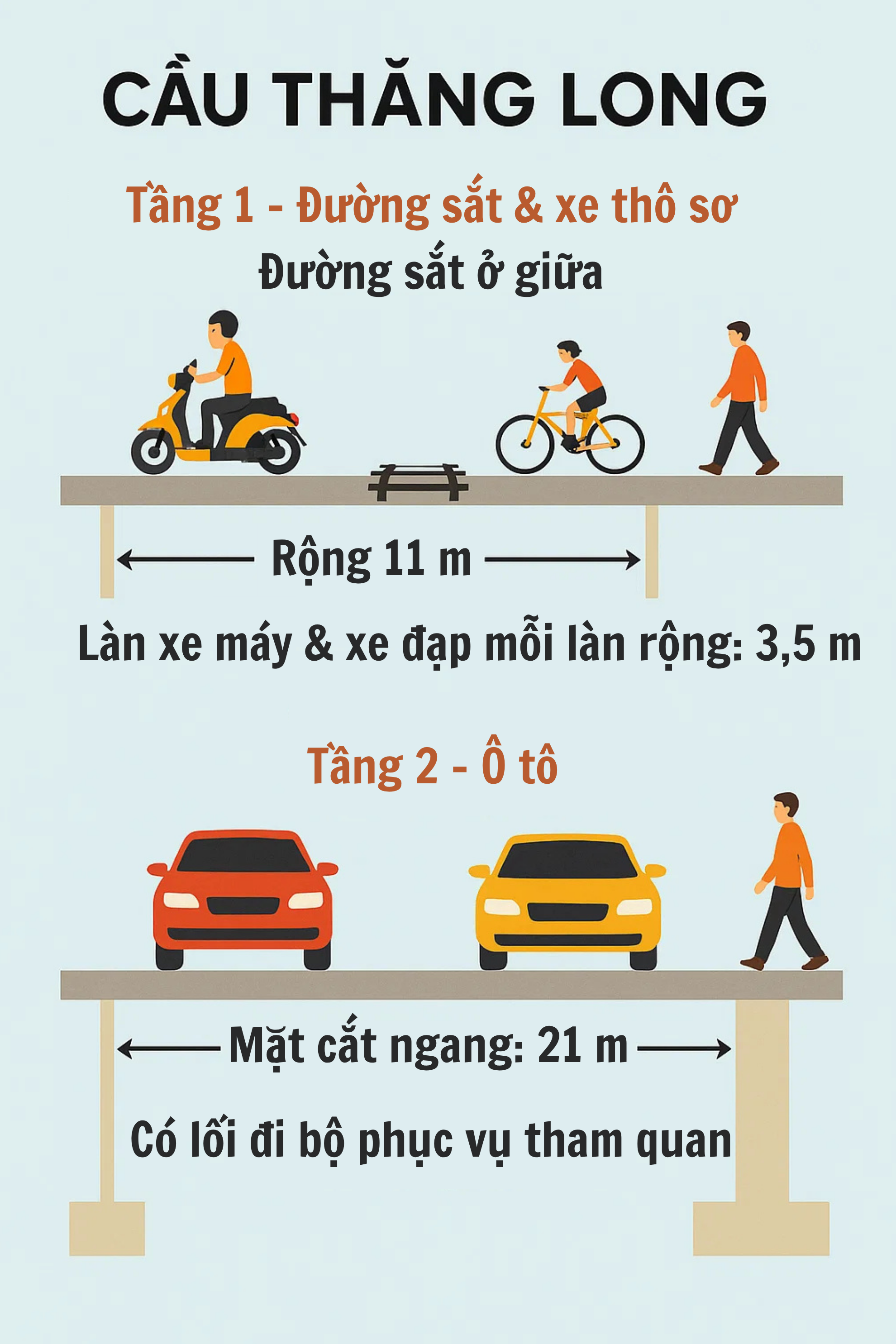
With a length of 3,250 meters, Thang Long Bridge features a modern steel truss structure, comprising two separate levels. Upon completion, it was the longest bridge in Vietnam at the time.
Dubbed the “century project,” Thang Long Bridge incorporated cutting-edge construction technologies, unparalleled in Southeast Asia during that era. Notably, its steel structure and steel deck were groundbreaking achievements, marking a significant leap for Vietnam’s bridge-building industry.
The project was executed by the Thang Long Bridge Complex Enterprise, with the workforce expanding from 1,600 to 8,300 workers during peak construction. The Soviet Union supported Vietnam in training deep-sea divers, automatic welding technicians, and spray painters—advanced skills rare in the region at that time.
Preparation for construction was extensive, requiring nearly two years to clear 190 hectares of land across 8 communes in Dong Anh and Tu Liem districts. Additionally, nearly 50 km of railway, 20 km of roads, and over 10,000 m² of housing and workshops for workers were built before the project’s official launch.
After nearly 40 years of operation, Thang Long Bridge remains a critical component of Hanoi’s transportation network. It not only facilitates travel but also plays a vital role in cargo transportation and trade between Hanoi and northern provinces. With its historical, technical, and contemporary significance, Thang Long Bridge continues to be an iconic infrastructure project in Hanoi.
Modernizing Railways: Why Vietnam Opts for Cost-Effective Technology Over the Most Expensive Solutions

The Minister of Construction emphasized that, in the current context, Vietnam is not seeking the most expensive technology but rather the most suitable one. This means prioritizing advanced, safe, and efficient technologies with transferable capabilities, enabling domestic enterprises to gradually take control and master these innovations.
Da Nang Chairman Pham Duc An Unveils $15 Billion Reclamation Mega-Project

Mr. Pham Duc An, Chairman of the Da Nang City People’s Committee, shared preliminary details regarding the ambitious 366 trillion VND coastal reclamation megaproject.
The Nhật Nam Real Estate Case: Where Did the 9.113 Trillion VND Go?

The indictment by the People’s Procuracy of Hanoi reveals that from 2020 to 2023, Vũ Thị Thúy (CEO and Chairwoman of Nhật Nam Company) and her accomplices mobilized and signed 43,314 investment cooperation contracts, totaling a staggering 9,113 billion Vietnamese dong.
Hanoi Apartments Overtake Land Plots as Leaders in the Secondary Market
In Q3/2025, land plot sales declined across all regions, primarily due to high average prices driving capital toward more liquid asset classes. Meanwhile, secondary apartment transactions continued to surge, reaching a two-year high in sales volume, with activity concentrated in yet-to-be-handed-over sub-districts.
Revitalizing Vintage Apartments: Overcoming the Challenge of Selling Aged Condos

Over the past period, condominium prices have continued to rise, yet liquidity has somewhat stagnated. This is primarily due to the fact that condominium prices have become excessively high, making it challenging for genuine residents to afford them.