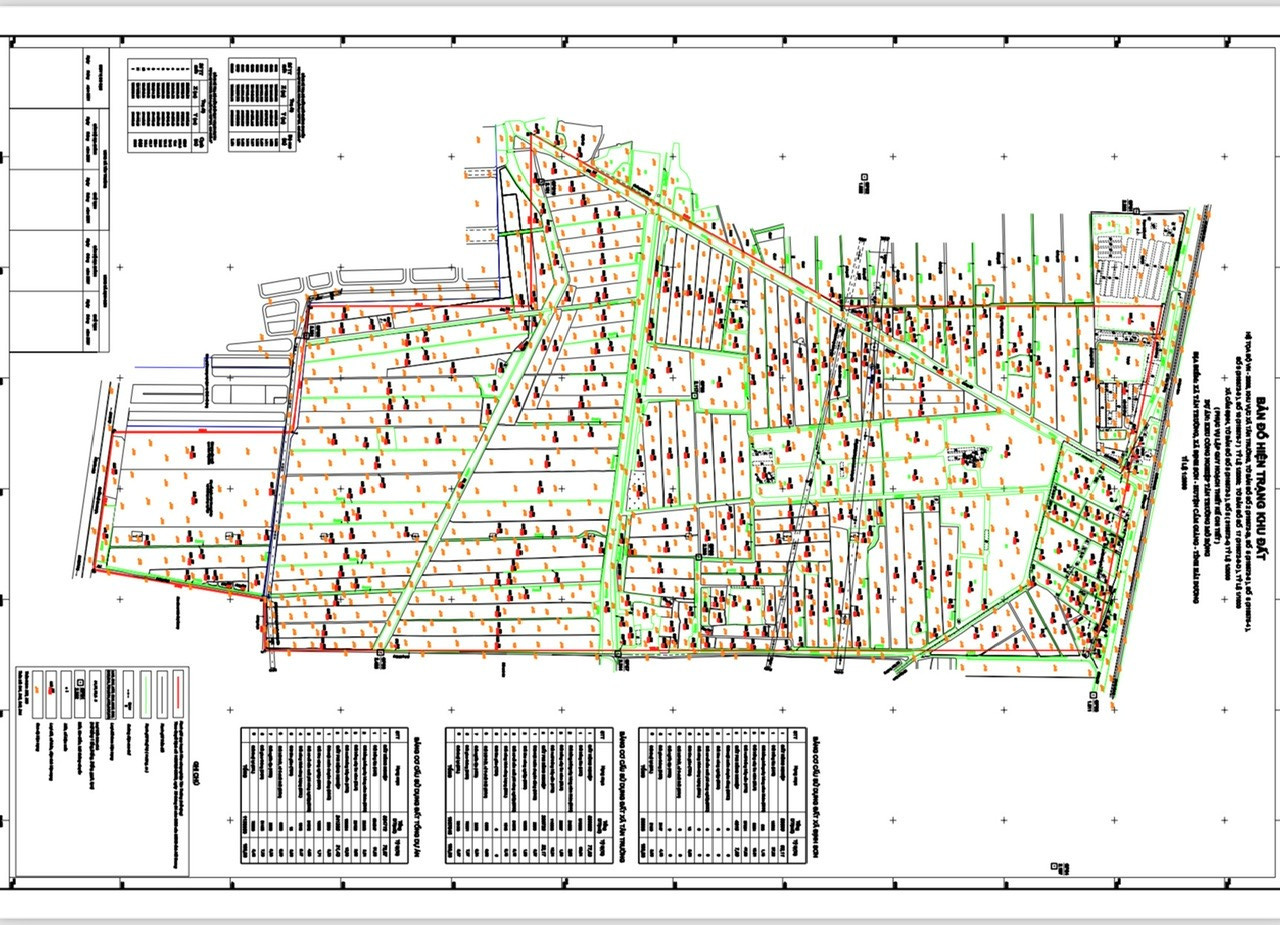
According to the master plan, Zone A spans 3,280 hectares, primarily consisting of rural residential areas and villages. The study area falls within the administrative boundaries of Thanh Liệt Ward and the communes of Đại Thanh, Ngọc Hồi, Tam Hưng, Thường Tín, and Bình Minh. Its boundaries are defined by Phan Trọng Tuệ Road to the north, Ring Road 4 to the south, existing residential areas and the Ngọc Hồi Industrial Cluster to the east, and Urban Zone C4 to the west. Preliminary forecasts estimate a population of 270,000 to 310,000 by 2045.
Zone A is envisioned as a modern sports, tourism, and eco-service urban complex, featuring an international-standard sports complex and “Olympic Villages” capable of hosting major events like the Asian Games (ASIAD) or the Olympics. It will also pioneer Transit-Oriented Development (TOD) and high-tech urban models, integrating Hanoi’s strategic transportation hubs.
Zone B, covering 4,560 hectares, lies within the administrative boundaries of Thường Tín, Tam Hưng, Thượng Phúc, and Dân Hòa communes. Its boundaries are Ring Road 4 to the north, the administrative borders of Dân Hòa and Thượng Phúc to the south, the North-South High-Speed Railway to the east, and National Highway 21C to the west. The projected population by 2045 is 250,000 to 285,000.
Zone B will focus on sports-centric urban development and services, anchored by a world-class sports complex (international stadium).
The city mandates completion of the planning project within 9 months. The Department of Planning and Architecture is tasked with verifying the planning assignment for Zone B. The planning horizon extends to 2045, with a vision to 2065.
The overarching plan for the 10,000-hectare Hanoi Olympic Sports City targets a population exceeding 1 million, divided into four zones. Zone A (3,280+ hectares) will emphasize commercial services and TOD development; Zone B (4,560 hectares) will host international sports infrastructure; Zone C (4,498 hectares) will focus on services and resorts; and Zone D (3,743 hectares) will be an eco-urban area.
Currently, the People’s Committees of Hồng Vân and Thanh Oai communes are gathering feedback on the 1/2000-scale planning proposals for Zones C and D.
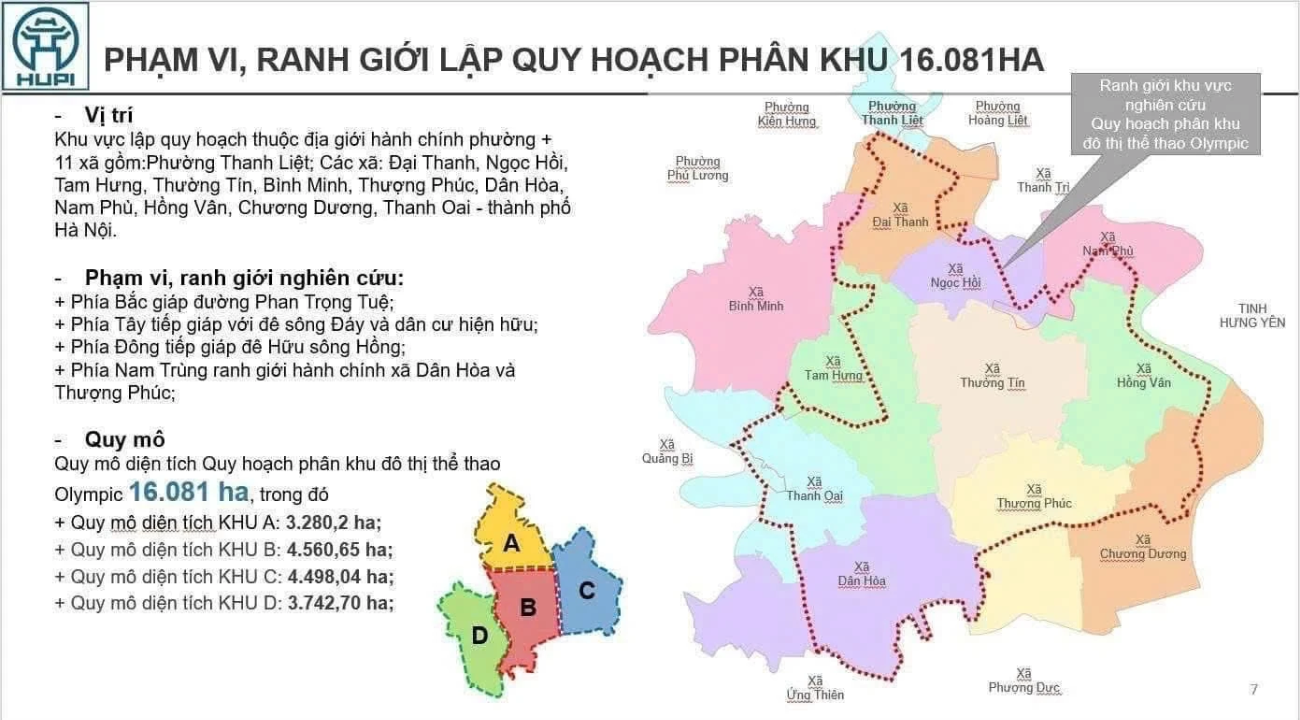
Planning scope and boundaries for the 16,081-hectare Hanoi Olympic Sports City.
|
– 13:19 12/11/2025
Hanoi Unveils 16,000-Hectare “Super Sports City” Masterplan, Featuring Olympic-Ready Stadium
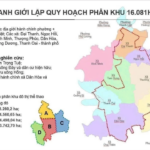
The Hanoi People’s Committee has approved the planning tasks for the Olympic Sports Urban Area Sub-zones A and B, at a scale of 1:2000. These sub-zones are part of the larger 16,081-hectare Olympic Sports Urban Area, envisioned to become the largest sports, service, and eco-urban complex in the southern part of Hanoi.
Green Urban Trends in Vietnam: Shaping Sustainable Cities
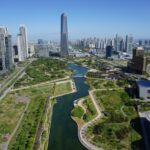
Not only does it contribute to environmental protection, enhance property value, and improve quality of life, but a “green building” also underscores a company’s commitment to the community. As a result, the development of green buildings has become an inevitable trend in Vietnam’s real estate industry.
Sustainable Urban Development: Building Climate-Resilient Green Cities

Amidst escalating annual damages from storms, floods, saltwater intrusion, and landslides, many existing infrastructure systems are proving inadequate. Consequently, investing in resilient urban infrastructure has become an urgent imperative.
Emerging Urban Oasis: Sun Group’s Vision for Vung Tau’s 3km Offshore Island, Once Proposed as an Airport
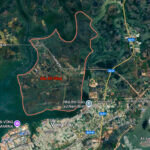
Nestled just across the river from the bustling heart of Vũng Tàu, Gò Găng Island offers a serene escape into a world starkly different from its urban neighbor. Here, lush mangrove forests, sprawling salt fields, and scattered fishing rafts paint a picture of untouched tranquility, while the sparse homes of locals add to the island’s rustic charm.
The Last Compound Subdivision at Mizuki Park Urban Area Captivates Attention
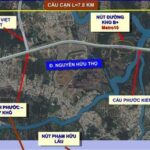
Trellia Cove, the final compound subdivision of Mizuki Park urban area, is generating significant market appeal amidst the ongoing scarcity of new supply in the southern region of Ho Chi Minh City.